

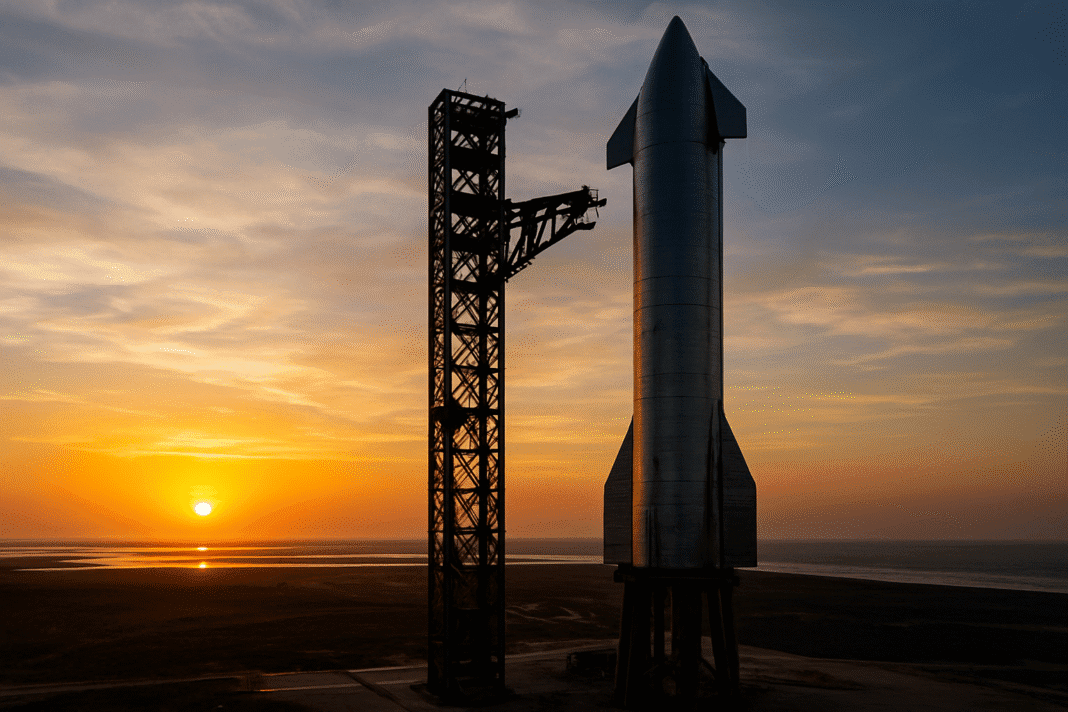
SpaceX is reportedly making one of the most consequential strategic decisions in its history by limiting future commercial availability of its highly successful Falcon launch family in favor of transitioning customers toward the still-developing Starship system. According to multiple reports, the company has begun declining certain Falcon launch reservations beyond 2028, suspended future Falcon rideshare bookings, and slowed production of some expendable Falcon components as it concentrates engineering resources on Starship. The move reflects Elon Musk‘s long-stated objective of replacing Falcon with a fully reusable launch architecture capable of dramatically lowering launch costs while supporting ambitious projects such as lunar missions, Mars colonization, next-generation Starlink deployments, and massive orbital infrastructure. However, the strategy also exposes the company to greater execution risk because Starship has yet to achieve the operational reliability that Falcon 9 has demonstrated over years of successful launches. Should Starship’s development timeline slip, SpaceX could temporarily constrain commercial launch capacity even as global demand for orbital access continues to grow.
Sources
- https://www.zerohedge.com/technology/spacex-reportedly-turns-away-falcon-customers-starship-gamble-comes-focus
- https://www.businesstimes.com.sg/startups-tech/technology/spacex-turning-away-falcon-customers-major-bet-starship
- https://www.reddit.com/r/SpaceXLounge/comments/1v5117d/spacex_is_turning_away_falcon_customers_in_major/
Key Takeaways
- • SpaceX is reportedly reducing long-term reliance on Falcon rockets by steering future commercial customers toward Starship after 2028.
- • The company’s strategy reflects confidence that fully reusable launch vehicles will dominate the future economics of commercial spaceflight, despite Starship still undergoing development.
- • Success would strengthen America’s leadership in commercial space, while prolonged delays could temporarily reduce available launch capacity for commercial satellite operators.
In-Depth
SpaceX has rarely been a company content to optimize yesterday’s successes. The reported decision to begin limiting future Falcon launch commitments illustrates a corporate philosophy built around replacing even highly successful products before competitors can. Falcon 9 transformed the global launch industry through reusable first-stage boosters, but Elon Musk has consistently described Falcon as an intermediate step rather than the final destination.
That philosophy now appears to be moving from rhetoric to corporate policy. Reports indicate the company is no longer accepting certain Falcon reservations beyond 2028 and has slowed production of some expendable hardware associated with the rocket family. If accurate, those decisions suggest SpaceX believes Starship will be operationally mature enough within the next several years to assume the overwhelming majority of commercial launch responsibilities.
The business logic is understandable. A fully reusable Starship capable of rapidly flying enormous payloads could reduce launch costs to levels that existing rockets cannot realistically match. Such economics would not merely improve SpaceX’s profitability; they could fundamentally reshape satellite deployment, space manufacturing, orbital infrastructure, and deep-space exploration. Lower transportation costs have historically unlocked entirely new industries, and Musk is betting that space will follow the same pattern.
Still, this remains a calculated gamble. Falcon 9 has accumulated one of the strongest reliability records in modern aerospace, earning the confidence of commercial customers, NASA, and the Department of Defense. Starship, while demonstrating impressive technical progress, has not yet achieved the operational consistency required for routine commercial service. Engineering setbacks are common in advanced launch vehicle development, and any extended delays could leave customers with fewer scheduling options during a period of growing demand for launch services.
From a broader policy perspective, the transition also highlights the advantages of allowing private-sector innovation to drive America’s space leadership. Rather than maintaining legacy systems indefinitely, companies operating in competitive markets have powerful incentives to pursue revolutionary improvements instead of incremental ones. That willingness to embrace technological disruption has become a defining characteristic of the American commercial space industry.
Whether SpaceX’s timeline proves optimistic remains to be seen. What is clear is that the company is signaling extraordinary confidence that Starship—not Falcon—will define the next generation of spaceflight. If that confidence is rewarded, the decision may eventually be viewed as the moment SpaceX deliberately retired the world’s most successful commercial rocket in pursuit of something far more ambitious. If the transition proves slower than anticipated, however, the company will face the difficult challenge of balancing visionary long-term goals against the immediate needs of customers who depend upon reliable access to orbit.