

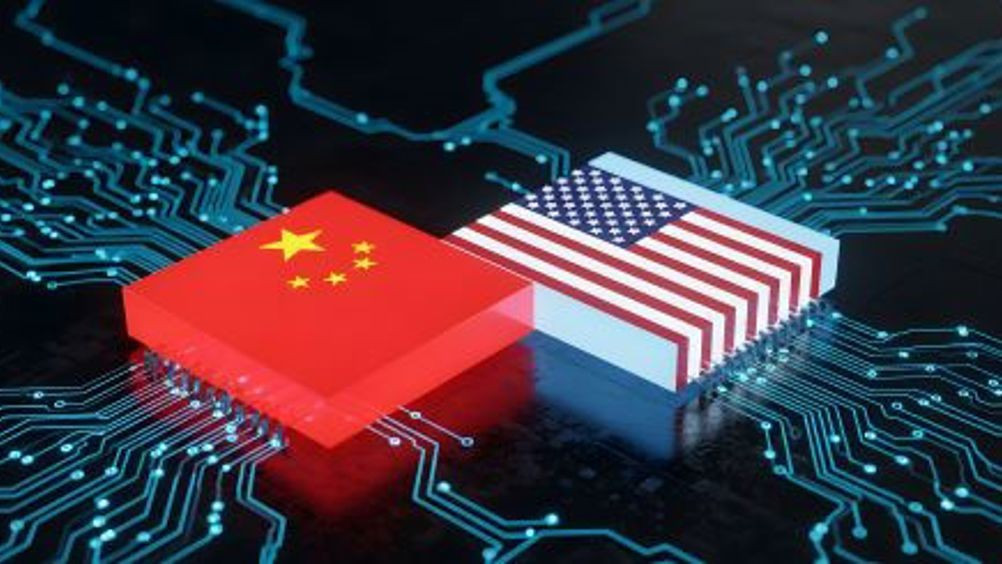
China’s challenge to American artificial-intelligence leadership may ultimately be decided not by which nation builds the world’s most sophisticated model, but by which nation supplies the affordable, integrated AI infrastructure adopted throughout the developing world. Chinese open-weight models, expanding technology infrastructure, aggressive pricing, financing, and government-backed international cooperation are giving Beijing an opportunity to establish itself across fast-growing economies in Asia, Africa, Latin America, and the Middle East. The strategic concern for the United States is that AI systems can become deeply embedded in government administration, industry, finance, logistics, education, communications, and national infrastructure, creating dependencies that are difficult and expensive to reverse. Washington has responded by promoting exports of an integrated American AI technology stack, but export controls and higher costs could complicate that effort. The emerging geopolitical contest is therefore increasingly about installed technological ecosystems: America may retain leadership at the cutting edge while China captures the larger international market and the political influence accompanying it.
Key Takeaways
- China’s strongest strategic advantage may be the ability to offer developing nations inexpensive, adaptable AI models alongside infrastructure, financing, cloud services, telecommunications equipment, and other technology already embedded in those markets.
- Chinese open-weight models have rapidly expanded their international footprint, demonstrating that American leadership in frontier AI does not automatically translate into dominance of the worldwide AI ecosystem.
- The United States is attempting to counter China through an integrated AI export strategy, but maintaining strict technology controls while competing for emerging markets creates a difficult balance that Beijing can exploit.
In-Depth
The strategic contest over artificial intelligence is becoming a contest over infrastructure, distribution, and economic dependence rather than simply which country produces the most capable model. China’s strength in open-weight AI gives Beijing an avenue to penetrate developing markets where price, availability, financing, and ease of deployment can matter more than benchmark supremacy.
That shift is already visible. Chinese-developed models have surged across open-model ecosystems, while DeepSeek helped demonstrate that capabilities could be distributed at lower cost and adapted locally. Beijing is building an international institutional framework around AI cooperation, creating relationships that can influence training, procurement, standards, government applications, and long-term technology choices.
Washington recognizes the geopolitical stakes. The American AI Exports Program was designed to promote American technology packages abroad, including hardware, models, applications, cloud infrastructure, cybersecurity, and data centers. Yet America faces an inherent tension: protecting technology through export restrictions while simultaneously attempting to ensure that foreign governments and companies choose American systems. China can exploit any resulting gaps with cheaper and more accessible alternatives.
The deeper danger is technological lock-in. Once government administration, logistics, education, finance, communications, and industrial systems depend upon one country’s AI ecosystem, replacing that ecosystem becomes difficult over time. America therefore cannot assume technological superiority alone guarantees geopolitical leadership. The decisive battlefield may be emerging economies seeking modernization. If China becomes their default AI infrastructure provider, Beijing could acquire influence without territorial conquest, embedding strategic dependence through technology, financing, standards, and institutional relationships that become increasingly costly for participating nations to unwind.
Sources
- https://huggingface.co/blog/huggingface/one-year-since-the-deepseek-moment
- https://www.reuters.com/world/china/twenty-nine-countries-sign-agreement-establish-global-ai-cooperation-body-2026-07-16/
- https://www.federalregister.gov/documents/2025/07/28/2025-14218/promoting-the-export-of-the-american-ai-technology-stack
- https://ifp.org/americas-ai-exports-program/