

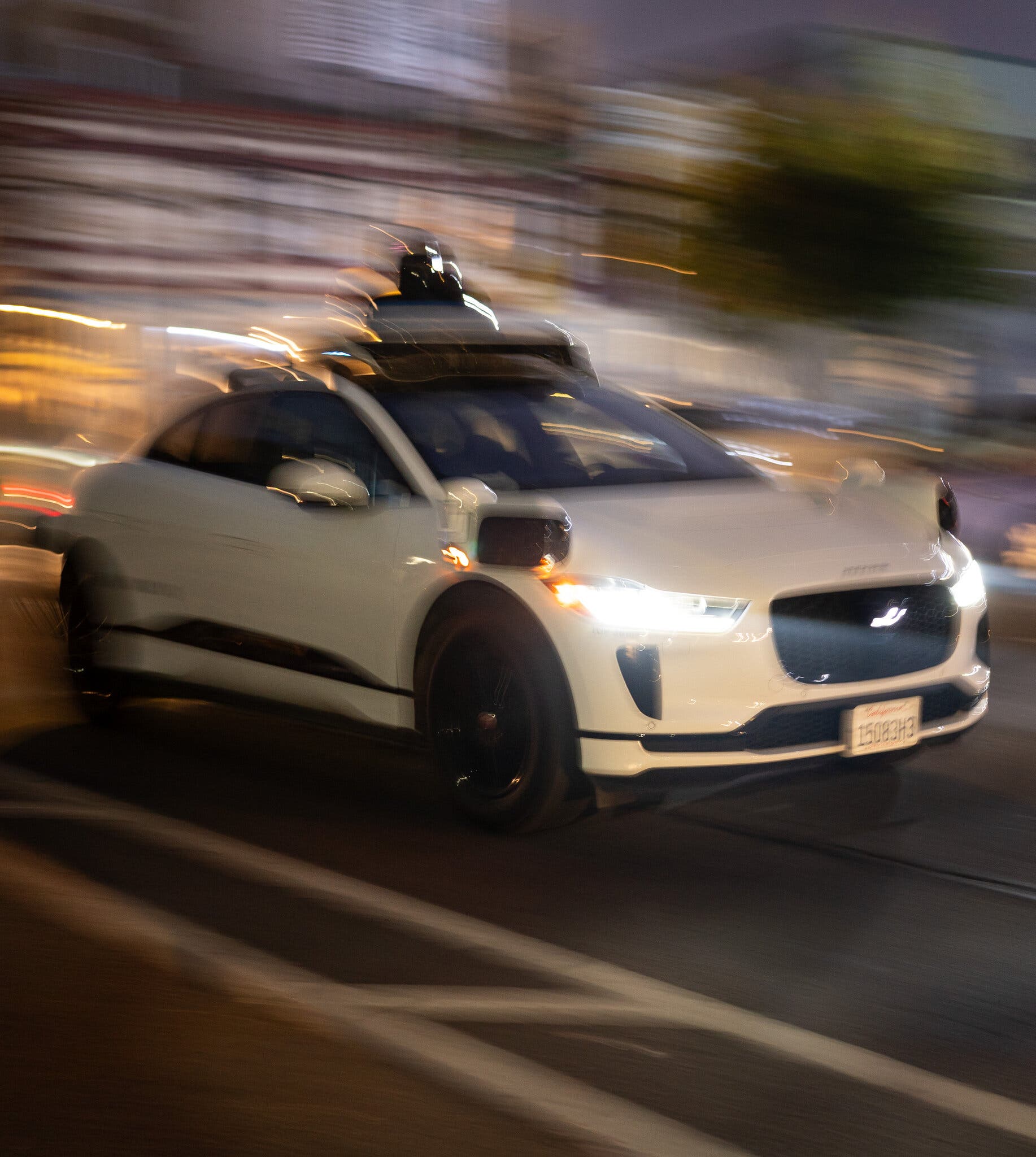
For more than a century, the automobile has represented something distinctly American: independence. A driver could choose his destination, his route, his passengers, and even whether to take the long way home. Now, artificial intelligence promises to transform that relationship. Autonomous vehicles may eventually make transportation safer, more efficient, and accessible to people who cannot drive. But before society celebrates the disappearance of the steering wheel, it should consider what else may disappear with it.
The most persuasive argument for autonomous vehicles is safety. Human beings are imperfect drivers. We become distracted, tired, angry, intoxicated, impatient, and careless. Machines do not text while driving, fall asleep after a double shift, or become enraged because someone cut them off.
If autonomous technology eventually becomes demonstrably safer than human drivers, refusing to use it could itself become difficult to justify. Few people would defend a transportation system producing thousands of preventable deaths merely to preserve the pleasure of driving.
But safety is not the only value that matters.
An autonomous automobile is fundamentally different from a conventional automobile. The traditional car is a mechanical instrument controlled by its owner. An AI-powered vehicle is increasingly a computerized system controlled through software, sensors, communications networks, databases, and algorithms. That transformation creates enormous power—and raises the question of who ultimately possesses it.
Consider privacy.
An autonomous vehicle may need to know where it is, where it is going, what surrounds it, and how its occupants are interacting with the vehicle. Over time, enormous amounts of information could potentially be generated about travel patterns. A detailed record of someone’s movements can reveal remarkably intimate information: where he works, worships, receives medical treatment, spends evenings, meets friends, attends political gatherings, or sleeps.
That information has tremendous commercial and governmental value.
Americans therefore should demand strong legal protections concerning who owns vehicle-generated data, how long it may be retained, whether it may be sold, when government may obtain it, and whether owners can meaningfully prevent unnecessary collection.
Cybersecurity presents another danger. A conventional automobile can malfunction, but a networked autonomous automobile potentially introduces vulnerabilities that mechanical vehicles never possessed. Software can contain defects. Communications systems can be compromised. Updates can introduce unintended consequences. A security weakness replicated across a vehicle fleet could conceivably create systemic risks far beyond the failure of a single automobile.
Then comes the uncomfortable ethical problem of machine decision-making.
Imagine an unavoidable collision. The vehicle must choose between several dangerous maneuvers within milliseconds. Programmers necessarily establish principles governing how the system responds. Those principles may involve probabilities of injury, classifications of obstacles, passenger protection, pedestrian protection, and countless other variables.
Who determines those principles?
Engineers?
Corporate executives?
Insurance companies?
Federal regulators?
Those questions cannot simply be dismissed as technical details because embedded within technical decisions can be judgments about human life. Society should be extremely reluctant to outsource moral choices to proprietary algorithms that ordinary citizens cannot inspect or challenge.
There is also a broader question of liberty.
Suppose autonomous vehicles eventually become dramatically safer than human-operated vehicles. Insurance companies could charge substantially higher premiums for manual driving. Governments might restrict human driving in congested cities. Manufacturers might stop installing conventional controls altogether. What begins as an optional convenience could gradually become mandatory through regulation, economics, or technological obsolescence.
That possibility deserves serious debate before autonomous transportation becomes dominant.
The conservative instinct toward technological innovation should not be reflexive hostility. Markets and human ingenuity have produced extraordinary improvements in transportation, medicine, communication, agriculture, and virtually every other aspect of modern life. Artificial intelligence could similarly prevent accidents, expand mobility for elderly and disabled Americans, reduce congestion, and make transportation more productive.
But conservatism also carries another instinct: skepticism toward concentrated power.
The danger is not simply that an autonomous automobile might make the wrong turn. It is that transportation could evolve from something individuals control into something corporations and governments can remotely supervise, restrict, analyze, or potentially disable.
The proper objective, therefore, should not be stopping autonomous vehicles. It should be establishing boundaries before dependency makes boundaries difficult to impose.
Americans should retain meaningful ownership of their transportation data. Government access should remain constrained by constitutional protections and appropriate legal process. Manufacturers should face rigorous cybersecurity obligations and meaningful liability when negligent design causes harm. Consumers should know when significant automated decisions affect them. And wherever reasonably possible, citizens should retain the ability to choose whether they surrender control of the vehicle.
Autonomous automobiles may ultimately save many lives. That would be a remarkable achievement.
But technological progress should expand human freedom rather than quietly exchange it for convenience. The question facing America is therefore larger than whether artificial intelligence can drive a car.
It is whether we can teach machines to drive without allowing the institutions behind those machines to take us somewhere we never agreed to go.