

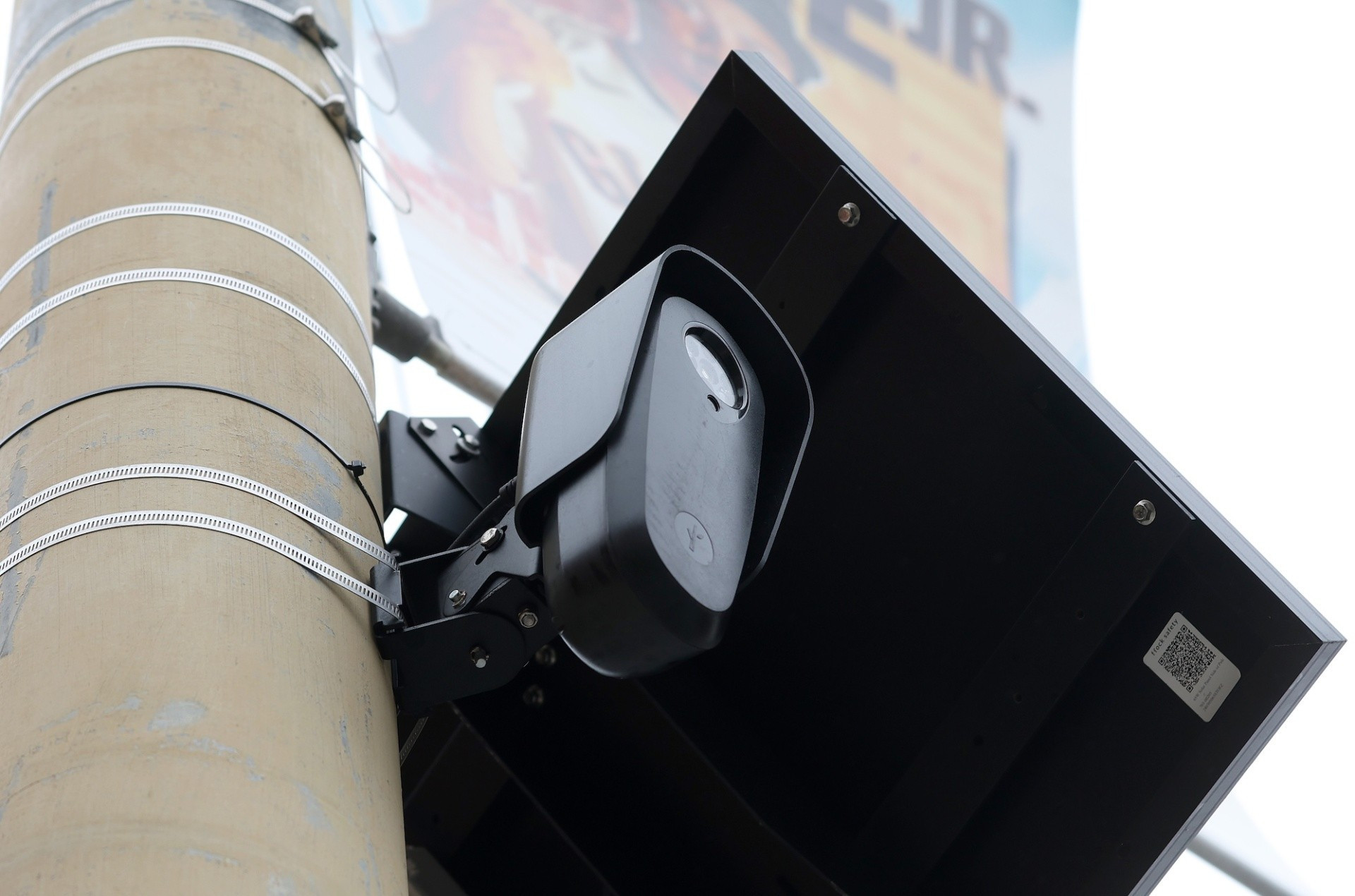
AI-powered surveillance cameras are rapidly becoming fixtures at public-school campuses across the country, prompting students, parents and civil-liberties advocates to question whether school security is evolving into a sprawling government surveillance system. Flock Safety technology—including automated license-plate readers and searchable vehicle data—is now used in more than 100 school districts, while critics warn that information collected for campus safety can potentially become accessible to law-enforcement networks far beyond school grounds. Students in Colorado and Georgia have organized efforts seeking removal of the cameras, while some districts have canceled contracts or paused their systems for review. Supporters contend the technology can identify dangerous suspects, locate missing people and help authorities respond quickly to threats, but the growing controversy raises a fundamental question: how much routine surveillance should Americans accept in the name of protecting schools?
Key Takeaways
- Flock surveillance technology has expanded into more than 100 public-school districts, allowing schools to identify license plates and vehicle characteristics, create searchable records and receive alerts when vehicles connected to suspected threats enter campus property.
- Student opposition is spreading as critics question whether cameras installed for school security are creating a broader surveillance infrastructure capable of tracking ordinary citizens and potentially sharing information across law-enforcement jurisdictions.
- Several districts are reconsidering the technology. Two Ohio school systems canceled their Flock contracts, a Nevada district paused its system for review, and students in Georgia are petitioning for cameras to be removed, demonstrating that concerns about privacy, accountability and public trust are no longer theoretical.
In-Depth
The spread of AI-enabled Flock surveillance cameras onto public-school campuses is turning a school-safety debate into an argument over government power, privacy and the normalization of constant monitoring. The systems can identify license plates and vehicle characteristics, create searchable records and alert authorities when flagged vehicles appear. Supporters argue that this gives schools and police a practical tool for locating suspects, missing people and potential threats before violence occurs.
The concern is scale. Flock technology is now used in more than 100 school districts, while students in several communities are pushing back against an intrusive surveillance network. In Alpharetta, Georgia, students are petitioning for removal of cameras installed across the district. In Ohio, Worthington and Olentangy school districts canceled their Flock contracts, with Worthington’s superintendent concluding that the limited benefits were not worth the potential loss of public trust. Clark County, Nevada, has paused use while its school police chief reviews procedures.
That reaction deserves attention. Protecting children is a fundamental public responsibility, but safety cannot become a blank check for constructing permanent surveillance infrastructure. A camera aimed at a school entrance may sound limited; a searchable network capable of following vehicles across jurisdictions presents a different constitutional and civic question.
Schools should therefore disclose precisely what is collected, who can search it, how long records survive, and which outside agencies receive access. Security technology should remain narrowly targeted, locally accountable and subject to meaningful public oversight. The burden belongs on government to prove surveillance is necessary, proportionate and constrained.
Sources
- https://www.atlantanewsfirst.com/2026/09/03/students-petition-remove-flock-cameras-alpharetta-high-school/
- https://www.wosu.org/politics-government/2026-09-01/worthington-and-olentangy-school-districts-cancel-their-flock-contracts
- https://www.fox5vegas.com/2026/08/26/clark-county-school-district-police-chief-reviewing-use-flock-cameras/
- https://www.wyso.org/news/2026-09-03/dps-leaders-say-they-dont-share-flock-camera-data-with-outside-agencies