

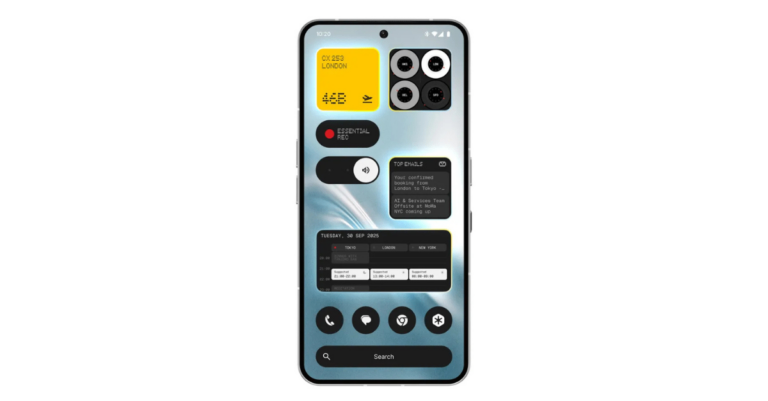
Nothing, the smartphone maker, has unveiled Playground, an AI-powered tool that lets users build mini “apps” (currently in widget form) using simple text prompts via its Essential Apps platform. Initially limited to lightweight widgets like a flight tracker or meeting brief, the system allows more technical users to customize the generated code—but for now, full-screen app support is not yet available. This launch follows Nothing’s recent $200 million funding round, and signals the company’s ambition to create a more personalized, AI-native interface layer atop Android. However, critics point out that the move is more interface innovation than true operating system change, since the underlying stack still depends on Android and similar efforts have stumbled over security and maintenance challenges.
Sources: 9to5 Google, TechCrunch
Key Takeaways
– Nothing’s Playground enables users to generate mini-apps (widgets) using natural language prompts, lowering the barrier for app creation.
– The system is built on top of Android rather than replacing it—so Nothing’s vision is more of an AI interface shell than a full operating system.
– The project faces notable risks around security, long-term maintenance, and adoption—issues that have tripped up similar “vibe coding” efforts in the past.
In-Depth
Nothing’s Playground is a bold experiment in democratizing software creation. The idea is that instead of writing code or assembling blocks, you simply describe what you want—“a mood tracker that syncs with my playlist” or “convert receipts to a weekly expense PDF”—and the system generates a widget that you can place on your home screen. More advanced users can tweak the generated code. The company positions this as the first step toward an “AI-native OS,” though the reality is more modest: it’s an AI-powered interface layer running atop Android.
That layered approach is both strength and constraint. On the one hand, leveraging Android means Nothing inherits a mature ecosystem and developer base, avoiding the impossible challenge of supplanting iOS or Android in one go. On the other hand, dependence on Android limits how much Nothing can differentiate; the more transformative the vision, the more it bumps up against the underlying platform’s boundaries. As The Verge notes, Playground “isn’t a true operating system” but rather a novel interface built on Android.
Security and maintenance are thorny challenges. Many previous attempts at “vibe coding” or no-code AI app generation have struggled to scale due to bugs, edge cases, performance issues, or vulnerabilities. Nothing acknowledges those risks head-on, emphasizing that making the system “easy to use and hard to make a mistake on” is critical. As the user base grows, patching, version compatibility, and safeguarding against malicious prompt inputs will all matter heavily.
Regarding deployment, the tool is currently limited to widget-style mini apps rather than full apps spanning multiple screens. That limitation is deliberate: Nothing says the technology isn’t mature enough for full applications yet. Still, the roadmap implies future support for conventional app formats. The first users of the feature are running Nothing OS 4.0 in beta, which itself has just launched based on Android 16 and includes enhancements like an AI dashboard. Some earlier Nothing phones are missing from the initial beta, underscoring that the rollout is being phased.
Strategically, this move reflects Nothing’s gamble to shift from being “just another smartphone maker” toward a company that can lead in blending hardware, software, and AI. The recent $200 million in funding gives them runway to explore this direction. The hope is that a vibrant community of users creating, remixing, and sharing mini-apps via something like a prompt-based marketplace (Playground) can become a competitive moat. If successful, Nothing could differentiate less by raw specs and more by how personalized and adaptive its devices feel.
But the road ahead is steep. For many users, the promise of “just say what you want and get it” will only matter if the generated widgets are reliable, performant, secure, and genuinely helpful. The shift from widgets to full apps will be a major technical test. And even if Nothing builds an elegant interface, it still must contend with entrenched ecosystems, app store rules, and consumer inertia. For now, Playground is an intriguing experiment—one that could either pave a new path or fall back into the crowded no-code rubble.