

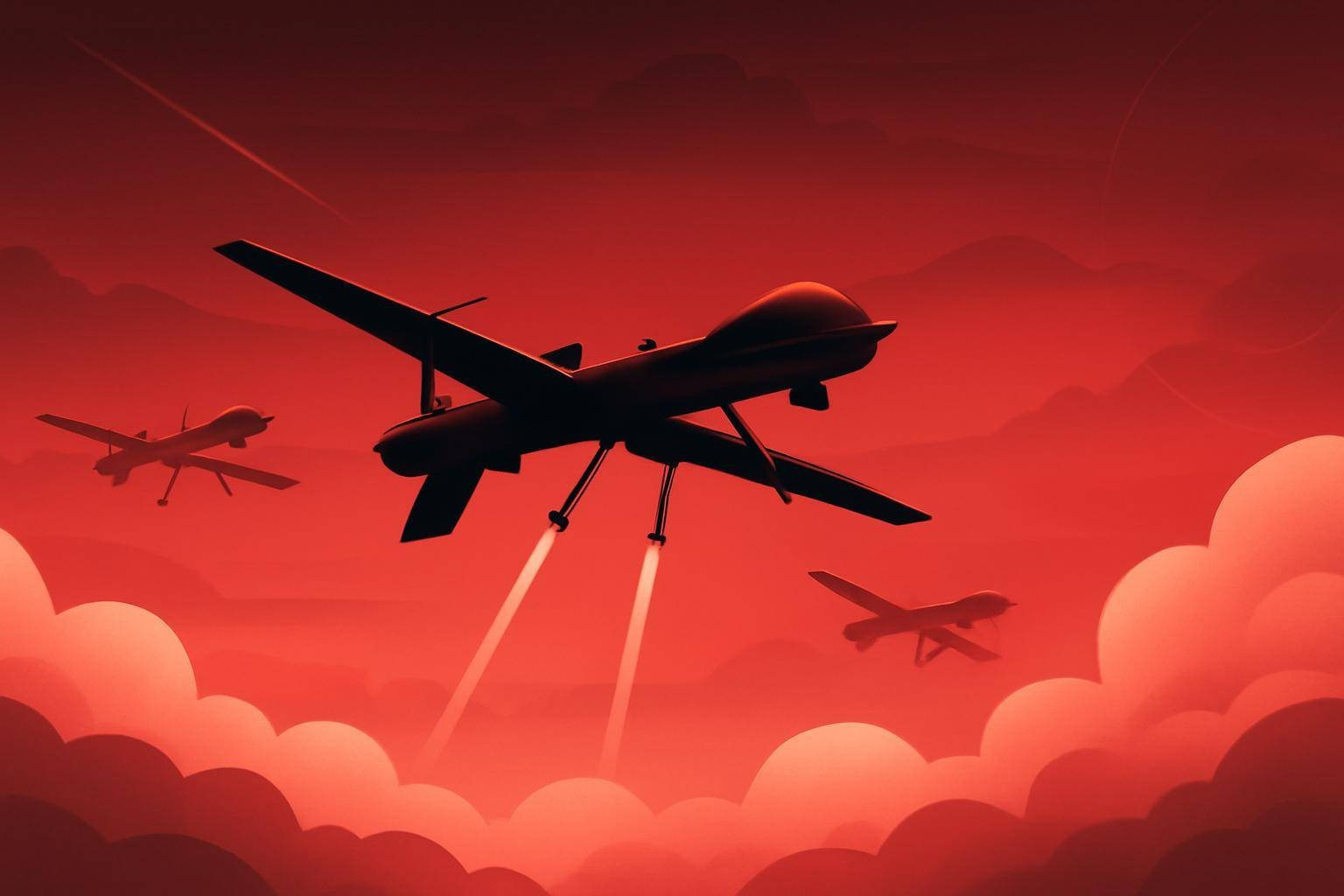
Rainmaker Technology wants the FAA to grant an exemption that would allow its small drones, especially the Elijah quadcopter, to carry cloud-seeding flares (of “burn-in-place” and ejectable types) up to 15,000 feet mean sea level, including in controlled airspace, to disperse particles and stimulate precipitation. The Air Line Pilots Association (ALPA) is pushing back, arguing that the proposal “fails to demonstrate an equivalent level of safety” and poses “an extreme safety risk,” citing issues like fire safety, trajectory modeling of ejectable parts, foreign object debris, and environmental impacts of the chemical agents.
Sources: TechCrunch, Yahoo News, AP News
Key Takeaways
– Safety vs. Innovation Tension: There’s a sharp tension between the push for innovative weather modification technologies (using drones and flares) and established safety norms in aviation. The pilots’ union sees unresolved risks related to flares, debris, and flying in controlled airspace, while Rainmaker insists that their non-public data addresses many of those concerns.
– Regulatory Precedent Matters: The FAA’s eventual ruling will likely set an important precedent for how drone-based weather modification is governed, especially in cases involving hazardous materials, high altitudes, and shared airspace with commercial aviation.
– Transparency and Oversight Are Central: Much of the disagreement rests on what information has been made public versus what’s in confidential filings. ALPA argues the public documents do not clearly show where flights occur, what altitudes are used, or how environmental impacts are mitigated. Rainmaker stresses that detailed safety protocols are already submitted in confidential documents. The FAA has responded by asking for more clarity.
In-Depth
In recent weeks, Rainmaker Technology has stirred up debate by asking the Federal Aviation Administration (FAA) for permission to carry out cloud-seeding operations using drones outfitted with flares. The proposed plan centers on the company’s Elijah quadcopter, which would deploy two types of flares—burn-in-place and ejectable—to distribute particles (notably silver iodide) designed to induce precipitation. Rainmaker intends to fly up to 15,000 feet mean sea level, navigating both controlled and controlled-at-times airspace, though it claims its flights will be constrained to predetermined safe zones and operate under strict coordination with Air Traffic Control (ATC).
However, that proposal has drawn strong objections from the Air Line Pilots Association (ALPA). The union is pressing the FAA to reject Rainmaker’s petition, characterizing it as failing to satisfy safety standards “equivalent” to those required for manned aircraft operations, and warning of “extreme safety risk.” Among ALPA’s concerns are unclear definitions of flight corridors, insufficient modeling of ejectable parts’ trajectories, the risk of debris falling to lower altitudes, potential fire hazards, and environmental risk from the chemicals used.
Rainmaker pushes back, saying that ALPA’s critique relies too heavily on what’s in the public notice rather than what’s been submitted confidentially. The startup maintains it has provided the FAA with comprehensive safety data, environmental risk mitigation plans, and coordination protocols with relevant aviation authorities. Its representatives emphasize that the amount of hazardous material carried in any given operation (silver iodide) is quite small relative to emissions from commercial aircraft, and that flares will be used only in more limited “research” phases pending full deployment of alternate aerosol dispersion systems.
At this moment, the FAA is still reviewing Rainmaker’s petition. It has issued a request for additional information regarding operations and safety details. The decision will not only determine Rainmaker’s ability to proceed, but may chart broader regulatory territory—how unmanned systems can be used for weather modification, what kinds of safety proofs are required, and how environmental and aviation concerns must be balanced. For regions suffering drought or aiming for better water management, successful use of drone-based cloud seeding could offer promise. But ALPA’s stance underscores that innovation won’t come without robust oversight; the skies are shared, and even small miscalculations at altitude can have serious consequences.