

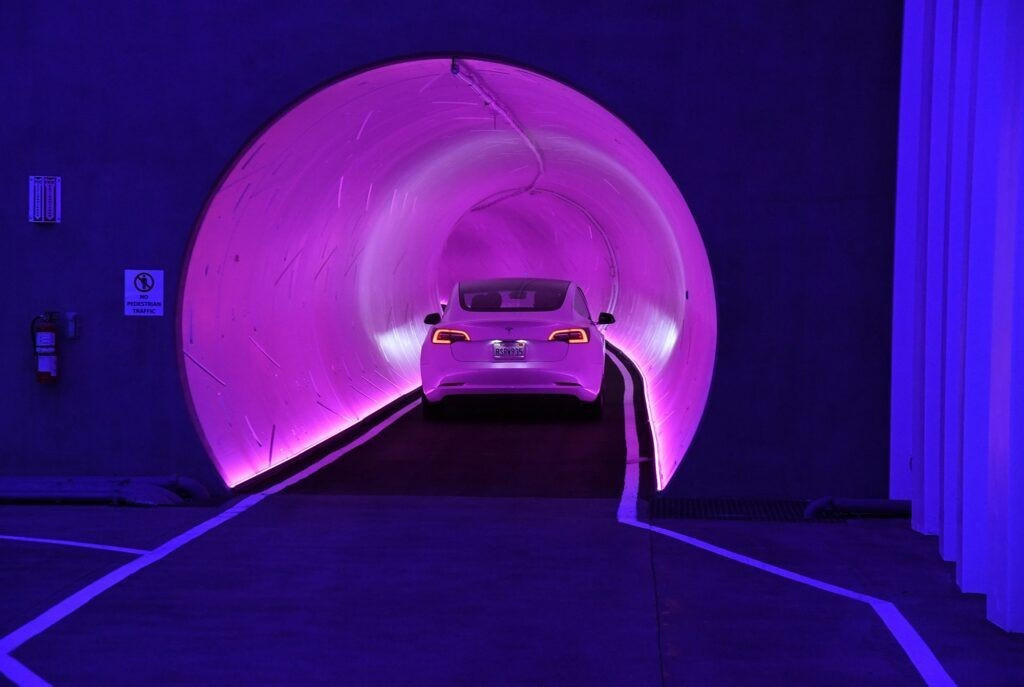
Elon Musk‘s The Boring Company has officially completed a 2.26-mile tunnel segment of the Vegas Loop, stretching from near Harry Reid International Airport northward to the Westgate Resort. This new stretch includes eight planned stations along the route, with stops at places like Virgin Hotels and the Hughes Center. The broader vision is a 68-mile network with over 100 stations designed to ease traffic congestion in Las Vegas and provide rapid, underground transit between major sites. While supporters hail this as a milestone for urban transit innovation, critics raise questions about safety, oversight, and whether such systems can deliver on promises in terms of speed, cost, and capacity.
Sources: WebPro News, City Cast Las Vegas, The Boring Company
Key Takeaways
– The new tunnel segment connects the airport to Westgate, adding eight stations and advancing the Vegas Loop’s planned growth toward a full 68-mile system.
– There is positive momentum, including public/private collaboration, but concerns remain around safety, regulatory oversight, cost effectiveness, and real-world passenger capacity.
– The project is part of a wider trend of Musk’s Boring Company pursuing similar loops (e.g. Nashville) and pushing subterranean transit as an alternative to traditional surface transit infrastructure.
In-Depth
The completion of the 2.26-mile tunnel from near Harry Reid International Airport to Westgate Resort marks one of the most tangible breakthroughs yet for The Boring Company’s vision of subterranean transit in Las Vegas. Dubbed part of the “Vegas Loop,” the new tunnel is just one component of a sweeping infrastructure ambition: a 68-mile, more than 100-station network connecting key hotspots like casinos, resorts, downtown, the airport, convention centers, and possibly more. With eight new stations planned on this recently completed stretch—Virgin Hotels, Hughes Center, among others—the aim is to reduce surface congestion, speed up travel times, and provide an alternative mode of transit in one of America’s busiest tourist corridors.
The engineering behind this also deserves attention. The tunnel was bored by a machine called Prufrock-1, which has already completed multiple tunneling tasks in the Las Vegas area. One of the touted innovations is a tunneling method that reduces surface disruption—by “porpoising” out of the ground rather than relying on large crane lifts or retrieval pits. This could represent cost savings, speed gains, and less interference with city operations.
Still, not everything is settled. There are remaining issues around safety regulation: how emergency access will work, what kind of ventilation and fire suppression systems are in place, how oversight bodies will monitor risk, and whether stations and tunnel design will meet stringent life-safety and evacuation standards. Las Vegas residents and experts are also watching closely to see whether promised passenger capacity and travel time savings actually materialize in daily use. Additionally, the cost of expanding to full scale—both financial and in terms of regulatory approvals—remains significant. For example, The Boring Company claims the Vegas Loop is intended to serve up to 90,000 people per hour in its final form.
It’s also part of a broader pattern. Similar loop-style transit is being proposed elsewhere, like the Music City Loop in Nashville (connecting downtown to the airport) that is expected to be fully privately funded and operational in the next year or two. Comparative projects will likely provide useful lessons (both positive and negative) about feasibility, public acceptance, safety, cost overruns, and regulatory compliance.
This project embodies both promise and risk. Its promise lies in offering an alternative transit path for congested road networks, harnessing technology to reduce surface delays and perhaps lowering environmental impacts if electric vehicles are used throughout. But the risk side shouldn’t be ignored: large infrastructure projects often underdeliver or cost more than budgeted; safety in underground transit is non-negotiable; and oversight (both public and private) must be rigorous. The success of this tunnel segment isn’t just about finishing the bore—it will be judged by how well it works for passengers, how safe it is, and how sustainable its expansion becomes.