

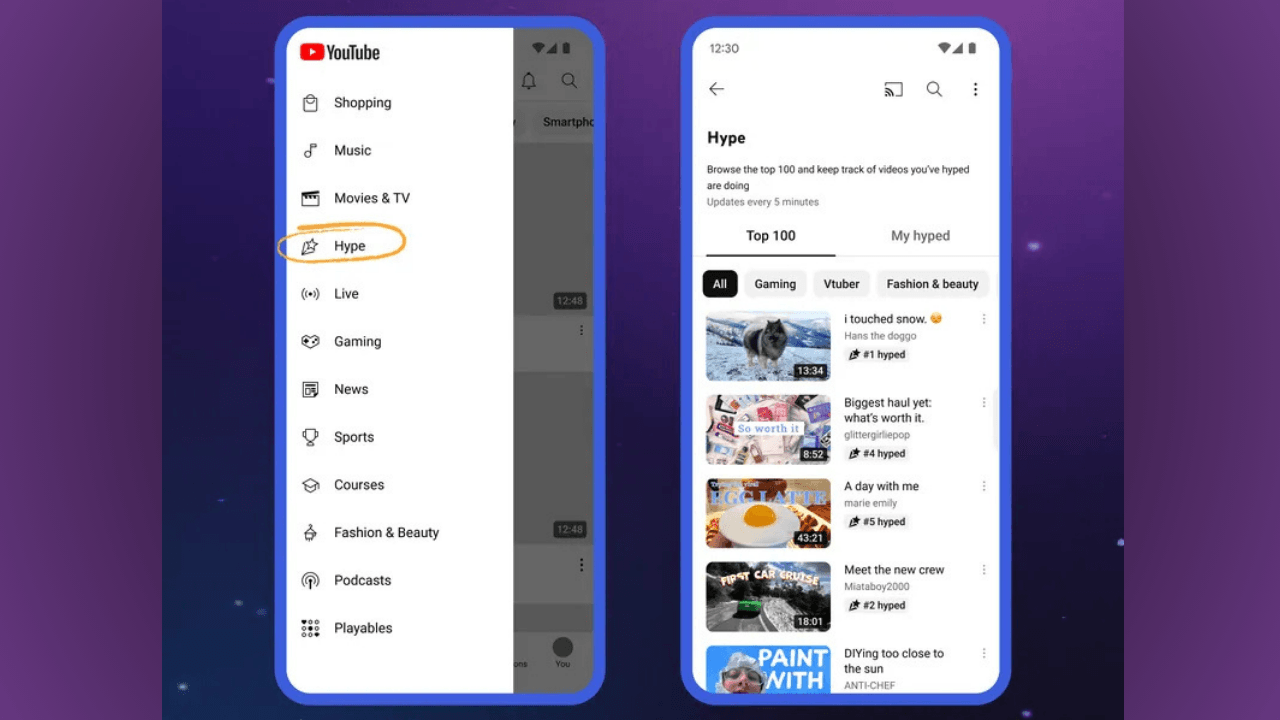
This week, YouTube has rolled out its “Hype” feature to a global audience—now available in 39 countries including the U.S., U.K., Japan, South Korea, India, and Indonesia—calling on fans to empower emerging creators with under 500,000 subscribers by using a Hype button located under the Like button to boost their visibility. This initiative, first launched at the 2024 “Made on YouTube” event, allows viewers to hype up to three videos per week, earning creators points that influence weekly Explore-tab leaderboards, with smaller channels receiving a proportionally greater boost for fairness.
Sources: YouTube Official Blog, TechCrunch, Digital Music News
Key Takeaways
– Fan-powered promotion: Viewers can directly support creators they love by using “Hype,” activating up to three “hypes” per week to help surface content into discovery channels.
– Built for fairness: Smaller creators get a larger multiplier effect on hype, helping level the playing field against bigger channels.
– Global rollout and future plans: Now live in 39 countries, YouTube plans to expand Hype even further, with upcoming enhancements like category-specific leaderboards and new fan engagement features.
In-Depth
In a restrained yet notable shift toward democratizing content discovery, YouTube has quietly expanded its “Hype” feature globally, now live in 39 countries across major markets. This is a subtle but meaningful nod to creator equity—offering fans of small and emerging channels a tangible mechanism to lift voices that might otherwise be drowned out by algorithm-driven dominance. By allowing up to three hypes per viewer each week, the platform gently hands power back to the community.
The structure conveys intentional parity: creators with fewer subscribers receive a proportionally greater boost, ensuring that a single hype can have meaningful impact where it’s needed most. Rather than chasing virality or sponsored promotion, these small creators gain traction through genuine fan enthusiasm—something that bottoms-up support systems should encourage, especially in spaces dominated by mass reach.
Importantly, the rollout avoids fan fatigue or abuse by keeping hyping limited per user, while rewarding consistency with badges and leaderboard placements. This lightly conservative design—tempering novelty with structure—aligns nicely with principles of meritocratic discovery and community-driven growth.
Looking ahead, YouTube’s promise of interest-based leaderboards and more nuanced Hype tools suggests that the platform is leaning into incremental, manageable reforms over sweeping change. For creators and their supporters, this means opportunities to foster genuine visibility, while maintaining the platform’s order and fairness.
In sum, YouTube’s global roll-out of “Hype” signals a modest, structured step toward empowering creators without disrupting core mechanics—an encouraging move for those who value both innovation and equity in online content.