

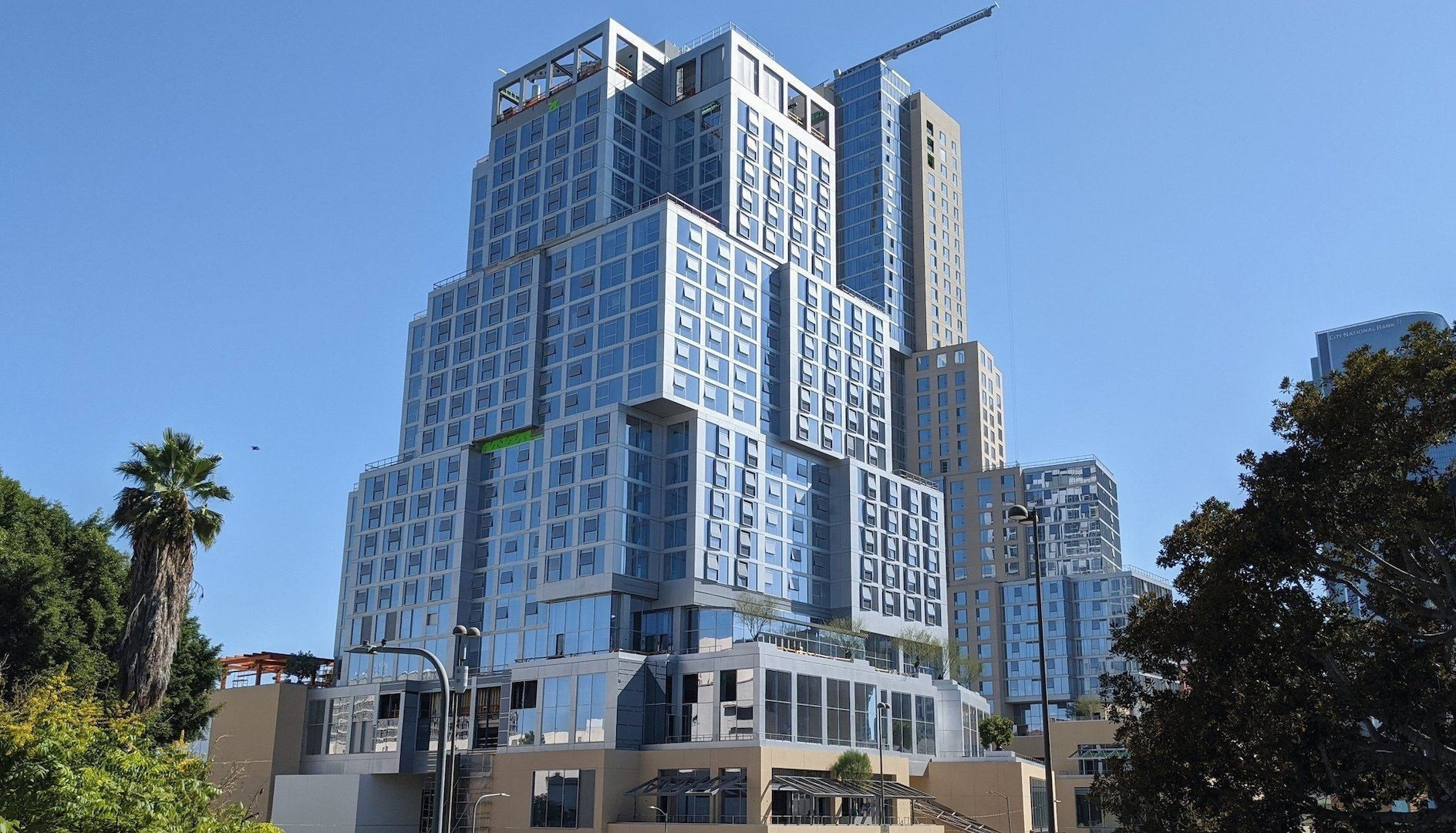
A groundbreaking museum set to open in Los Angeles, has positioned itself as the first major institution of its kind dedicated to artificial-intelligence-generated art and immersive spatial experience. The museum — billed as the world’s first “Museum of AI Arts” — will feature a central installation called the Infinity Room, created by media artist Refik Anadol, that uses advanced generative AI models along with multi-sensory design (including AI-generated scents) to dissolve the boundaries between human perception and machine-derived data. The facility, located within the Grand LA complex (designed by architect Frank Gehry) and developed in collaboration with architecture firm Gensler and sustainability consultancy Arup, spans over 2,300 m² and includes five discrete galleries with a strong emphasis on research and development of AI in the arts. Sources suggest that the opening has been pushed back to spring 2026. The museum intends not just to display artworks but to form a research hub for “human-machine collaboration” in cultural institutions, while blurring traditional lines between art, architecture and algorithmic computation. (See links below.)
Sources: Los Angeles Times, Parametric Architecture
Key Takeaways
– The museum establishes a new paradigm by explicitly replacing or augmenting human-centric curation with generative AI systems designed to simulate physical spaces and sensory environments.
– The Infinity Room project highlights the increasing convergence of art, architecture, sustainability and computational design—signaling that museums may become hybrids of cultural display and tech R&D hubs.
– The opening delay to spring 2026 and the ambitious build-out of multi-sensory AI systems (including an AI “Large Nature Model” for scent generation) underscore both the technical complexity and investment risk inherent in blending cutting-edge tech with public cultural infrastructure.
In-Depth
It’s easy to underestimate how much the art-world’s next chapter may depend on algorithmic design rather than paintbrushes—or even curators. The upcoming museum in Los Angeles isn’t just another gallery; it’s positioning itself as a full-blown experiment in what happens when artificial intelligence, human imagination and architecture converge. At the heart of this experiment is the Infinity Room, an immersive installation by Refik Anadol that expands well beyond mirrored chambers or projected visuals: here the walls, the air, the smell of the space are all data-driven, generative, adaptive. The installation uses what the developer terms “World Models” (AI systems that simulate physics and spatial behaviour) and a “Large Nature Model” (trained on ethically-sourced environmental data to generate scent) to craft multi-modal experience. The result: a gallery where a visitor might step into what feels like boundless space, shifting soundscapes, scent currents and visuals that respond to the architecture itself, not just to the human occupant.
From a conservative-leaning perspective, the project raises interesting questions about the role of the public institution, taxpayer investment, and cultural priorities. If a museum is essentially becoming a high-tech showcase or R&D facility, how does that align with traditional missions of preservation, access, and education? The building is being developed in the Grand LA complex touted as an architectural anchor (with Gehry’s signature), backed by a major developer and architectural firm. The scale—2,320 m² gallery space plus research labs—means significant upfront costs, both in construction and in the high-end hardware and software required for real-time generative AI, scent-and-sound systems, and immersive architecture. Opening has already been delayed to spring 2026, which suggests unforeseen complexities, cost overruns or technical integration challenges. One could argue that public-private risk shifts more toward the private developer here, but if municipal incentives, zoning benefits or tax-subsidies are involved, taxpayers might indirectly underwrite the venture.
Yet, the promise is compelling: rather than simply viewing paintings or sculptures, visitors become part of a living data sculpture where human experience intertwines with machine creativity. The museum doesn’t intend to remain static; it defines itself as “research and development platform dedicated to AI practices that are redefining the parameters of computational art for the next decade.” In other words, this isn’t solely a cultural monument—it’s a technology incubator. That dual purpose may attract tech-savvy donors, venture funds, corporate sponsorships and cross-disciplinary teams (artists, engineers, data scientists, architects). For local and regional economies such a project could become a magnet for talent, tourists and corporate exhibitions.
Of course, there are challenges. AI-driven art raises questions of authorship, curation, and authenticity—who is the “artist” when algorithms generate the visuals and scents? How is ownership and intellectual property managed? Will the human guest feel served or subsumed by machine-driven environments? From a cost-benefit point of view, will the museum draw consistent visitor numbers beyond the launch hype? Will it sustain public access if high tech demands drive up operational costs? These are valid prudential questions that any conservative observer might pose. Still, if it succeeds, this museum could be a blueprint for 21st-century cultural institutions—where the frontier of art is not just what we see or feel, but what we compute.
In short, the upcoming Los Angeles museum marks a pivot: from passive spectatorship toward immersive algorithm-driven encounters. It embraces the age of AI not only as tool but as collaborator. For those watching cultural infrastructure, urban development and technological innovation, it may signal where the low-res art-gallery model gives way to hybrid experiential tech-culture arenas. Time will tell whether the substantial investment pays off—in cultural influence, visitor engagement and public value.