

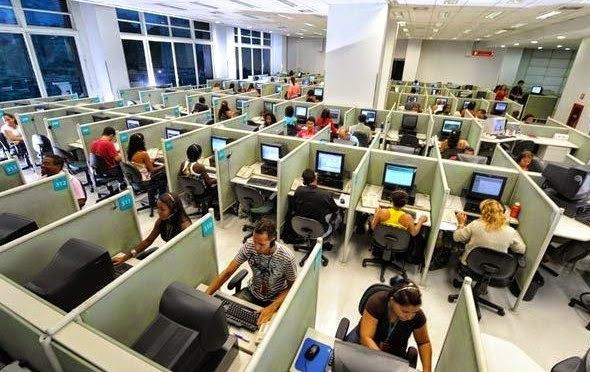
A quiet yet seismic shift is underway in the customer-service world: voice and conversational AI are automating large swathes of the call-center function, threatening the livelihoods of millions of agents while simultaneously redefining the structure of work. According to one recent article, voice-AI systems now can handle many of the routine inquiries once reserved for human agents, and analysts project that within a few years the industry could face large-scale displacement. At the same time, other research shows that AI deployment is less about wholesale replacement and more about augmentation — human agents are evolving into more strategic, empathetic roles, while machines take on the repetitive tasks. Meanwhile, productivity gains are real and companies are moving fast, but risk factors—such as workforce burnout, regulatory pressure, and mis-managed transitions—loom large. The interplay of efficiency, human value, and job-security is shaping a future in which call-centers may no longer resemble what they once were.
Sources: Forbes, Calabrio.com
Key Takeaway
– AI adoption in contact-centers is already widespread: a recent survey found 98 % of centres use AI tools, yet many organisations struggle with the human-factors of deployment (trust, role re-alignment, emotional workload).
– The agent role is shifting from low-skill, high-volume execution to higher-value, emotionally-nuanced tasks — human empathy and judgement remain key even as machines take on the standard queries.
– The job-displacement threat is real but uneven: while routine tasks are being automated, new roles are emerging in oversight, training, analytics, and human-AI coordination; successful transitions depend on reskilling and leadership strategy.
In-Depth
It’s an era of transformation for the traditional call-centre, where thousands of headsets once clicked on the hour and agents toggled between scripts and menus. Now, powerful voice-AI systems are steadily encroaching on that landscape. According to an article by WebProNews, voice and conversational AI are automating interactions that once required human touch, raising “alarms about job security” in an industry employing over three million in the U.S. alone. Those systems are purportedly capable of handling a high volume of interactions, detecting sentiment, and delivering responses in real time — fundamentally altering the human–machine interface.
At first glance, this appears like a bleak forecast for call-centre agents: the machines are coming, and the jobs may vanish. Yet, the nuance lies in how this transformation unfolds. One comprehensive report by Calabrio shows that 98 % of contact-centres have adopted AI tools, but few have mastered how to integrate them effectively with human agents. The study points to a disconnect: although technology is mature, the supporting practices — especially around emotional-intelligence training, agent-experience design, and change-management — lag behind. What that means is simple: efficiency gains are real (faster throughput, automated summaries, 24/7 availability), but without human-centred design the benefits may be shallow or short-lived.
In a blog post featured by Forbes, the authors explore how AI impacts call-centre jobs. Their conclusion: machines won’t—and arguably shouldn’t—fully replace humans anytime soon. Instead, they foresee a hybrid model where AI takes the routine, and humans do the heavy lifting of empathy, nuance, escalation and complex problem-solving. That human dimension remains pivotal because many callers don’t just want an answer — they want to feel heard. From a conservative vantage point one can acknowledge both the inevitability of technology and the enduring value of human labour. The risk, however, lies in poor leadership: if firms treat AI purely as a cost-cutting tool and don’t invest in re-skilling, oversight or career pathways for agents, the fallout will be real — not just for workers, but for customer-experience, brand loyalty and workforce morale.
Looking ahead, the call-centre of 2030 will likely look different: fewer rows of desks, fewer headsets tied to scripts, more human–machine teams where agents supervise, interpret and intervene. For workers, this means development of emotional-intelligence, analytics-adjacent skills, and comfort working alongside AI. For management, it means balancing productivity gains with human dignity and labour continuity. The most successful firms will be those that don’t simply replace humans with machines, but enable humans plus machines—pragmatically, respectfully, and with foresight. In a world where automation is advancing, preserving the human dimension is not just morally sound — it is business-smart.