

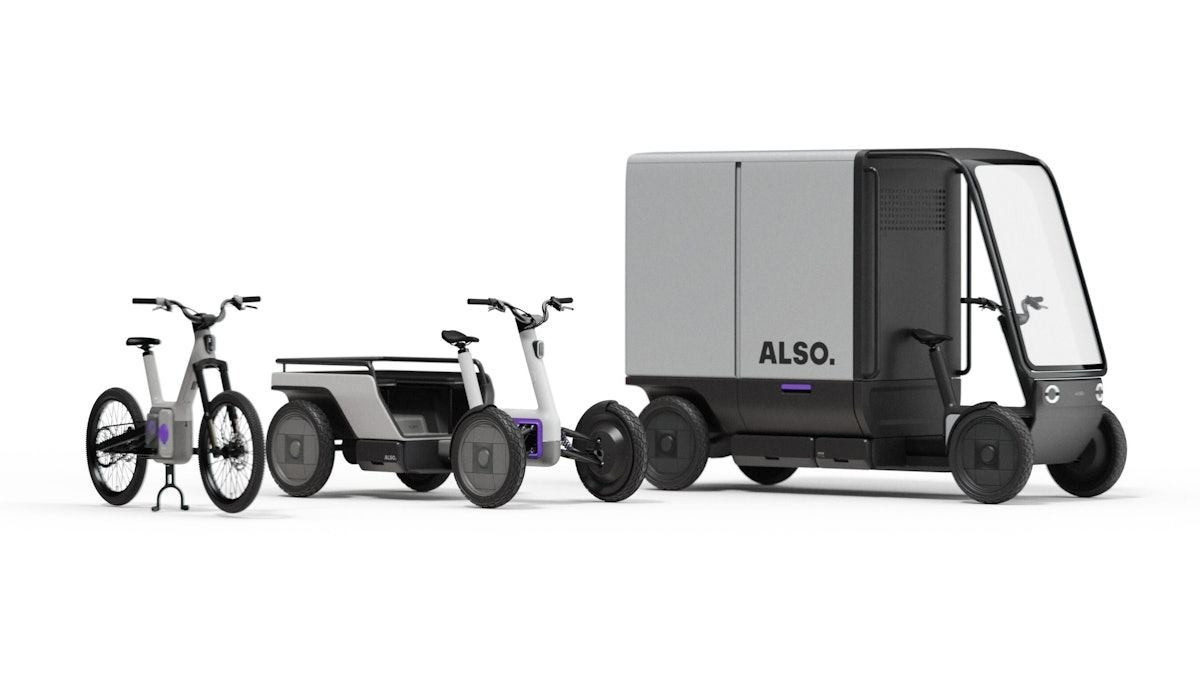
Retail giant Amazon is doubling down on its urban-delivery logistics strategy by partnering with micromobility startup Also — a spinoff of electric-vehicle maker Rivian — to acquire thousands of pedal-assist, four-wheel cargo quads. The vehicles, branded as the TM-Q, will carry over 400 pounds of cargo yet navigate bike lanes and tight urban environments across the U.S. and Europe with greater ease than traditional vans. The deal builds on Amazon’s existing fleet investments (including tens of thousands of Rivian electric vans) while signaling a shift toward smaller, more flexible, lower-emission delivery units designed for the last mile. According to the press release from Also, Amazon already operates more than 70 micromobility hubs in major cities and views these cargo quads as a way to reduce traffic, curb-access constraints and noise in dense areas. With deliveries expected in spring 2026, the initiative suggests Amazon is preparing for stricter urban regulation of delivery fleets and rising cost pressures on conventional vans.
Sources: TechCrunch, The Verge
Key Takeaways
– Amazon’s deal with Also to deploy thousands of TM-Q pedal-assist cargo quads expands their former van-centric logistics model into micromobility for dense urban areas.
– The four-wheel cargo bikes combine van-like payload capacity (400+ lbs) with bike-lane efficiency, enabling curb access and reduced congestion in city centers.
– This move positions Amazon ahead of tightening urban delivery regulations, rising last-mile costs and growing competition — signalling that the future of parcel logistics may be increasingly about compact, agile vehicles rather than only large trucks and vans.
In-Depth
Amazon’s newly announced partnership with micromobility firm Also (spun out from Rivian) marks a strategic and operational shift in how the e-commerce juggernaut plans to manage its last-mile delivery network. Rather than relying exclusively on large electric vans or traditional diesel trucks, Amazon is moving toward smaller, pedal-assist cargo quads that can operate inside bike lanes and narrow urban corridors — the TM-Q model being central to this initiative. The reasoning is straightforward: In dense urban areas, curb access is tight, vehicle parking is scarce, traffic slows van routes, and regulatory pressure is increasing on large delivery vehicles. By contrast, a pedal-assist quad is narrower, more maneuverable, consumes less space, emits no tailpipe pollutants, and can stage closer to customers.
From a business perspective, Amazon already has a relationship with Rivian: the electric delivery van program was a first-mover in large-scale e-fleet transition. Now, leveraging that operational data, Amazon is extending the fleet architecture down to the micro-mobility level. According to Also’s press release, Amazon has more than 70 micromobility hubs in U.S. and European cities — infrastructure that can host and service smaller delivery vehicles like the TM-Q. The payload figure cited for the quad—over 400 pounds—suggests it is capable of carrying significant volume, though still lower than full vans; the trade-off is accepted because operational cost per stop and central-city suitability is dramatically improved.
From a conservative outlook, this move makes sense on multiple fronts: cost containment (less fuel/electricity use, potentially lower maintenance, smaller operator labour cost per unit), regulatory hedging (less likely to be restricted under emissions or congestion rules), and scalability (deployment in high-density regions may yield higher stops per hour, smaller units being easier to stage). But it also comes with challenges: integration of new vehicle types into routing, driver training, formal and informal rights of way (bike lanes vs. roadways), safety regulation, and the willingness of municipalities to accommodate these hybrids. There is also the matter of switching from purely truck-based logistics systems to more fragmented fleets combining large vans, smaller EVs, and now pedal-assist quads — operational complexity rises.
Yet Amazon appears to believe that the gains outweigh the complexity. Urban delivery is becoming more expensive and difficult: curb space is limited, traffic slows routes, city governments are taxing or banning high-emission vehicles, and consumers expect faster service. A system that uses micro-vehicles for short, dense-area stops, and reserves larger vans for suburban and long-haul legs, could deliver higher efficiency. What’s particularly telling is the scale: this is not a pilot of a few dozen quads, but “thousands” of units across continents — suggesting Amazon views this as a main-stream component of its fleet, not just an experiment.
For investors, regulators, and incumbent logistics operators, the implications are notable. For Amazon, being an early mover into urban micromobility gives them a head-start in networks, partnerships, public-policy goodwill and infrastructure. Rivian’s spin-out Also gains credibility by landing Amazon as a major fleet customer — a big win when conventional consumer e-bike markets are saturated and price-sensitive. For city governments, more companies deploying smaller delivery machines may align with goals of reducing congestion and emissions—but questions will arise around safety, rights of way, cargo lane competition, and the regulatory classification of these vehicles. Ultimately, this deal indicates that last-mile logistics may increasingly be a mix of large vehicles for the bulk of volume and smaller electric or pedal-assist machines for the urban core — a two-tier system. Amazon’s aggressive posture here suggests they believe controlling the delivery edge in cities is vital for sustaining margins and growth in an era of rising costs and regulatory pressure.