

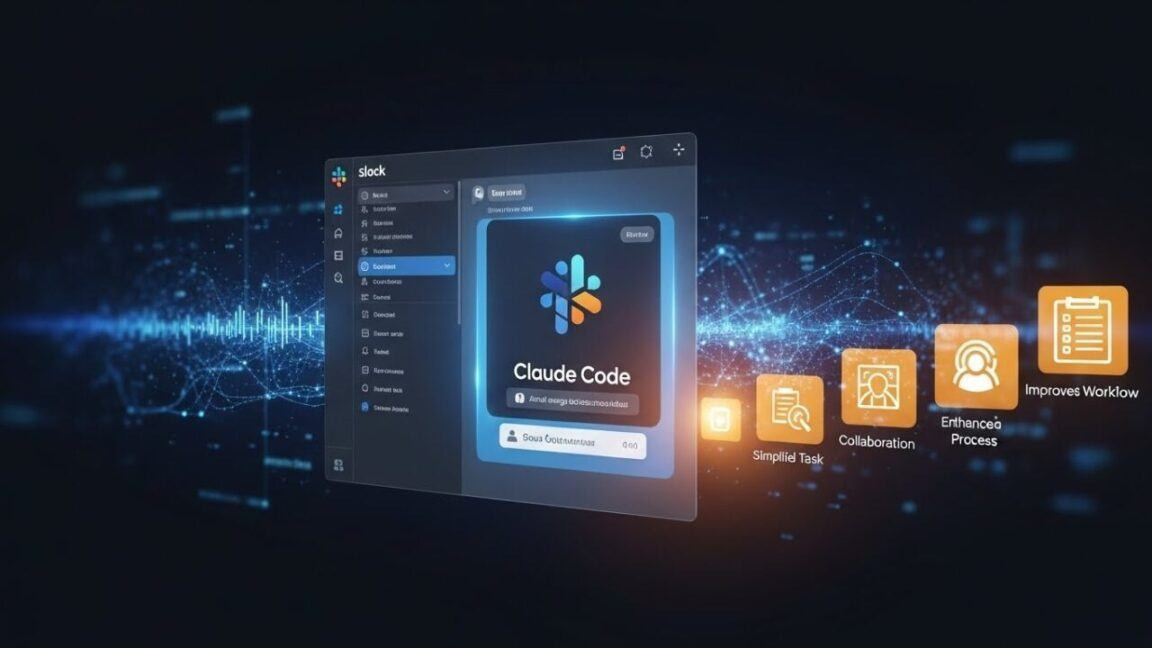
Anthropic has launched a beta integration of its AI coding assistant, Claude Code, inside Slack, enabling developers to tag @Claude in Slack conversations to automatically start a coding session that uses the context of discussions, bug reports, and feature requests to generate, edit, debug, test, and even propose pull requests for software code without leaving the chat environment. The feature deepens Slack-embedded AI by turning natural team exchanges into actionable coding tasks, automatically selecting relevant authenticated repositories, and posting progress and results back to the thread. Deployment requires installing the Claude app into a Slack workspace, authenticating with a Claude account, and having access to Claude Code on the web, with the integration currently in research preview rather than general availability. This move reflects a broader trend of embedding AI tools deeper into everyday developer tools and collaboration platforms to reduce context switching and speed up engineering workflows.
Sources: The Verge, VentureBeat
Key Takeaways
– The Slack integration lets teams convert conversation into live coding actions by tagging Claude to trigger autonomous development tasks.
– Users must install the Claude Slack app, authenticate accounts, and enable Claude Code on the web to use the feature, with limitations based on plan type.
– This represents a shift toward workflow-centric AI that lives inside collaboration tools, aiming to speed up engineering processes and reduce friction.
In-Depth
Anthropic’s rollout of Claude Code inside Slack is a noteworthy evolution in how AI tools are integrated with the day-to-day workflow of software teams. Rather than confining AI coding assistants to separate web portals or integrated development environments (IDEs), this update moves Claude’s capabilities into the very space where engineers already discuss bugs, features, and project priorities. The basic idea is simple but powerful: when someone on a team mentions @Claude in a Slack channel or thread with a programming-related request, the system automatically detects the intent and spins up a full Claude Code session. That session isn’t just about spitting out snippets; it taps into the context of the conversation and an authenticated code repository to understand what’s being asked and take real development actions—debugging code, proposing fixes, running tests, and returning results back into the team’s thread.
This approach reduces the friction of switching between communication and coding contexts. In a typical workflow, an engineer might read a Slack message about a bug, switch to an IDE, manually reconstruct the relevant context, and then begin fixing it. Claude’s Slack integration aims to collapse those steps by letting the conversation itself be the prompt. That means developers can stay focused on collaboration while Claude handles heavy lifting. The integration also automatically selects the appropriate repository and uses surrounding discussion—like error logs or stack traces shared in Slack—to guide its actions. Progress updates are posted right into the thread, and links to the full session and pull requests help maintain transparency and traceability.
To actually use this feature, organizations need to install the official Claude app from Slack’s App Marketplace and ensure that users authenticate their Claude accounts and have access to Claude Code on the web. Because the integration is still in a research preview phase, some rough edges and limited features are expected as Anthropic tunes the system. Moreover, not all Slack plans may support the integration immediately, since access typically requires Team or Enterprise tiers and appropriate Claude subscriptions.
Strategically, this move reflects a broader trend toward workflow-centric AI, where the focus isn’t just on standalone capabilities but on where and how those capabilities are embedded into existing tools. By situating Claude Code in Slack, Anthropic is betting that the next frontier of AI adoption isn’t just better models but deeper integration into collaboration platforms. For development teams, this could mean faster turnaround on bugs and features, less context switching, and a smoother bridge between discussion and implementation—so long as teams maintain good discipline around code review and validation. While the tool is powerful, it also raises questions about governance, review processes, and how developers balance reliance on AI assistance with maintaining human oversight. Overall, Claude Code’s Slack integration is an important step toward more seamless, AI-augmented software workflows.