

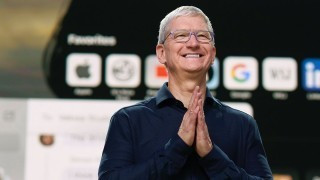
Tim Cook, CEO of Apple Inc., revealed during the company’s Q4 2025 earnings call that Apple remains open to mergers and acquisitions (M&A) in order to accelerate its artificial-intelligence (AI) roadmap. The company continues pursuing a three-pronged strategy: building internal foundation models, partnering with third-party large language model providers, and considering strategic buys when they “advance our roadmap.” According to an announcement via TechCrunch, Cook reiterated that Apple is “open to pursuing M&A if we believe it will advance our roadmap.” Additional coverage from The Verge highlights Apple’s intent to integrate more third-party AI tools into its ecosystem over time, while the Daily Times confirms the comments and notes that Apple’s next-generation AI-powered Siri is slated for a 2026 launch.
Sources: TechCrunch, The Verge
Key Takeaways
– Apple is shifting from its traditionally cautious acquisition strategy and is now explicitly stating it is open to M&A opportunities if they help speed up AI development.
– The company continues to rely on three AI pathways—internal development, external partnerships, and acquisitions—with external integrations (like third-party LLMs) becoming increasingly important.
– With next-generation Siri scheduled for 2026 and Apple under competitive pressure from rivals like Microsoft Corporation and Alphabet Inc., this openness to M&A underscores Apple’s recognition that organic growth alone may not suffice in the rapidly evolving AI landscape.
In-Depth
Apple’s recent remarks signal a meaningful shift in its corporate strategy under Tim Cook at a time when the AI juggernaut is rolling full steam ahead across the tech sphere. Historically, Apple has favored internal development and incremental acquisitions rather than bold, transformative buys. By publicly declaring that it is “open to pursuing M&A if we believe it will advance our roadmap,” Apple is acknowledging that competing in the AI arena may require more aggressive tactics than the company has employed in the past.
During the Q4 2025 earnings call, Cook made clear that Apple’s AI approach remains anchored in three pillars: building its own foundational models, engaging with third-party large language model providers, and strategically acquiring companies that fill gaps or accelerate progress. The willingness to consider acquisitions—even of larger size than the smaller ones Apple typically does—marks a departure from its conservative posture. According to the Daily Times coverage, Apple has already purchased seven small companies this year, albeit not all AI-focused, and is now signaling it’s willing to broaden its lens to acquisitions that deliver strategic value.
There’s a good reason for this shift: Apple is under pressure. Rivals such as Microsoft and Alphabet are investing massively in AI, data centers, and infrastructure, and Apple, despite robust overall financials, has been viewed as playing catch-up in this domain. The Verge’s reporting notes that Cook emphasized the intent to embed more third-party AI tools into Apple’s ecosystem—such as integrations with ChatGPT, Google Gemini, or others—to bolster Apple Intelligence and upgrade Siri’s capabilities. With the next-generation AI-enhanced Siri slated for 2026, Apple appears to be racing against time to ensure it doesn’t cede ground in what is increasingly being framed as a device- and ecosystem-level battle.
From an investor and strategic vantage, this development yields a few implications. First, Apple’s openness to M&A may increase the likelihood of a larger, headline-grabbing acquisition in the AI space—though the company remains cautious in its public posture. Second, the shift suggests Apple anticipates that purely organic development will not meet its AI ambitions within the timelines it believes necessary. Third, for start-ups and smaller firms in the AI sector, Apple’s statement is a signal that it may be more active as an acquirer or partner, which could influence valuations, exit strategies, and competitive dynamics in the AI start-up ecosystem.
For users and consumers, this could lead to more rapid rollout of advanced AI features within Apple devices and services. If Apple leverages acquisitions to fill missing pieces—say, in specialized AI chips, large language models, or conversational AI—it could accelerate the evolution of Siri from a device assistant into a richer, context-aware companion. Apple’s emphasis on privacy and device integration means the way it deploys AI might differ from rivals, focusing less on cloud-centric mass data aggregation and more on on-device intelligence and selective cloud augmentation.
Politically and economically, the move aligns with broader U.S. tech strategy. Apple’s investment in AI and willingness to buy may reflect a recognition that leadership in AI has national competitiveness implications. With Apple’s large cash reserves and strong consumer brand, the company is well-positioned to play a larger role in shaping how AI is embedded into everyday electronics—not just phones, but wearables, home devices, and potentially automotive systems.
In short, Apple’s flagged openness to M&A in the AI domain is more than a subtle tweak—it may signal a strategic pivot as the company positions itself to compete head-on in the AI era. For stakeholders—from investors to consumers to potential startup targets—it’s a development worth watching closely.