

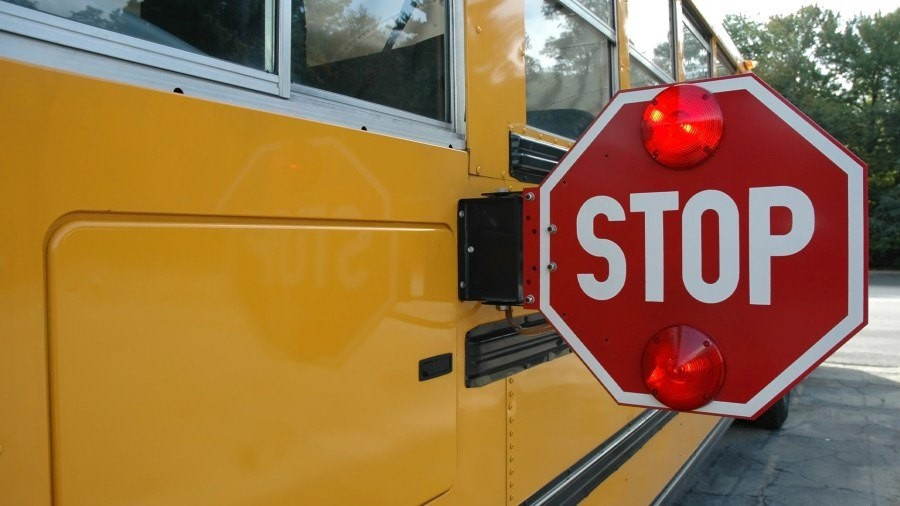
Federal safety regulators have opened an investigation into Waymo LLC following an incident in Atlanta where one of its fully autonomous robotaxis reportedly drove around a stopped school bus that had its red lights flashing, stop-arm extended, and children disembarking. The National Highway Traffic Safety Administration (NHTSA) said the vehicle initially stopped but then maneuvered around the front of the bus while operating without a human driver or onboard safety monitor. The probe covers approximately 2,000 of Waymo’s fifth-generation automated vehicles and will assess how the system handles school bus-related traffic laws and whether similar incidents have occurred. Waymo says it has already issued software updates in response and is cooperating with the investigation. The incident raises fresh concerns about the pace at which autonomous-vehicle firms are scaling commercial operations amid evolving regulatory oversight.
Sources: Reuters, Car & Driver Magazine
Key Takeaways
– Federal regulators are actively investigating Waymo’s autonomous vehicles following a clear traffic-law incident involving a school bus — highlighting potential gaps in how driverless systems interpret critical road safety signals.
– The scale of the probe (≈ 2,000 vehicles) suggests regulators believe this may not be an isolated incident and are examining systemic software or sensor-based shortcomings in Waymo’s automated driving system.
– Waymo has responded by issuing software updates and emphasising safety, but the incident underscores reputational and regulatory risks for autonomous vehicle companies at a time of aggressive market expansion.
In-Depth
The autonomous-vehicle industry is facing a significant regulatory moment as Waymo’s expansion meets a sharp compliance spotlight. In Atlanta, a robotaxi operated by Waymo approached a stopped school bus with its red lights flashing, extended stop-arm and disembarking children. The vehicle initially came to a halt but then proceeded to manoeuvre around the front of the bus and continue down the road — all without a human safety driver present. The NHTSA has launched a preliminary investigation into about 2,000 of Waymo’s fifth-generation vehicles, evaluating how its system recognises school-bus stop permits, flashing lights, children in crosswalks, and other critical signals that human drivers typically respond to automatically.
What this development signals is a regulatory reckoning for a company long seen as the leader in autonomous ride-hailing. Waymo boasts extensive real-world mileage and low crash-rates compared to human drivers, yet this incident brings to light the critical boundary where machine logic meets human rules — especially those designed to protect children. Waymo’s explanation notes that the bus partially blocked the driveway the robotaxi was exiting and that the flashing lights and stop-arm were not visible from the vehicle’s approach angle. While that may be technically accurate, the broader question is the system’s ability to anticipate, detect and respond to vulnerable road-users in complicated real-world scenarios.
From a conservative perspective, this incident underscores the need for caution and robust oversight. Expanding commercial robotaxi fleets is an ambitious goal, but when basic traffic-laws — ones designed to safeguard children— may be bypassed by autonomous systems, the case for more rigorous regulation, transparency around software updates, and conservative rollout policies becomes compelling. For Waymo, software updates have already been deployed, but the NHTSA’s involvement means any patch won’t erase the reputational risk nor the regulatory cost. Conservatives concerned about public safety, accountability and unintended consequences of rapid technological deployment should see this as a cautionary tale: innovation is important, but it cannot supersede the primary obligation to protect children and obey the rules of the road.
In short, Waymo’s challenge now is not just technical — it’s political and regulatory. If the investigation finds broader systemic failures or blind-spots, the company could face recalls, mandated oversight, fines or restrictions on its expansion plans. For policy-makers, the incident reinforces the importance of ensuring autonomous-vehicle firms meet not only operational milestones but also legal and ethical standards that govern human drivers. And for the public, especially parents and local communities, it raises the question: are driverless cars ready for all corner-cases, or are we still relying on human intuition in scenarios machines may mis-interpret? The answer will shape the future of autonomous mobility, regulatory frameworks and the trust society places in AI-driven transport.