

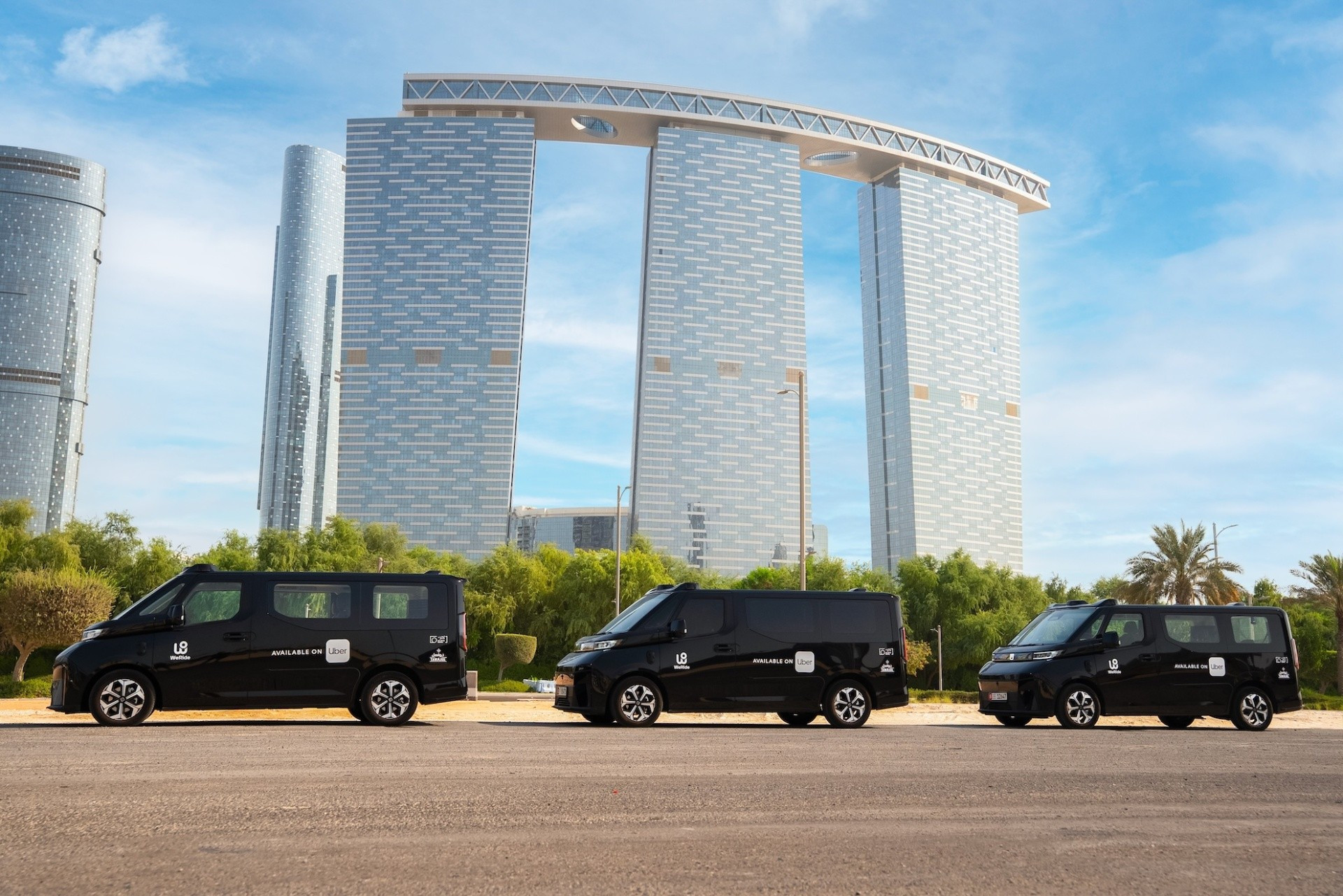
Autonomous taxis are now live in the Gulf, with WeRide and Uber launching fully driverless ride-hailing on Yas Island in Abu Dhabi, in a first for the Middle East. The rollout marks the region’s move from trials to real-world usage, with plans already underway to expand across the city and beyond. The service uses Level-4 autonomous vans, integrating LiDAR, radar, and camera systems to handle navigation and safety without a human driver. Initial deployment covers key zones such as Yas, Saadiyat, Al Maryah and Al Reem islands. WeRide currently operates more than 100 robotaxis in the Middle East, and the companies plan to scale the network into the thousands over the coming years.
Sources: Reuters, National News
Key Takeaways
– Abu Dhabi is the first city in the Middle East — and the first outside the U.S. on Uber’s platform — to offer fully driverless robotaxi rides.
– The initial fleet covers selected zones with Level-4 autonomous vans and intends to match fares of UberX or Uber Comfort, making the service broadly accessible.
– The launch signals a major shift from experimental trials to commercial smart-mobility deployment, with ambitious expansion plans across the Gulf region.
In-Depth
The region long known for oil, opulence, and rapid modernization has taken another bold step forward: public transportation without human drivers. On November 26, 2025, Uber and WeRide rolled out what many expected but few saw coming so soon — commercial driverless robotaxi service on Yas Island in Abu Dhabi. The move transforms what was once futuristic ambition into everyday reality, as people can now order a robotaxi through the Uber app and be transported autonomously across select urban zones.
These robotaxis are not prototypes. They are Level-4 automated vans — equipped with LiDAR, radar, and high-resolution cameras — capable of navigating real city streets without human intervention. Passengers don’t just get experimental rides; they get full-fledged service with fares aligned with Uber’s standard economy tiers (UberX, Uber Comfort). The system promises a travel experience that’s seamless and comparable in cost to ordinary ridesharing, removing one of the major obstacles to adoption: affordability.
The initial launch isn’t limited to a niche fleet. Nearly 70 vehicles are already available, covering critical zones like Yas, Saadiyat, Al Maryah, and Al Reem islands. For residents and visitors, this means access to driverless rides near malls, leisure destinations, and business zones. Meanwhile, WeRide reports over 100 robotaxis operating across the Middle East, and both companies envision scaling the fleet into the thousands in coming years.
This marks a watershed moment: autonomous mobility shifting from closed-door test tracks and piecemeal trials, to fully licensed, commercial operations. For the Gulf — and particularly Abu Dhabi — this aligns with broader national goals for smart mobility, urban modernization, and infrastructure innovation. While cities in Europe and North America continue debating regulations, insurance liability, and safety frameworks, the Gulf has moved swiftly to embrace driverless transportation as a core pillar of its urban future.
The implications are significant. For riders, there’s convenience, likely cost savings, and the novelty of a driverless ride. For cities, there’s the promise of reduced congestion, improved transportation efficiency, and a path toward cleaner, electric-based mobility networks. For societies built on traditional labor models — including taxi drivers — it underscores a looming transformation: a shrinking demand for human drivers and a shift toward tech-enabled efficiency.
In short, the Gulf isn’t just testing its mobility future anymore. It’s living it — and the robotaxi fleet rolling out in Abu Dhabi is the first sign of a region in motion, steering away from the past and into a driverless tomorrow.