

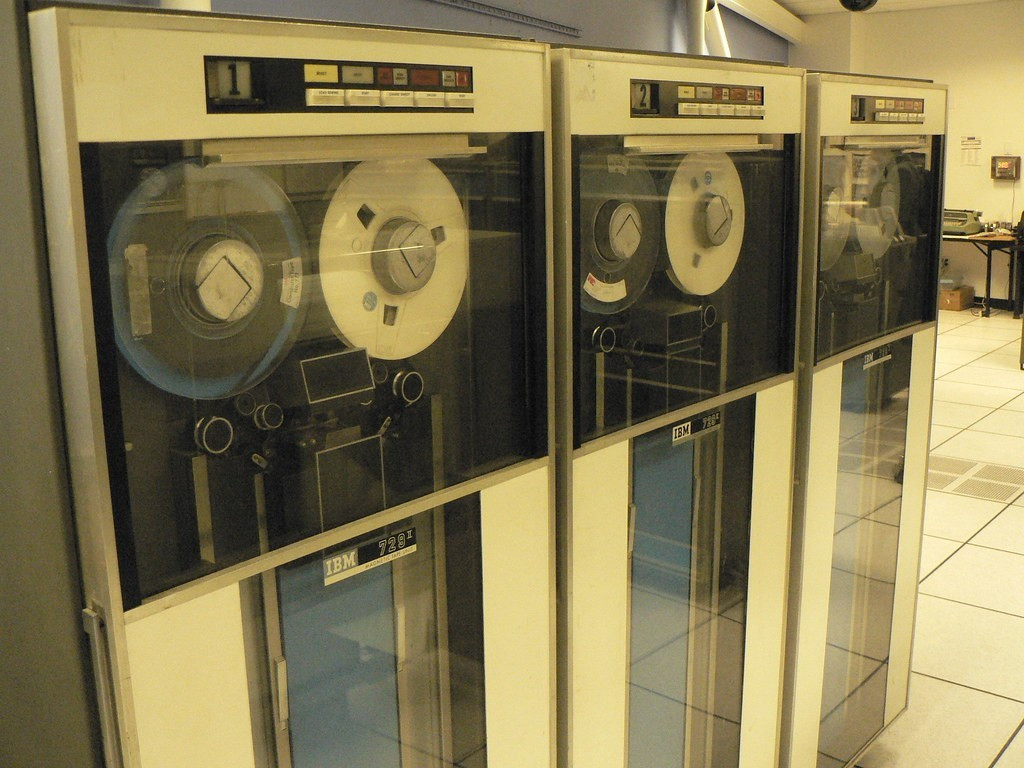
Despite being the target of past predictions of extinction, magnetic-tape archival storage is experiencing renewed strength in enterprise IT, driven by the massive data demands of generative AI, machine-learning workloads and compliance-driven cold data retention. For example, the Linear Tape‑Open (LTO) format recently recorded shipments of 152.9 exabytes of compressed capacity in 2023, and more than 176 exabytes in 2024, illustrating sustained year-over-year growth. Reports highlight that newer tape cartridges and media materials—such as aramid-based base film and refined drive heads—are enabling higher capacities (e.g., native 30-40 TB and projections to hundreds of TB per cartridge) while preserving the low total cost of ownership, energy-efficiency, and long-term durability that tape offers. Consequently, many large organisations in sectors like healthcare, finance, media and research are retaining or expanding tape libraries as part of hybrid architectures, even as some agencies push to migrate off tape for newer technologies. What once seemed old-school—literally reels and cartridges of tape—is now being reframed as a viable and cost-effective foundation for exabyte-scale, compliance-ready storage in the age of data-intensive AI.
Sources: IT Pro, Data Center Dynamics
Key Takeaways
– Tape storage continues to grow rather than decline: shipments of LTO tape reached record levels (152.9 EB in 2023, over 176 EB in 2024) despite predictions of obsolescence.
– The resurgence is driven by AI-era data demands (unstructured data, model training sets) and by tape’s core strengths: low cost per TB, energy efficiency, long archival life, and offline/air-gap security.
– Innovation is alive in tape: new materials and form-factors (e.g., aramid-based film) and roadmap targets are pointing toward cartridge capacities in the hundreds of terabytes, keeping tape relevant in a hybrid storage stack.
In-Depth
For many in IT, magnetic tape evokes dusty archives, old-school backups and systems of record long since replaced by flash, NVMe and cloud storage. Yet in 2025, the narrative around tape has flipped: far from being a dinosaur, tape media is carving out a renewed niche in enterprise data architectures. At the heart of this revival is the convergence of two powerful forces: the explosion of data driven by generative AI and machine-learning applications, and the hard economic logic of storing that data at scale. When organisations confront petabytes or even exabytes of “cold” or rarely accessed unstructured data—think training data sets, regulatory archives, long-tail media assets—the cost of disk or always-on flash becomes prohibitive. Tape, meanwhile, delivers a compelling value proposition: low ongoing power/cooling cost, inherent longevity (media life measured in decades), physical removability (air-gapping for cyber-resilience) and steadily improving capacities thanks to engineering innovation.
Industry data highlight that the LTO (Linear Tape-Open) consortium—a collaboration of HPE, IBM and Quantum—reported 152.9 exabytes of compressed tape media shipped in 2023, rising to over 176 exabytes in 2024. These numbers defy the “death of tape” narrative that has circulated for years. In parallel, tape manufacturers and consortiums are introducing new media innovations: thinner, smoother substrate materials, refined servo-mechanisms and drive heads, and architectures that can deliver native cartridges in the 30-40 TB range (and with future generations aiming well above 100 TB). These upgrades matter: they reduce cost per terabyte, enhance reliability and maintain backward compatibility with earlier drives—a key investment protection criterion for large enterprises.
But the story is not just about raw capacity. Tape is increasingly being embedded in modern hybrid storage stacks: hot/cold tiering strategies place active data on flash or disk while backing up or archiving less-active data on tape libraries. For sectors where compliance mandates WORM (write-once-read-many) behavior, audit trails and long-term retention (20-30+ years) are required, tape offers a mature, proven platform. Additionally, in an era of ransomware threats and data sovereignty regulations, the physical removability of tape cartridges provides a defensible air-gap layer—a capability less available with standard always-online storage.
Of course, there are caveats. Tape is not a substitute for high-performance, low-latency storage. If you need rapid random access, sub-millisecond latency or real-time streaming for active workloads, tape is the wrong fit. The economics shift when access patterns demand frequent retrievals: the “cold” in cold data still matters. Also, while the capacity numbers (e.g., exabytes shipped) are impressive, some commentary notes that compressed capacity figures can obscure actual uncompressed throughput and usable capacity, and that media cost per terabyte has not always fallen as dramatically as one might hope. Nevertheless, for the right use cases—archival, long-term retention, compliance, and large unstructured datasets—tape is not only surviving but thriving.
From a strategic perspective, organisations in finance, media/entertainment, public sector and research should take note. If your architecture anticipates heavy archival loads or needs to retain exabytes of data for decades, tape deserves a seat at the storage table. Planning should include tape library roadmaps, integration of LTFS (Linear Tape File System) or similar frameworks for ease of access, physical/robotic cartridge handling, and air-gap strategies for security. For decision-makers focused on long-term cost predictability, scalability and resilience, the fact that tape is investing and evolving is no faint endorsement—it’s a clear signal.
In short: the era of tape-as-dead technology has passed. What once seemed a relic is being repurposed and re-engineered for an age where data volumes keep accelerating, budgets must stretch further, threats loom larger and the imperative to retain data for longer is intensifying. For enterprises willing to plan with decades in mind rather than months, magnetic tape remains a sensible, scalable and cost-effective cornerstone of the storage infrastructure.