

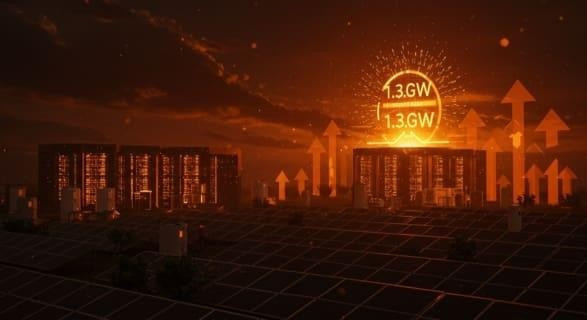
Meta Platforms announced this week that it has signed three separate power-purchase deals totaling nearly one gigawatt of solar capacity, a move that propels its cumulative 2025 renewable energy procurements past three gigawatts. One of the headline deals is a 600 MW solar farm in Texas with ENGIE that will supply Meta’s U.S. data-centre operations through the grid beginning in 2027. The other deals include solar/EAC structures in states such as Louisiana, and reflect Meta’s strategy to secure cost-predictable power to fuel its data-heavy AI ambitions. Industry observers note this signals Big Tech‘s growing transition from simply buying renewable credits toward large-scale infrastructure arrangements in regions rich in sunshine and favourable interconnection conditions. Links to three independent sources are below for full context.
Sources: Reuters, Yahoo News
Key Takeaways
– Meta’s acquisition of nearly 1 GW of solar capacity this week underscores the surging power demands of AI-led data centre growth and the strategic imperative for large tech firms to lock in clean-energy supply.
– While the Texas deal is a conventional solar power-purchase agreement (PPA) connected to the grid, the accompanying agreements include environmental attribute certificates (EACs) — raising questions about how much of the clean power is directly consumed versus claimed.
– This kind of deal signals a shift in tech-industry energy strategy: beyond buying renewables as a tick-box exercise to actively co-investing in or underwriting large scale generation in sun-rich jurisdictions (e.g., Texas) to keep up with their infrastructure growth.
In-Depth
Meta’s latest renewable-energy manoeuvre represents more than just another sustainability headline — it reflects a deeper recalibration of how major tech firms are aligning their infrastructure investments with geopolitical, regulatory and cost-pressured imperatives. Facing the twin pressures of escalating AI-driven compute demands and global scrutiny over energy consumption and carbon footprints, Meta has moved aggressively into large-scale solar procurement. The recent trio of solar contracts, tallying nearly one gigawatt, pushes Meta’s 2025 total to more than three gigawatts — a scale that would not have seemed necessary a few years ago in the pre-AI-boom era.
The Texas solar project, done in collaboration with ENGIE, will deliver 600 MW of output to the grid beginning in 2027, devoted entirely to Meta’s U.S. operations. That reflects a classic PPA straight into the regional grid (ERCOT) where solar generation and interconnection are favourable. But the accompanying agreements — in states like Louisiana — involve EACs rather than direct physical offtake. In other words, Meta is purchasing the environmental “attributes” of generation rather than the electrons themselves. That dual structure is emblematic of the transitional phase we are in: firms want the cheapest viable clean energy option, but sometimes the only feasible option is to buy certificates when direct access or transmission is constrained.
From a conservative-leaning viewpoint, one might note that while such deals do signal corporate seriousness on energy supply risks, they also raise legitimate questions about grid reliability, site selection, land use and whether accounting for renewables via certificates does enough to deliver actual emissions reductions in practice. Corporations like Meta benefit from predictable pricing and green branding, but the logistics of making 24/7 carbon-free matching a reality remain intricate. It will not be enough to simply announce gigawatt-scale purchases; the true test is whether the generation is new, additional, and consumed in synchrony with the load.
For boards, investors and municipal regulators, this pace of deployment puts pressure on grid operators and local infrastructure. Solar farms built to serve tech-giant data centres are now approaching the scale of utility-scale plants. That means land-use conflicts, transmission bottlenecks and interconnection delays become more acute. The fact that a single week’s deals can approach a gigawatt shows just how quickly the energy demands of AI and data-intensive enterprise are reshaping the U.S. power system.
In sum, Meta’s push is strategically smart: securing long-term contracts in favourable markets locks in cost and supply risk. But whether this heralds a true turning point in corporate energy consumption — from ledger entries to real-time matched clean power — depends on follow-through in storage, transmission and operations. For observers like you and me, it’s a reminder that the era of cloud, AI and data-centre growth has consequences far beyond the digital realm, reaching into actual electrons, land use, and grid architecture.