

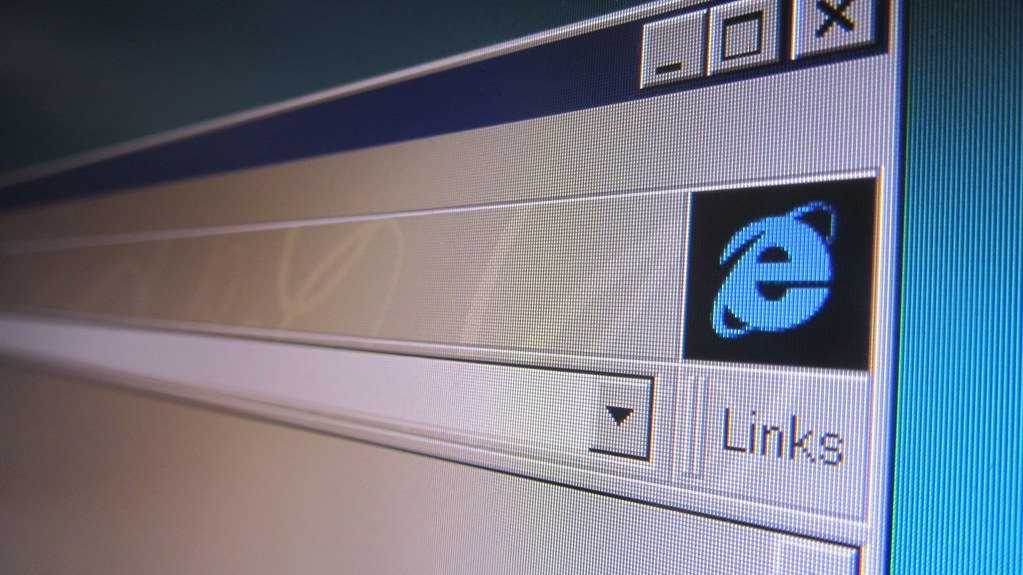
After nearly three decades, Internet Explorer (IE) has reached its end. The browser — once ubiquitous thanks to being bundled with Windows — was officially retired on June 15, 2022, when support ended for IE 11 on many Windows 10 installations. IE’s legacy MSHTML (Trident) engine persists only in a compatibility-only “IE Mode” within Microsoft Edge, which Microsoft pledges to support through at least 2029.
Key Takeaways
– Internet Explorer’s final version, IE 11, was officially decommissioned on June 15, 2022 for most Windows 10 users.
– The decision stemmed from IE’s outdated rendering engine — which lacked modern web-standards compliance and had persistent performance and security problems — making continued support impractical.
– For legacy compatibility (e.g. older intranet sites, ActiveX-dependent applications), Microsoft now forces users to move to Edge with IE Mode — a bridge supported until at least 2029.
In-Depth
It’s hard to overstate how dominant Internet Explorer once was. Beginning life in 1995 as part of Microsoft’s early push into the consumer web, IE quickly became the default browser for virtually every Windows user — bolstered by its inclusion in every Windows release after 1997. By bundling IE with Windows, Microsoft secured near-universal adoption, making IE synonymous with web browsing for much of the late 1990s and 2000s.
But IE’s dominance proved fleeting. Its core rendering engine — MSHTML, often referred to by its codename “Trident” — was designed in an era long before modern web standards such as HTML5, CSS3, and advanced JavaScript frameworks. As the broader web evolved, IE lagged. Developers increasingly shunned it because sites rendered poorly or not at all; many opted for more standards-compliant alternatives like Google Chrome, Mozilla Firefox, or Apple Safari.
The problems weren’t purely aesthetic or compatibility-based. IE had a well-deserved reputation for sluggish performance, memory inefficiencies, frequent crashes, and — most critically — persistent security vulnerabilities. Fixing those problems would have required a complete re-architecture of the browser — essentially rebuilding it from the ground up. Microsoft sensibly determined that was more effort than it was worth, especially given the declining user base and mounting technical debt.
That calculation led to the decision to sunset IE in favor of a more modern, secure, and performant successor. In 2015, Microsoft introduced Edge. Promptly, new development on Internet Explorer ceased, with IE 11 — released in 2013 — as its final iteration. Between 2021 and 2022 Microsoft formally ended support for IE 11 on most versions of Windows 10; by February 2023, desktop versions were being redirected to Edge, and by mid-2023 visible icons and shortcuts were slated for removal (though pushback from certain organizations temporarily delayed the final clearing of those remnants).
Still, Microsoft recognized that enterprise users and organizations — especially those with legacy internal systems, intranet sites, or proprietary apps dependent on ActiveX or legacy HTML — could not immediately abandon IE. To accommodate that, Edge was equipped with “IE Mode,” which hands off rendering responsibilities for such sites to the old Trident engine under a compatibility shell. Microsoft has committed to supporting IE Mode through at least 2029, giving businesses time to migrate or modernize.
For everyday users, though, this is a moment of closure. Internet Explorer — long greeted with resigned disdain (or nostalgic affection) — belongs to history. In its place: a safer, faster, more standards-compliant browsing environment under Edge. For the web at large, this should mean fewer legacy-site frustrations, better performance, and a more unified, modern browsing experience.