

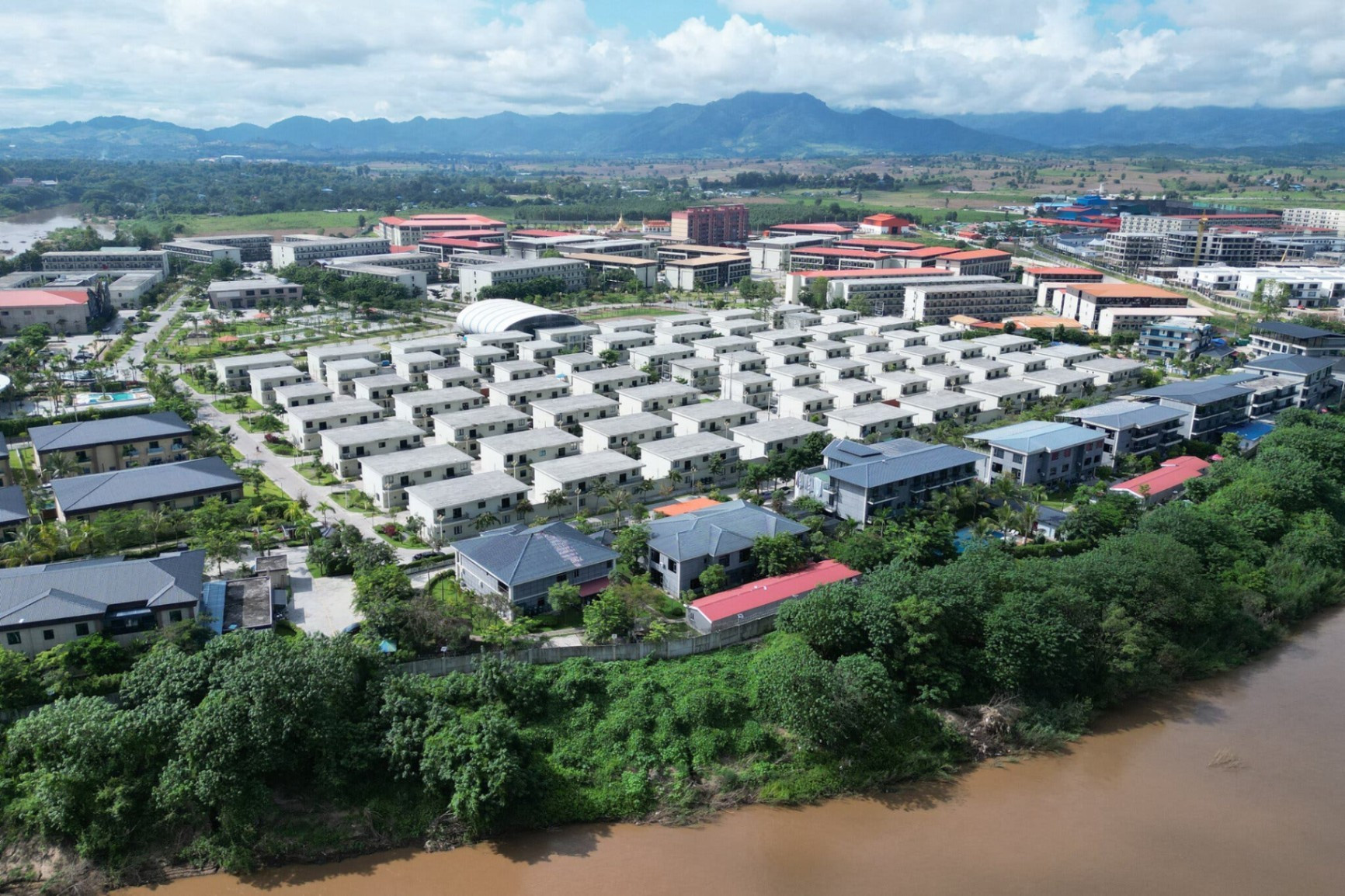
A recent raid by Myanmar’s military junta on the infamous KK Park scam compound near the Thai border culminated in a dramatic demolition of select buildings — but newly released satellite imagery and expert analysis suggest the effort was largely superficial. While authorities touted the destruction of 237 of the compound’s 635 illegal structures and the detention of thousands of undocumented foreign workers, the images show that only a limited eastern section of the compound was razed, with hundreds of buildings remaining intact and reportedly still usable for illicit fraud operations. Anti-trafficking experts argue the raid appears more like a public-relations move than a genuine crackdown on the organized crime networks operating there.
Sources: Mizzima.com, SumSub
Key Takeaways
– Satellite imagery reveals that the demolition at KK Park was confined to a small portion of the sprawling compound, casting doubt on government claims of a full crackdown.
– Experts and anti-trafficking organizations warn that the raid may be a “performative” action — designed to appease international pressure — rather than a meaningful disruption of scam operations and human-trafficking networks.
– Thousands of foreign nationals were detained and many Starlink terminals and devices seized, but critics argue that critical infrastructure and network leadership likely remain untouched.
In-Depth
The recent headlines surrounding the raid on KK Park might give the impression of an aggressive, sweeping crackdown on one of Southeast Asia’s most notorious cyber-fraud and human-trafficking hubs — but the reality appears far more restrained and, perhaps, strategically orchestrated. According to a November 26, 2025 report from WIRED, satellite imagery captured after the supposed demolition shows that only a limited eastern portion of the compound was destroyed, while the vast majority of building clusters remain standing and ostensibly operational.
The numbers cited by government officials — 237 buildings demolished out of 635, more than 3,000 computers and 21,000 mobile phones confiscated, and over 1,800 undocumented foreign entrants detained — are substantial on their face. The official narrative suggests a successful assault on a major criminal enterprise. But experts working in the anti-slavery and fraud-prevention space caution against taking those figures at face value. According to them, the selective destruction suggests a focused show of force, rather than an all-out disruption of the entire operation. One prominent voice, Mechelle B. Moore of Global Alms (a nonprofit based in Thailand), says, “All of the critical buildings that you would need to perpetrate the scams are still intact and still ready for use.”
The compound’s geography adds to the skepticism. KK Park lies just across the border from Thailand, on the banks of the Moei River. Over the years, it has become a sprawling fortress-like complex — hundreds of buildings, thousands of workers, dormitories, villas, even hospital-like facilities — all serving the purpose of housing trafficked labor and conducting large-scale fraud operations. Officials have also seized dozens of Starlink satellite terminals, which crime syndicates reportedly used to maintain internet connectivity when more conventional infrastructure was shut off.
Despite publicized crackdowns, the illegal economy tied to scam compounds appears deeply entrenched and highly adaptive. International organized crime networks — often rooted in Chinese triads — allegedly manage and profit from these operations, recruiting workers with false promises of legitimate employment and then coercing them into running investment, romance, or gambling scams for hours on end. Those who attempt to escape risk torture or worse; passports are confiscated, movement is restricted, and forced labor under severe conditions is reportedly common.
In this light, the demolition of a few buildings and the seizure of devices, while symbolically dramatic, may do little to dismantle the broader criminal infrastructure. Critics argue that the most dangerous components — the leadership, communication networks, and overseas financial flows — likely remain intact. Without a comprehensive purge of the syndicates behind the scams, and without robust victim identification and repatriation protocols, the cycle of exploitation may simply shift location.
Further complicating the situation, observers note that at least part of the crackdown may be aimed at appeasing international scrutiny. The governments of the United States, China, and Thailand have all applied pressure — through sanctions, repatriation efforts, and diplomatic warnings — on Myanmar to address the illicit scam industry. A highly visible raid, followed by televised destruction and mass arrests, helps the military junta present itself as taking decisive action, while potentially preserving the systemic networks generating substantial illicit revenue.
In short, the “destruction” of KK Park is real — but only in part, and only in a symbolic sense. Beneath the rubble and the bureaucratic rhetoric, much of the compound appears intact, and the organized criminal ecosystem it supports remains broadly unharmed. Real accountability would require more than rubble; it would need sustained disruption of criminal networks, transparent investigation, protection for victims, and credible enforcement — not just dramatic photo ops.