

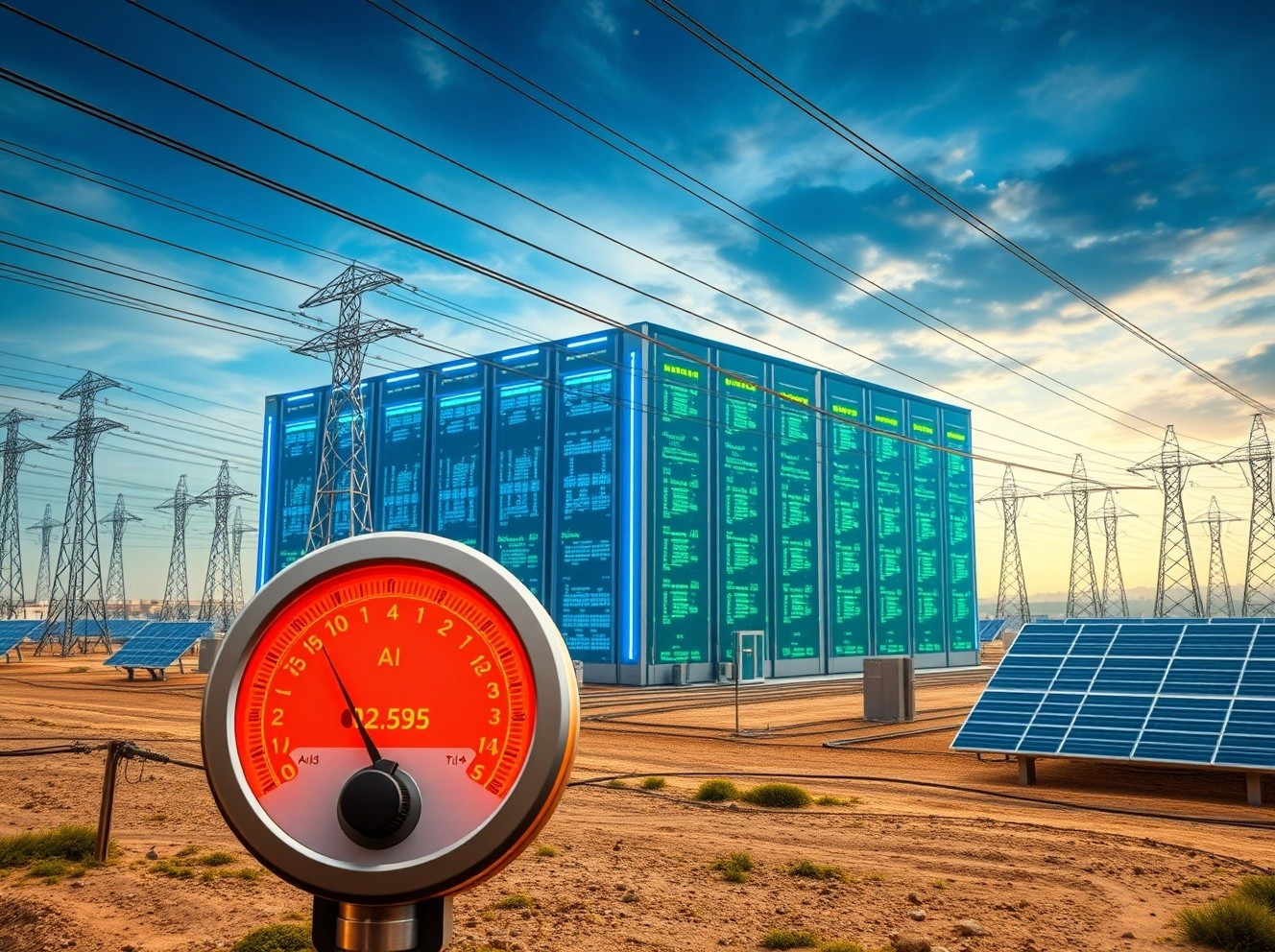
Public concern is growing as the rapid expansion of artificial-intelligence infrastructure and massive data-center build-outs begin to strain America’s electrical grid and household utility bills. A national survey by solar and storage provider Sunrun found that 80 percent of U.S. homeowners believe data centers will drive up their electricity costs. New estimates from the Lawrence Berkeley National Laboratory project that data-center energy consumption in the United States could rise from about 4 percent today to as much as 6.7 – 12 percent of total national electricity usage by 2028. Meanwhile, other industry analysis notes that wholesale electricity prices in regions near large data-center clusters have surged as much as 267 percent in recent years, raising questions about who ultimately picks up the tab for the AI-driven infrastructure boom.
Sources: TechCrunch, Washington Post
Key Takeaways
– Consumers are waking up to the real-world energy impact of the AI/data-center boom: 80 percent in the Sunrun survey believe their utility bills could rise as a result.
– Data centers are now consuming roughly 4 percent of U.S. electricity and the share may more than double (to 6.7 – 12 percent) by 2028 according to research estimates.
– Rising wholesale power costs, grid-strain from concentrated data-center clusters, and slower growth in traditional generation infrastructure mean the burden could shift to end-users and policymakers.
In-Depth
The intersection of artificial intelligence, data-processing infrastructure, and America’s energy grid is morphing into one of the more consequential storylines of the moment—especially for homeowners and everyday utility customers who may soon feel the squeeze.
On one side there is the AI/data-center build-out: tech companies are placing massive bets on AI, deploying ever-larger data centers, and harnessing ever-greener ambitions and faster compute. These facilities require not just racks of servers but cooling systems, large power feeds, backup generation, and constant connectivity. Because of this, the energy demands are no longer trivial side-considerations—they are becoming structural factors in the national electricity equation.
According to recent research from the Lawrence Berkeley National Laboratory, data centers in the U.S. presently account for about 4 percent of all electricity consumption, and that number could rise to between 6.7 and 12 percent by 2028. That jump is dramatic. At that scale, data centers will compete head-to-head with major industrial sectors for energy and create new bottlenecks in power delivery and infrastructure management.
At the same time, utilities and grid operators are sounding alarms. Wholesale electricity prices in certain jurisdictions near data-center clusters have spiked—reported increases of up to 267 percent in some locales. That signals a deeper stress: the grid is not always designed for sudden, concentrated megawatt-level loads and dynamic scaling driven by AI workloads. And upgrading or expanding power plants, transmission lines, and infrastructure takes years and billions in investment.
Where does that leave the homeowner? That’s where the public sentiment piece kicks in. The national Sunrun survey of 1,000 U.S. homeowners found that 80 percent worry that data-center expansion could drive up their electricity bills. Additionally, 68 percent believe their utility provider cannot keep up with rising demand, and 81 percent reported having experienced at least one outage in the past year. The optics are challenging: while tech firms reap profits from AI and data-center growth, everyday consumers are bracing for higher costs and less-reliable service.
From a conservative perspective, this raises multiple concerns. First, who pays for this infrastructure? If utilities raise rates to cover the grid upgrade costs demanded by AI/data-centers, that cost may fall disproportionately on residential rate-payers, many of whom are not benefitting directly from those data-centers. Second, there’s the issue of energy policy and infrastructure planning. The growth of data-center loads can crowd out investment in grid resilience for homes and businesses, unless policymakers act proactively. Third, it highlights the tension between technological growth (AI, big data) and the foundational infrastructure (electricity, transmission, generation) that supports it—growth divorced from fundamentals is always risky.
That said, there are some mitigating factors and pathways forward. Large tech firms are increasingly signing power-purchase agreements for renewables and exploring on-site generation and storage. Solar farms can come online in roughly 18 months, offering a relatively fast ramp compared to traditional fossil-fuel plants. Energy-efficiency measures in data centers, workload shifting, and smarter cooling can help reduce incremental load growth. And from a policy standpoint, an emphasis on distributed generation—especially home solar plus battery storage—can relieve grid pressure and offer consumers more resilience.
From the homeowner’s vantage point, this evolving dynamic suggests a few practical takeaways: monitor utility-rate filings in your state or utility territory (especially if large data-centers are locating nearby); consider the resilience and cost-trajectory of your local grid (including outage frequency and reliability); and explore whether investment in home solar and battery storage might make sense—especially if you live in a high-growth data-center corridor or a state with volatile utility rates.
In sum: The AI/data-center surge is not all headline hype—it carries real implications for power consumption, grid infrastructure, and ultimately household electricity bills. Growth in tech seldom happens in a vacuum. The grid is the unsung partner—or potential bottleneck. Unless the infrastructure keeps pace and the costs are allocated fairly, there’s real risk of a backlash. From a policy standpoint, conservative thinking would push for transparent cost-allocation, grid reliability commitments, and ensuring that consumers are not left footing the bill for someone else’s server farm. Because in the end, for most Americans, the lights staying on and the bills staying manageable matter more than the next big AI model.