

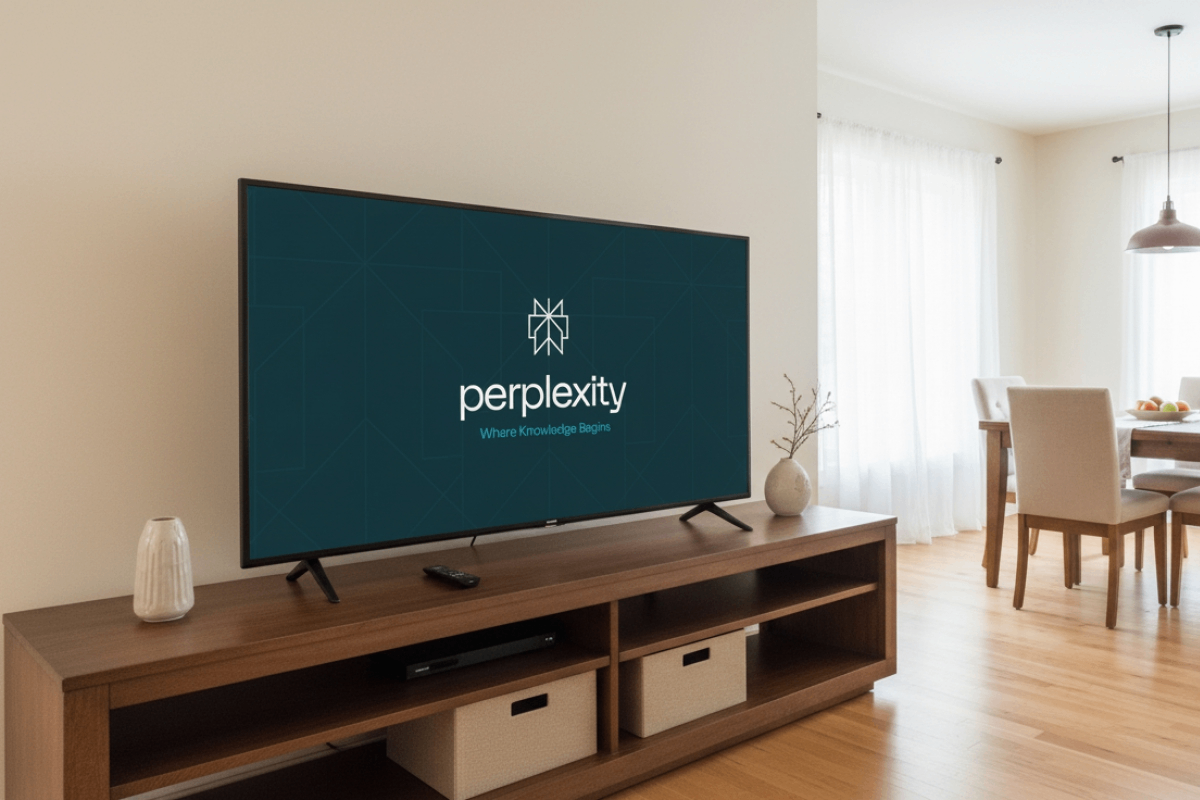
Samsung has officially announced a partnership with Perplexity AI to integrate Perplexity’s “answer-engine” technology into its 2025 smart TVs, letting users choose between Perplexity, Microsoft Copilot, or Samsung’s own TV-focused AI when pressing the dedicated AI button. The Perplexity TV App will be available immediately on Samsung’s 2025 models, with a free 12-month subscription to Perplexity Pro included, and coming later this year via OS updates to 2023–24 models. Samsung says this move “broadens our Vision AI Platform offering” and represents a strategic expansion of the living-room as the next battleground for AI engagement. Nevertheless, the company also cautions that the TV space is “tricky” due to prior consumer-tech efforts that failed to convert the screen beyond streaming and passive media.
Key Takeaways
– Samsung is placing Perplexity’s AI alongside Microsoft’s Copilot and its own AI ecosystem in its TVs, giving users choice among major assistants rather than locking them to one.
– The rollout includes a free 12-month Perplexity Pro subscription for users of Samsung’s 2025 smart TVs (and eligible 2023/24 sets via later update), signalling aggressive value-add to drive adoption.
– Bringing an AI answer-engine to the big screen highlights Samsung’s recognition that the living room TV is shifting from passive consumption to interactive experience — but it also acknowledges that success is not guaranteed given past failures in “smart TV” innovation beyond streaming.
In-Depth
In an interesting and potentially strategic move, Samsung is doubling down on the idea that the television — long treated as the passive hub of the living room — is poised to become a front-line battleground for AI interaction. The company has entered a partnership with Perplexity AI to embed the startup‘s answer-engine technology into its 2025 smart TVs via a dedicated “Perplexity TV App.” The service allows users to ask questions, explore content, plan tasks or discover entertainment via natural language on their big screen. According to Samsung’s own press statements, this app is now available on all 2025-model televisions, with a rollout later this year to 2023 and 2024 models via firmware updates. Samsung is sweetening the deal by bundling a free 12-month subscription to Perplexity Pro, offering full-feature access to the engine for new users.
From a market-strategy standpoint, this development checks several important boxes. For Samsung, it represents diversification. The company doesn’t just rely on its own internal AI or a single partner — instead it offers a menu of assistants (its own, Microsoft Copilot, Perplexity), which may appeal to consumers who value choice and flexibility. That approach could help Samsung capture more of the “intelligent hub” value—especially as TVs face pressure from phones, tablets and PCs for user attention. By making the TV more than just a screen for Netflix and cable, Samsung is positioning the set as a conversational, interactive gateway for the home.
Furthermore, from a consumer choice and market-dynamics perspective, including Perplexity gives Samsung an advantage: users may opt into a platform that delivers real-time, web-sourced answers (Perplexity), rather than an AI assistant simply built around streaming or device control. In an era when “smart” devices risk becoming locked ecosystems, Samsung’s multi-assistant strategy stands out as more open and user-centric. This could appeal to more conservative or enterprise-sensitive customers who value interoperability over vendor lock-in.
However, the road ahead is not without challenges. Samsung itself acknowledges that the living room is a “tricky” space — many past attempts to make TVs deeply interactive beyond video-streaming have faltered. Users are primarily accustomed to passive viewing, remote controls and simple app navigation. Asking someone to shift to conversational queries, voice or keyboard input on a couch is a behavioral leap. Voice input may still face adoption hurdles (adults may prefer typing, use of microphones raises privacy concerns, etc.). The novelty may wear off if the experience isn’t smooth or if the AI cannot deliver significantly better value than just opening a browser on a tablet.
Another factor to watch is monetization and competitive dynamics. While Samsung is offering 12 months free, the long-term model (premium features, data monetization, ad suppression) is still unclear. Also, the TV AI competition is heated: other players such as Google (Gemini on Google TV) and Amazon (Alexa on Fire TV) are also making pushes. For Samsung, offering choice may be a strength — but it also opens the door to fragmentation or confusion if users don’t understand the differences among assistants or if one dominates.
From a conservative viewpoint, one may appreciate the value of user choice, minimal vendor lock, and interoperability in home tech. Samsung’s approach to let customers pick their assistant, rather than funneling them into a closed ecosystem, reflects a healthy respect for consumer freedom. It signals that big-screen intelligence doesn’t have to be dictated by the TV maker alone — which aligns with the broader conservative principle of competition and choice, minimizing corporate overreach.
That said, users should remain cautious. Any device that uses natural-language voice or microphone input raises legitimate questions around data collection, privacy and long-term support. While Samsung will deploy the Perplexity TV App free for a year’s Pro subscription, users should check what happens after the promotional period ends. Will the costs go up? Will data be aggregated and used for targeted advertising in the living room? These are the kind of questions that consumers should ask before embracing the next wave of “intelligent” home screens.
In conclusion: Samsung’s partnership with Perplexity is a bold leap in redefining the TV from a viewing box into an interactive, conversational home hub. For consumers who value freedom of choice and want their big screen to do more than passively show episodes, this move is promising. On the flip side, adoption will hinge on whether users really engage with the capability, how smoothly the experience works, and how transparent the ecosystem remains. If Samsung plays it right — offering optionality, protecting privacy, and delivering real utility — this could mark a meaningful step toward a smarter living room. But if it falls back into gimmick territory, its TV AI ambitions may become just another tech highlight that never quite sticks.