

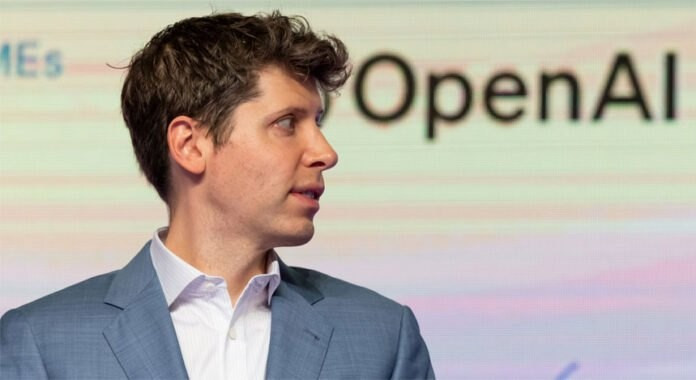
At a conversation in San Francisco on November 3, 2025, Sam Altman (CEO of OpenAI) and Steve Kerr (head coach of the Golden State Warriors) found themselves confronting pointed questions about wealth inequality in America. Moderator Manny Yekutiel asked about the contrast between ultra-wealthy individuals—such as Jensen Huang, with an estimated net worth of $179 billion—and the 42 million Americans recently losing food-assistance benefits. Altman defended Huang’s wealth accumulation as “creating great companies is a great thing to do on its own,” while acknowledging that those who benefit from society should “pay it forward.” Meanwhile, Kerr was more blunt, describing ticket prices for Warriors games as “insane” and saying “it feels weird” that the country is heading in a direction with such a pronounced wealth gap that disadvantages younger generations. When asked about their own responsibility, both men conceded individual impact is limited in the face of systemic issues such as housing costs and an economy “so deeply screwed up.” Full-path URLs of supporting sources follow.
Sources: SFGate.com, Time Magazine
Key Takeaways
– Business and sports leaders like Altman and Kerr are being publicly pressed to address wealth disparity—even though they argue that broader systemic issues underlie the problem.
– Altman frames technological and entrepreneurial success as inherently positive while accepting moral responsibility for societal benefits; Kerr emphasizes cultural and generational unfairness tied to cost barriers and housing or event access.
– Both concede that despite personal influence, meaningful change requires structural solutions—particularly around housing affordability and economic policy—not just individual philanthropy or corporate action.
In-Depth
In a rare joint appearance of a major tech executive and a high-profile sports coach, Sam Altman and Steve Kerr were brought into the spotlight not to discuss their professional domains but to talk about one of the most politically charged issues of our time: the widening gap between America’s wealthy elite and everyday citizens. Held at the Sydney Goldstein Theater in San Francisco, the discussion pivoted quickly from leadership and innovation to a hard-hitting questioning of what responsibilities come with immense commercial success. Altman, whose company has become synonymous with advanced artificial intelligence, found himself defending the fortunes of a peer billionaire, arguing that building major companies and advancing technology are “a great thing to do on its own.” Nevertheless, he admitted that those blessed by societal infrastructure should “pay it forward.” Meanwhile, Kerr, whose work is rooted in team sports and public accessibility, spoke of how ticket prices for live games have become “insane,” and lamented how younger generations face steep barriers to home-ownership and prosperity. His remarks struck a more populist chord: “it feels weird” that the country seems skewed against many working Americans.
What stands out in this session is the tension between celebrating individual achievement and acknowledging structural inequities. Altman’s position is emblematic of the tech industry: success is praised, innovation is valorized, but the question of redistribution or accountability is more delicately treated. Kerr, meanwhile, represents a more overt critique of economic fairness, though he doesn’t propose radical solutions—more a sense of frustration that segments of society are priced out of what he sees as communal experiences or dreams.
Both men echoed the idea that the core problem lies in entrenched costs and systemic failure: housing in places like San Francisco, for example, routinely tops million-dollar price tags for affordable units. Altman described housing as “the dominant issue I care about,” yet immediately followed by an admission that he doesn’t know how to fix it. The moderator even suggested the OpenAI foundation could build housing, only for Altman to say the price per unit was so high that it becomes insurmountable—even for private-sector efforts.
From a conservative viewpoint, this exchange underscores a broader lesson: wealth generation and innovation are not inherently the villains in the wealth-gap narrative. Private enterprises create jobs, drive growth, and fund philanthropy. The real challenge lies in ensuring that the rules of the economy—zoning, housing regulation, taxation, labor markets—enable upward mobility and preserve affordable access to community goods like sports and home-ownership. The panel hinted at this but stopped short of prescribing policy. In effect, Altman and Kerr simultaneously accept moral responsibility and disclaim structural authority, pointing to powerful dynamics beyond their individual reach.
For policymakers and community leaders, this sort of public forum raises the stakes: when influential figures who generate wealth are asked about societal fairness, the question is not only about whether they’ll give back—but whether the underlying system will allow the rest of society to climb. Addressing unaffordability, regulatory bottlenecks, and economic access must now keep pace with the narratives of innovation and achievement. Innovation can and should continue—but if it leaves large swaths of Americans behind or priced out of opportunity, then the promise of that innovation remains partial. For conservative audiences especially, the takeaway is clear: promoting free-enterprise is essential, but it must be paired with pragmatic policy that safeguards access, minimizes unintended exclusionary effects, and preserves pathways to the middle class.
In short, this event was less about critique and more about accountability and structural realism. Altman and Kerr didn’t offer sweeping social remedies, but their willingness to be asked and respond publicly reflects a changing expectation for leaders of business and sport alike. The wealth gap won’t be closed by speeches or goodwill alone; markets and success must be matched with institutional frameworks that keep opportunity open. Without that, the tension between innovation and inequality will only deepen.