

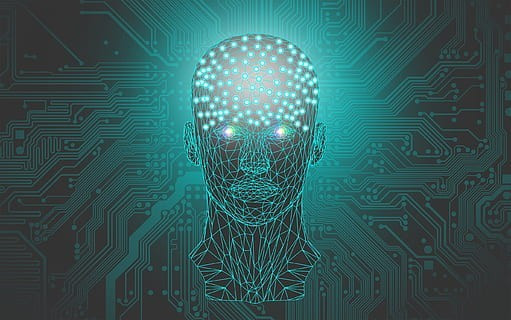
A growing body of machine-intelligence research is tackling the long-standing limitation that most large AI models stop learning once formal training ends, with projects from top institutions like MIT and Google exploring ways to let models adapt and refine themselves from new inputs instead of remaining static after deployment; for example, scientists at the Massachusetts Institute of Technology developed a method called SEAL that lets models continue to learn and personalize beyond their training phase by adjusting internal parameters in response to new information, though challenges such as catastrophic forgetting remain and the approach is computationally expensive, while other teams (including Google Research with something called Nested Learning) are proposing architectural innovations to structure ongoing learning in smaller, nested problems to preserve old knowledge while absorbing new, dynamic data — a shift that could eventually blur the line between “completed training” and lifetime learning, but still faces substantial hurdles before such mechanisms are reliable in real-world AI systems.
Source:
https://www.wired.com/story/this-ai-model-never-stops-learning-research/ https://research.google/blog/introducing-nested-learning-a-new-ml-paradigm-for-continual-learning/ https://www.ibm.com/think/topics/continual-learning
Key Takeaways
• Researchers are actively pursuing continual learning approaches that allow AI models to update and improve after initial training, instead of staying static.
• Technical challenges like catastrophic forgetting — where new learning degrades previously learned knowledge — and high computational costs remain major obstacles.
• New architectural paradigms, such as Nested Learning, aim to organize models so they better retain old information while incorporating new insights.
In-Depth
AI systems today are remarkable at generating text, images, and insights, but most stop learning new things once their formal training ends. That’s where the cutting edge of AI research is pushing deep: not toward bigger models, but smarter ones that keep learning long after their initial training cycle is finished. A notable recent example comes from the Massachusetts Institute of Technology, where a technique called SEAL lets models continue to refine their internal parameters based on new inputs, theoretically enabling ongoing learning and personalization. This kind of adaptive behavior is a clear departure from traditional machine learning, where models are trained on fixed datasets and then deployed in a static state. It’s an exciting direction, but it’s not without serious challenges — one of the most notorious being catastrophic forgetting, where a model’s attempt to learn new tasks ends up eroding earlier capabilities, and another being the computational intensity required to sustain learning on the fly.
At the same time, broader research efforts like Google’s Nested Learning are rethinking how neural architectures themselves could be organized into nested problems. By giving different pieces of a model their own learning flows, researchers hope to sidestep some of the memory and forgetting issues that plague current systems and move closer to something resembling human continuous learning. These developments show promise, hinting at a future where AI evolves more fluidly — but the technology is still nascent, and real-world deployment will need to balance ongoing improvement with cost, reliability, and safety before these methods are mainstream.