

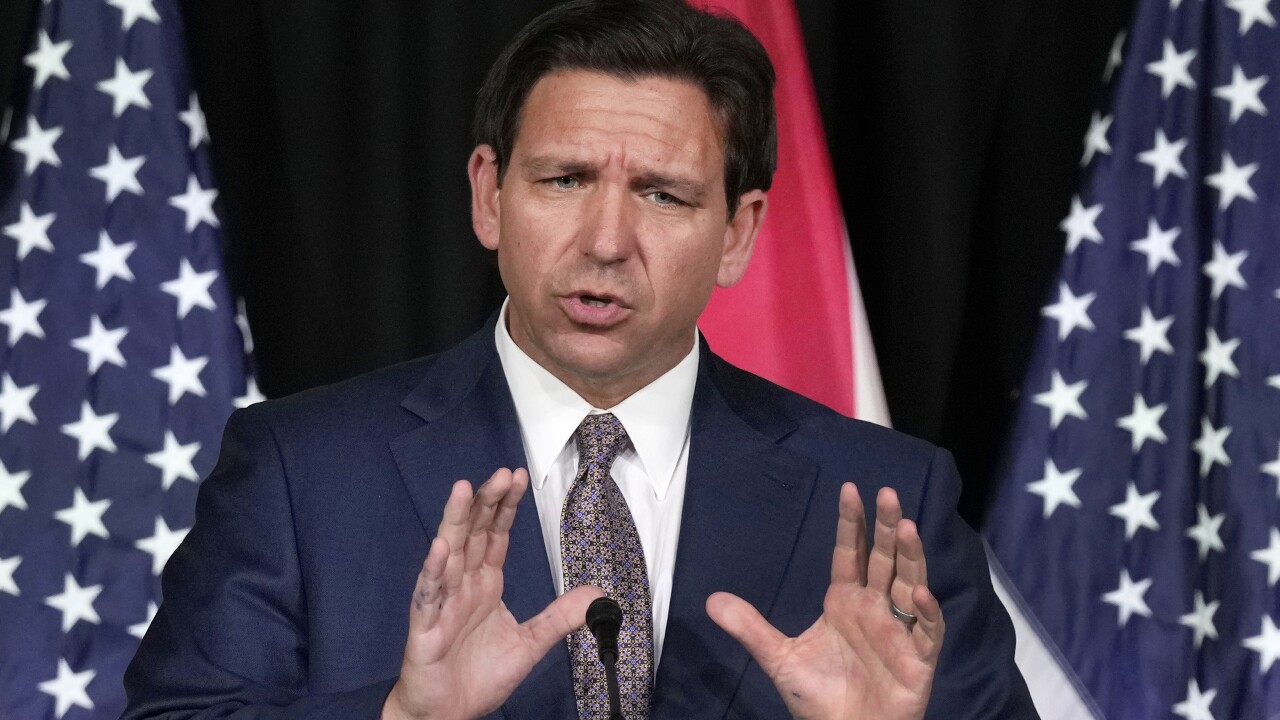
Florida Gov. Ron DeSantis is aggressively advocating for strict state-level artificial intelligence regulations, arguing that unchecked AI growth threatens privacy, children’s safety, the economy and even energy costs; he’s pushed an “AI Bill of Rights” framework that would enforce consumer protections, parental controls and transparency requirements, and he’s coupled this with proposals to regulate AI data centers so that residents and taxpayers aren’t burdened with higher utility or environmental impacts, all while asserting states have the authority to act independently even as a federal executive order seeks a national AI standard.
Sources
https://prescottenews.com/2026/02/05/why-desantis-believes-ai-needs-tight-regulation-now-the-epoch-times/
https://www.flgov.com/eog/news/2025/governor-ron-desantis-announces-proposal-citizen-bill-rights-artificial/
https://www.theinvadingsea.com/2026/02/05/ai-data-centers-florida-legislature-sb-484-1118-desantis-trump-public-records-energy-water/
Key Takeaways
• DeSantis is championing a state-level Artificial Intelligence Bill of Rights aimed at data privacy, parental safeguards, consumer alerts when interacting with AI, and limits on how AI can use a person’s name or likeness.
• Proposed AI data center measures seek to protect Florida ratepayers and natural resources by preventing utilities and taxpayers from footing costs associated with hyperscale data centers and giving local governments authority to restrict their development.
• DeSantis argues states have the constitutional right to regulate AI independently, pushing back against federal efforts for a unified national standard that could preempt stronger state laws.
In-Depth
Florida Gov. Ron DeSantis has placed artificial intelligence squarely within his final year agenda, framing the rapidly evolving technology not as a boon without boundaries but as a set of risks that demand proactive safeguards. Central to his strategy is the introduction of what he calls an “Artificial Intelligence Bill of Rights,” an expansive suite of proposals designed to enshrine protections for citizens against what he views as the inherent dangers of unfettered AI deployment—including threats to privacy, children’s safety and fair economic treatment. This concept, announced in December 2025, is intended to go beyond simple regulatory tweaks by articulating a broad policy framework that includes requirements for transparency when consumers engage with AI systems, strong parental controls over minors’ interactions with AI, and explicit limits on the use of an individual’s name, image and likeness without consent. In his view, these measures aim to counteract potential harms stemming from AI-generated content, exploitative automated systems and the opaque ways in which data is collected, processed and applied. Supporters of DeSantis’s vision emphasize that without clear statutory guardrails, powerful AI platforms could erode individual rights, bypass parental authority and contribute to social and psychological harms, especially among younger users.
Alongside the AI Bill of Rights, DeSantis has turned his attention to the infrastructure powering advanced AI systems—particularly hyperscale data centers. These facilities, which house vast networks of servers and cooling systems required to train and run complex artificial intelligence models, consume enormous amounts of electricity, water and land resources. DeSantis argues that unchecked development of such centers could saddle local residents and utilities with higher energy costs, strain natural resources and create environmental challenges. His proposals would explicitly prevent utilities from charging Florida ratepayers extra to support hyperscale data center expansion and empower local governments to reject such development in their communities. By tying resource use and economic consequences directly to AI policy, DeSantis is attempting to ensure that the benefits of technological innovation do not come at the expense of public welfare.
Another critical element of DeSantis’s approach is his insistence on state sovereignty in AI policy. Despite a federal executive order calling for a nationwide framework that some interpreted as pushing back against state-specific regulations, DeSantis has maintained that Florida—and other states—have the constitutional right to regulate AI within their borders. He has publicly rejected the notion that an executive order can preempt state law, while also signaling his belief that existing federal proposals do not go far enough in protecting citizens or addressing localized concerns. In doing so, he has positioned Florida as a potential model for other states considering their own AI governance strategies, arguing that a patchwork of state laws may be necessary to adequately address the multifaceted challenges posed by artificial intelligence. This stance has sparked debate among policymakers, industry stakeholders and legal scholars, who weigh the pros and cons of decentralized versus uniform regulatory regimes.
In championing these policies, DeSantis has underscored his broader concern that technology should serve human interests rather than supplant them. Framing AI regulation as a matter of economic fairness, public safety and individual rights, he has sought to appeal to both lawmakers and the public by stressing that the stakes extend beyond abstract technological debates to tangible impacts on everyday life. As the Florida Legislature continues to consider the proposed bills and the deadline for passage approaches, the outcome could shape not only state policy but also influence the national conversation about how best to harness AI’s potential while curbing its risks. DeSantis’s efforts illustrate the ongoing tension between innovation and regulation, and his assertive approach signals that AI governance will remain a central and contentious policy issue in the months ahead.