

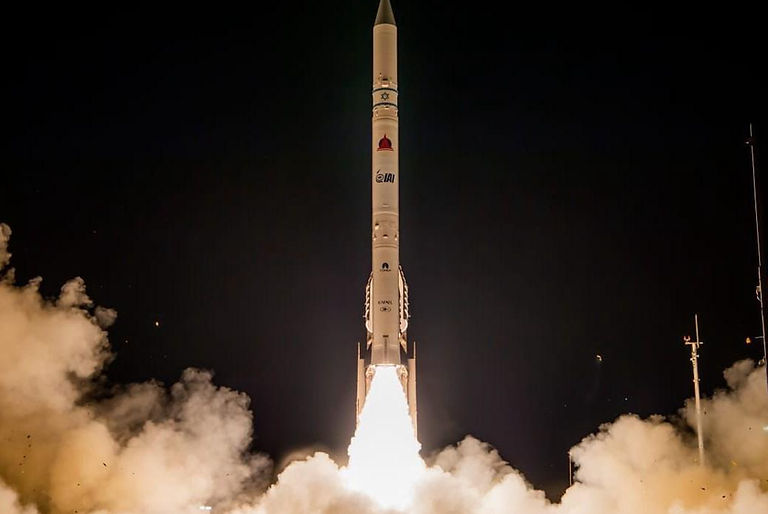
Israel is rapidly developing enhanced space-based surveillance and intelligence systems aimed at strengthening its strategic military posture in the Middle East, particularly in anticipation of any future conflict with Iran, according to defense officials speaking at Israel’s Space Week. Leadership in the Defense Ministry’s Space Office emphasized that lessons from recent conflicts, including the June war with Iran, have underscored the critical role of space capabilities as an “eye in the sky” that can monitor adversaries across the region around the clock and in all weather conditions. These space systems, ranging from advanced reconnaissance satellites to AI-enhanced data processing and near-real-time imagery collection architectures, are intended to provide the Israel Defense Forces (IDF) with rapid targeting information, tactical insights, and broader awareness of Iran’s military and ballistic programs. With tensions high due to U.S. deployments and internal unrest in Iran, Israel’s push into space is designed not only to improve defense and intelligence but also to ensure that future operations benefit from technological superiority. Officials also stressed that partnerships with the U.S. and contributions to international space efforts reflect a dual-use and commercial angle. The growth of Israel’s space industry, shaped by hard-learned wartime lessons and accelerated innovation, aims to provide strategic benefits well beyond traditional terrestrial capabilities.
Sources
https://www.jpost.com/defense-and-tech/article-885413
https://apnews.com/article/a826e62e34968b7fe999b79b6cc565bf
https://www.reuters.com/business/aerospace-defense/what-are-irans-ballistic-missile-capabilities-2026-02-04/
Key Takeaways
• Israel is expanding its space-based reconnaissance and intelligence systems to boost strategic military awareness and readiness for potential future conflict with Iran.
• Advanced satellites with AI-enabled real-time imagery collection have become core components of Israel’s defense infrastructure and are seen as crucial in regional surveillance.
• Tensions with Iran remain high, and technological edge in space and missile defense systems is central to Israel’s deterrence and operational strategy.
In-Depth
In recent months, Israeli defense officials have revealed a concerted push to strengthen and expand the country’s space-based military and surveillance capabilities—efforts directly shaped by the hard lessons of modern warfare and heightened regional tensions. These initiatives, discussed publicly at Israel’s Space Week by Avi Berger, head of the Defense Ministry’s Space Office, are part of a broader strategy to ensure that the Israel Defense Forces (IDF) maintain a decisive edge in intelligence gathering, tactical awareness, and rapid response across the Middle East, particularly in the face of Iran’s expanding missile and military programs.
At its core, the envisioned space apparatus operates as an uninterrupted “eye in the sky,” capable of delivering real-time or near-real-time data covering a vast and volatile theater of operations. This includes areas from the Gaza Strip to Iran’s heartland, providing commanders with granular imagery and intelligence that informs decisions and operational planning. Directors within the Defense Ministry have underscored that the evolving threat environment—and the lessons extracted from the June war with Iran—mandate that existing systems will not suffice for future confrontations, hence the accelerated innovation and deployment of new space assets. These systems link advanced reconnaissance satellites with powerful AI-driven data processing tools that can rapidly extract, analyze, and distribute critical information across defense networks.
The space sector’s growth reflects a paradigm shift: where once Israel relied on conventional defense measures, it now fuses terrestrial and space-based technologies to achieve a layered and resilient defense posture. Key to this shift is the integration of industry and defense, enabling rapid development cycles. Satellite constellations generate gigabytes of detailed imagery, which can be retasked and optimized in near real time depending on evolving battlefield needs. AI enhancements—described by space officials as “AI on steroids”—expedite this process, enabling faster interpretation and actionable intelligence. Such capabilities offer strategic advantages in early warning, threat tracking, and dynamic target management, extending operational reach far beyond the limitations of ground-based sensors.
The push into space also dovetails with broader geopolitical imperatives. High-resolution satellites and sustained orbital presence are increasingly viewed as critical for deterrence, especially as Iran develops its ballistic missile arsenal and expands its reach across the region. Independent assessments note that Iran’s missile forces include a range of short-, medium-, and long-range systems capable of striking deep into neighboring territories—a capability that reinforces Israeli emphasis on space-based surveillance. By maintaining a robust satellite network, Israel hopes to monitor movements and preparations that might otherwise go undetected until too late, offering policymakers and military planners a crucial informational edge.
This emphasis on space extends to international collaboration, with officials highlighting cooperation with the U.S. and participation in global space initiatives. Such partnerships not only enhance technical capacities but also imbue Israel’s space program with broader diplomatic and economic relevance. The dual-use nature of many technologies—serving both defense and commercial purposes—positions Israel’s space industry to contribute to the global space economy while simultaneously delivering tactical advantages.
Taken together, these developments illustrate how space capabilities have become an indispensable component of modern military strategy. For Israel, space is no longer peripheral to defense—it is central. In a region where adversaries are adopting increasingly sophisticated tools and where rapid intelligence can mean the difference between success and strategic failure, Israel’s investments in space-based systems are meant to secure not just tactical wins, but enduring strategic advantage. By integrating advanced satellites, AI-powered analysis, and international partnerships, Israel seeks to construct a resilient, adaptive defense architecture that can prevail in the uncertain and ever-changing landscape of Middle Eastern geopolitics.