

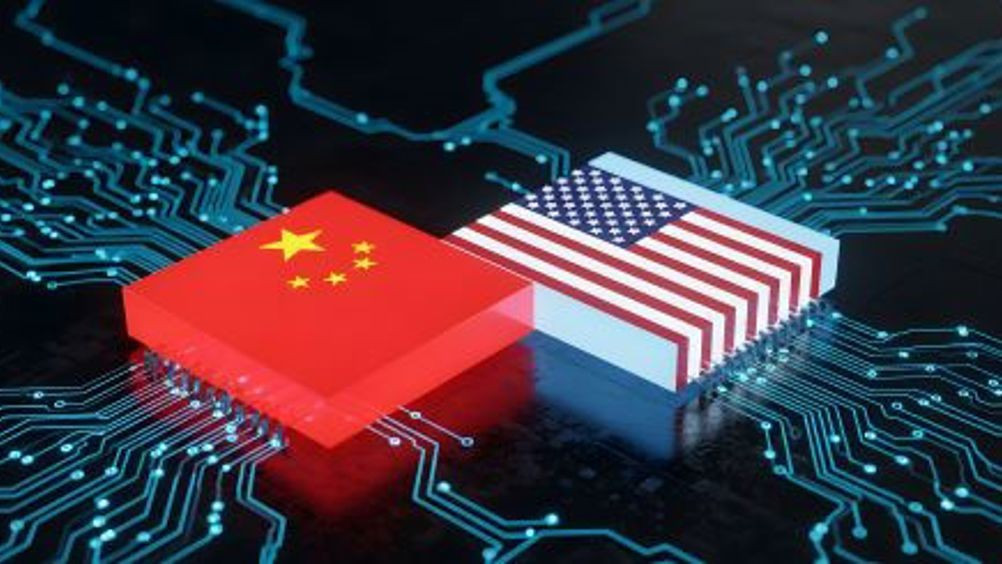
A bipartisan group of eight U.S. lawmakers led by House committee leaders has formally pressed the Trump administration to expand and tighten export controls on advanced semiconductor manufacturing equipment to China, warning that current entity-specific restrictions leave “critical gaps” that Beijing is exploiting to advance its chipmaking capabilities. They argue that restricting China’s access to so-called chokepoint tools — including advanced lithography systems China cannot produce domestically — is vital for U.S. national security and technological competitiveness, and called for broader countrywide controls and allied cooperation to prevent the transfer of key chipmaking gear and subcomponents into Chinese hands, as well as restrictions on servicing existing machines already in China. The lawmakers asked for a briefing within the next month on the administration’s strategy to secure allied alignment on these measures, underscoring urgency amid concerns that China’s imports and domestic development of semiconductor tools could erode U.S. leverage.
Sources
https://www.theepochtimes.com/china/lawmakers-urge-trump-admin-to-exercise-leverage-over-china-with-chipmaking-equipment-controls-5984035
https://www.reuters.com/world/us/us-lawmakers-push-curb-chinas-access-chipmaking-tools-2026-02-11/
https://www.lokmattimes.com/international/us-lawmakers-push-tighter-china-chip-curbs/amp/
Key Takeaways
• A bipartisan coalition in the U.S. House is urging expanded export control laws that would impose broader, country-wide limits on China’s ability to acquire advanced semiconductor manufacturing equipment.
• Lawmakers specifically target “chokepoint” tools — technologies critical for advanced chip production that China currently cannot replicate domestically — and warn that existing entity-based controls are insufficient.
• The group has requested a briefing from the Trump administration within the next month outlining its plan to coordinate with allied nations on these tighter restrictions, reflecting rising concern over strategic competition with China in high-tech sectors.
In-Depth
In a clear sign of intensifying concern over China’s growing foothold in high-end technology, several influential members of the U.S. House of Representatives have stepped forward with a firm call for tighter export controls that would choke off Beijing’s access to the world’s most advanced semiconductor manufacturing equipment. This effort, led by the chairman of the House Select Committee on China and the chairman of the House Foreign Affairs Committee, reflects bipartisan agreement that maintaining American technological superiority — particularly in semiconductor production — is a cornerstone of national security and economic competitiveness.
The lawmakers contend that current U.S. export control policy, which often targets specific companies within China, is no longer sufficient. Under existing rules, certain foreign-produced semiconductor manufacturing equipment is only restricted when sold to designated entities, leaving other channels open that China has been able to exploit. With these loopholes, China has reportedly more than doubled imports of critical tools in recent years, eroding U.S. leverage and aiding Beijing’s push toward technological self-sufficiency. Officials have sounded alarms that once advanced tools cross into Chinese territory, enforcement becomes nearly impossible; verification visits are slow, heavily monitored, and largely impractical, making it difficult for the U.S. government to ensure tools are not repurposed for military or intelligence applications.
The lawmakers’ proposed solution is twofold: first, put in place country-wide export controls that apply to all semiconductor manufacturing chokepoint equipment regardless of the specific buyer; second, work closely with allies to implement matching restrictions on the sale and servicing of these tools. By pressing allied governments to align with U.S. policy, the lawmakers hope to close gaps that have allowed China to import advanced machinery through partners that have historically resisted sweeping export bans. They assert that cooperation on this front is essential, as semiconductor supply chains are global and dispersed across many nations.
Additionally, the group urged the administration to prepare contingency plans that would allow the United States to unilaterally restrict exports of U.S.-origin components used in the production of advanced chipmaking tools if allied nations fail to adopt similar countrywide controls. This underscores the growing urgency among U.S. lawmakers to protect strategic technological advantages amid fierce geopolitical competition with China.
The push for tighter export controls comes against a backdrop of concern that Beijing is closing the technological gap in semiconductor production, an industry at the heart of emerging technologies such as artificial intelligence, advanced communications, and next-generation military systems. By restricting access to the most advanced processing tools — from extreme ultraviolet lithography systems to crucial subcomponents — the lawmakers believe the United States can slow China’s advancements and maintain leverage in future negotiations. They have asked for a briefing from the Trump administration within the next month to outline a comprehensive strategy that incorporates allied cooperation and clearly defined timelines for implementing these broader controls. The evolution of this push will be a key indicator of how the U.S. intends to balance economic competition and national security in the global semiconductor sector.