

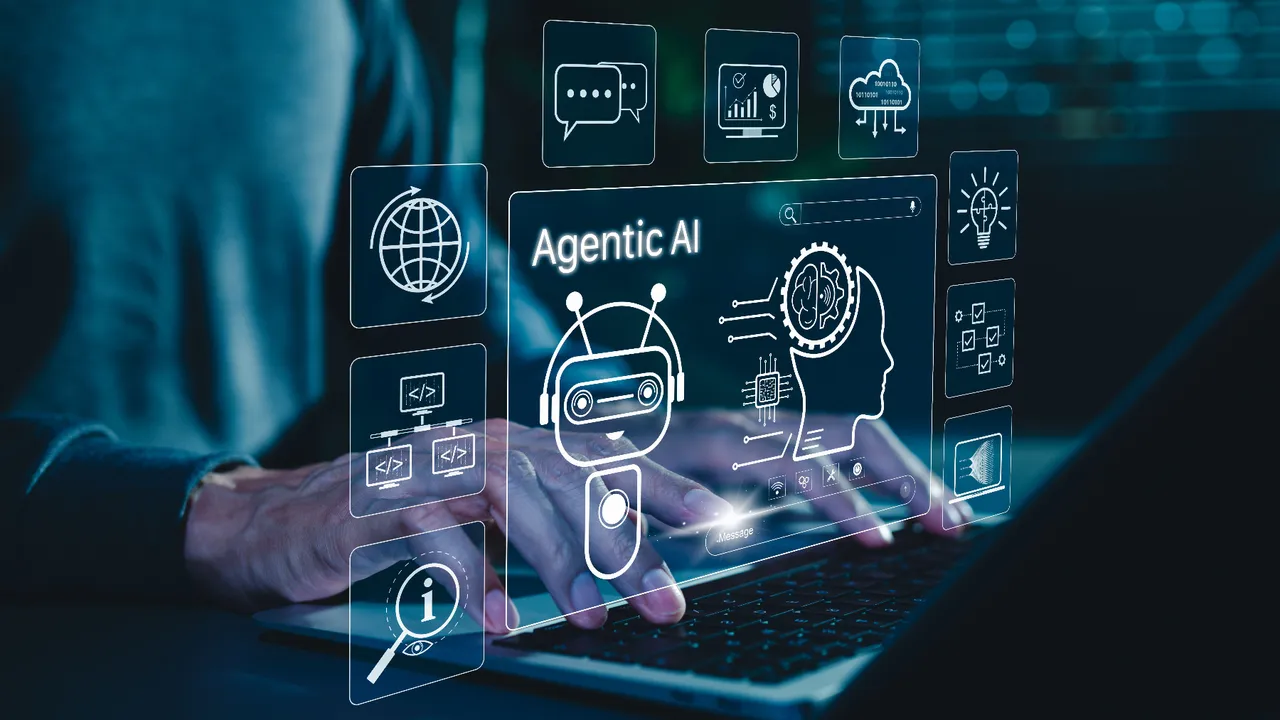
A recent article titled “Practical AI: The Age of Agentic AI” argues that we’re shifting from simple AI copilots toward more powerful — and autonomous — “agentic” systems capable of planning, reasoning, and executing complex business workflows end-to-end. These systems can coordinate across data sources, self-learn, and dynamically manage tasks like supply-chain disruptions or process optimization. But with that new power comes new danger: many organizations lack the data quality, governance frameworks, and oversight needed to safely deploy agentic AI at scale. The story is one of real opportunity tempered by serious practical and ethical constraints.
Sources: Booz-Allen, arXiv
Key Takeaways
– Agentic AI represents a dramatic leap from passive AI assistants toward fully autonomous systems that can design, plan, and execute multi-step tasks across domains.
– The technical potential is huge — but widespread adoption hinges on clean, reliable data and strong governance protocols to manage risk, security, and transparency.
– Emerging research suggests that no single model will dominate: hybrid architectures blending “symbolic” and “neural/generative” paradigms may offer the best balance between safety, adaptability, and real-world usefulness.
In-Depth
Over the past few years, AI adoption in business has mostly centered on assistants — chatbots, copilots, and tools that help users get through individual tasks. But according to “Practical AI: The Age of Agentic AI,” courtesy of ITPro, we are now stepping into what may be a bigger transformation: autonomous AI agents that proactively handle workflows — all without continuous human prompting. These agents don’t just respond; they reason. They plan. They execute. They coordinate across applications. And importantly, they learn.
Imagine a global supply chain. In traditional systems, humans monitor inventory, spot disruptions, and redirect logistics manually. With agentic AI? One “AI Super Agent” might detect supply delays, reallocate resources, adjust orders, and reroute shipments in real time — all while flagging anomalies and optimizing costs. That kind of multi-domain orchestration is what agents are being built to do.
But as the ITPro article stresses, this isn’t magic. It’s deeply complicated. Several high-level technology executives quoted in the article argue that the biggest bottleneck isn’t the AI itself — it’s the underlying data quality and enterprise readiness. One executive estimates only 12% of companies currently have data clean and robust enough for reliable AI outputs. In effect, autonomous AI is only as good as the data it’s built on. Without transparency, explainability, and auditability, those systems risk becoming “black boxes” – powerful, but untrustworthy.
That concern resonates in broader industry analysis. The consulting firm behind the report “The Age of Agentic AI” argues that agentic AI could eventually transform software architecture itself. Rather than building rigid applications hand-coded with strict protocols and fixed workflows, companies might rely on AI systems that reason, adapt, and solve emergent problems autonomously. In this vision, software becomes fluid; problems get solved on the fly; scaling becomes far easier. Yet the same flexibility introduces serious management challenges. As workflows become less deterministic and more AI-driven, ensuring reliability, safety, and alignment with business objectives becomes far more difficult.
Academic research adds even more nuance. A recent comprehensive survey of 90 studies published in October 2025 explores how current agentic-AI systems span two broad paradigms: symbolic (relying on algorithmic planning and persistent state) and neural/generative (leveraging large language models and prompt-based orchestration). The authors argue that domain constraints — such as safety-critical systems in healthcare versus fast-paced, data-rich environments like finance — should guide which paradigm to use. Symbolic systems offer reliability and predictability, whereas generative models provide flexibility and adaptability. The paper concludes that hybrid systems — combining symbolic stability with generative flexibility — are likely the winning architecture for real-world adoption.
That insight is especially relevant given the hype around AI autonomy. Many of the flashy demos assume perfect conditions — clean data, controlled environments, and tightly scoped tasks. The real world is messier. Enterprises contend with legacy systems, inconsistent data silos, regulatory compliance, and unpredictable external variables. In those contexts, pure autonomy without guardrails is risky.
The emerging consensus seems to be this: agentic AI holds enormous promise — but it’s not about building armies of AI bots and letting them run wild. Instead, the future depends on careful design. That means embedding agents within governance frameworks, deploying them only where data integrity is solid, building transparency and audit trails, and often keeping humans “in the loop” to manage exceptions. It means starting small — perhaps with design-time agents or low-code tools — and gradually scaling as confidence grows.
For companies ready to embrace it, agentic AI could relieve employees of rote tasks, boost efficiency, and accelerate decision-making. For the rest, it might remain an interesting concept — full of potential, but not yet practical.
The shift into this “agentic” era marks more than a technical milestone: it’s a test of enterprise discipline, data maturity, and ethical readiness. How well organizations navigate that test could determine whether AI becomes a true partner — or an uncontrolled wildcard.