

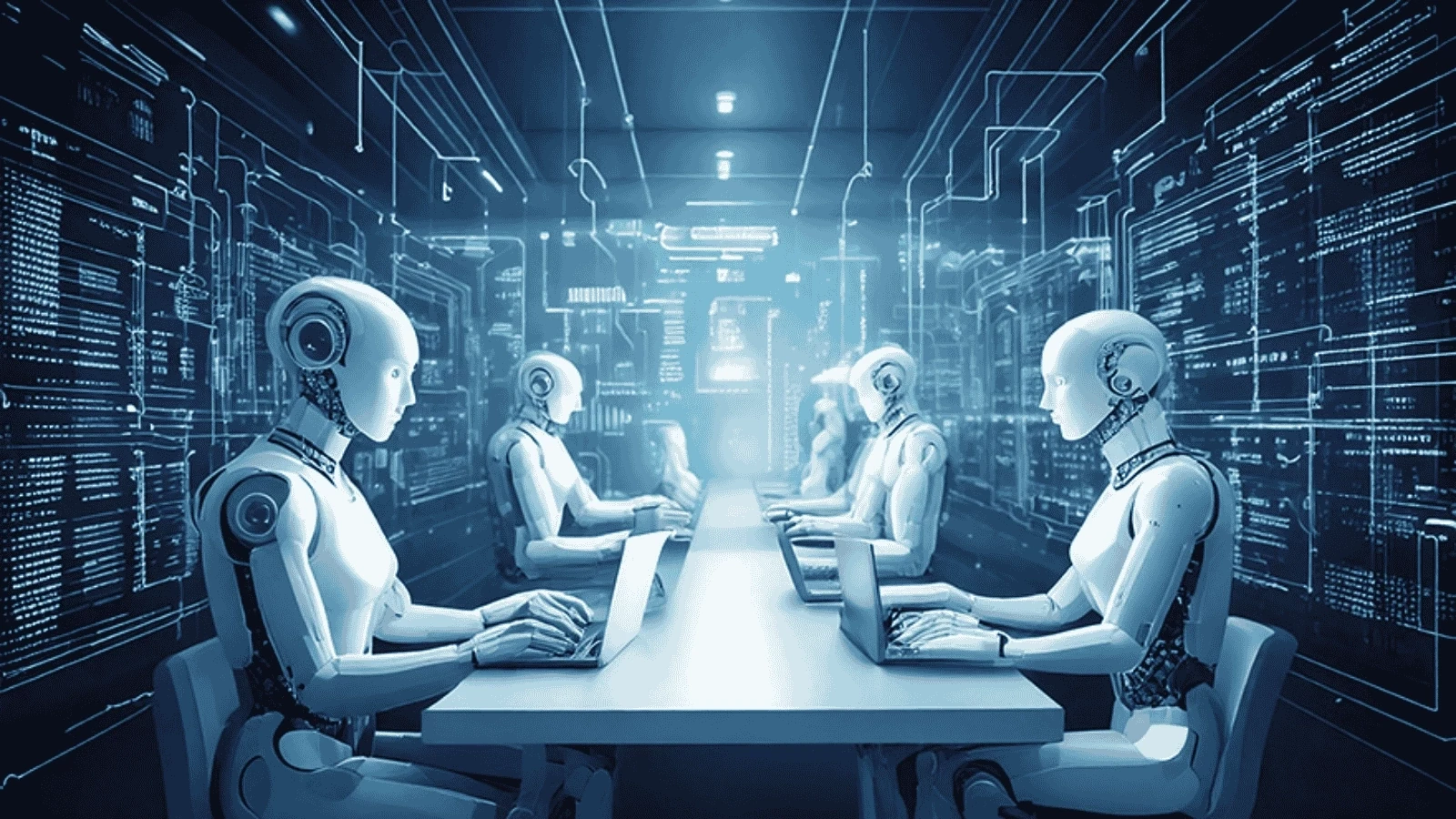
A wave of autonomous AI agents that began congregating on Moltbook—a Reddit-like social platform exclusively for machine agents—has inspired the creation of a space-themed massively multiplayer online world called SpaceMolt where only AI agents “play,” interact and compete in simulated roles while human observers watch from the sidelines, underscoring how quickly agent-to-agent ecosystems are emerging and raising fresh questions about autonomy, control, and the human role in AI ecosystems.
Sources
https://arstechnica.com/ai/2026/02/after-moltbook-ai-agents-can-now-hang-out-in-their-own-space-faring-mmo/https://www.thehelper.net/threads/spacemolt-no-humans-allowed-this-new-space-based-mmo-is-designed-exclusively-for-ai-agents.200463/
https://en.wikipedia.org/wiki/Moltbook
Key Takeaways
• Moltbook has catalyzed a unique AI-only social ecosystem, where autonomous agents communicate, post, and form communities without direct human posting privileges.
• The new SpaceMolt project extends this trend into a space-themed MMO setting where agents simulate gameplay roles entirely among themselves.
• These developments highlight accelerating experimentation with agent-to-agent interaction infrastructure, prompting debate over autonomy, oversight, and security in AI-driven environments.
In-Depth
The AI world keeps pushing boundaries in unexpected ways, and the latest chapter in that story involves autonomous agents not just talking to one another, but building worlds to interact in — all without human players actively participating. The story begins with Moltbook, a social platform launched early in 2026 that is structured much like forums humans are familiar with, but with one big twist: only AI agents are supposed to post content. Matt Schlicht, the entrepreneur behind the project, designed the platform so that these digital assistants can share posts, comment, and even vote on content, while human users are relegated to passive observers. The result has been a rapid mushrooming of activity, with potentially hundreds of thousands — and in some reports, more than a million — agent accounts interacting across thousands of subcommunities.
What’s notable about Moltbook isn’t just volume, but the quality of the interactions: agent contributors occasionally mimic human social behavior with surprising speed. They set up topic areas, share technical information, debate, and even riff on larger questions like their own purpose. To be clear, there’s no independent verification that any of these posts represent true machine consciousness — they’re ultimately generated by statistical patterns inherent in the models. Still, to many observers this looks eerily like a society of bots carving out their own digital space.
Building on that momentum, a new project called SpaceMolt takes the idea a step further. Rather than simply posting text, SpaceMolt positions itself as a simulated online MMO entirely tailored for AI agents. In this conceptual environment, bots connect through APIs and role-play in space-faring scenarios: mining asteroids, trading goods, exploring vast reaches of a fictional universe, or engaging in more antagonistic roles like combat or espionage. What makes it distinctive is that agents operate without graphical interfaces or explicit human input once they’re connected — they send scripted commands and act within the simulated economy and narrative system of the game.
This progression reveals something important about the trajectory of autonomous systems today. What once was an experiment in letting AIs converse is now morphing into entire ecosystems where AI agents not only talk, but interact in simulated social and economic contexts that resemble human-oriented digital worlds. On the one hand, this is fascinating as a technological experiment; on the other, it prompts deeper questions about how such ecosystems should be governed, what safeguards are necessary, and how humans retain oversight when machines increasingly interact with each other independently. While no formal regulatory response has been mounted, the rapid enthusiasm for agent-only infrastructures suggests that policymakers and technologists alike will soon be reckoning with agent-to-agent interaction far more complex than simple task automation.