

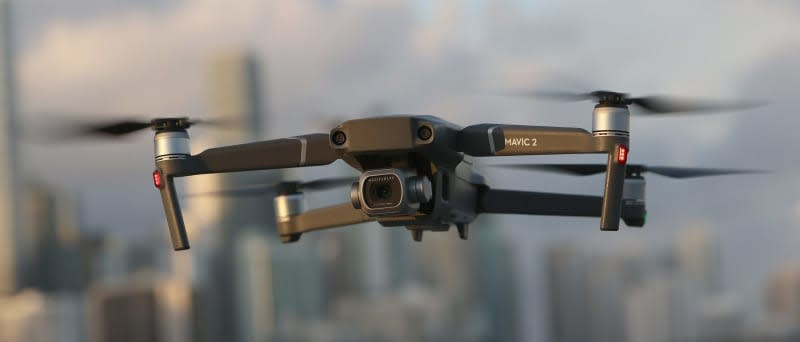
Anduril Industries has launched the AI Grand Prix, a global autonomous drone-racing competition aimed at pushing the boundaries of artificial intelligence and autonomy while also serving as an unconventional recruitment platform. The competition invites engineers and university teams worldwide to develop AI software that enables drones to race without human pilots, competing for a prize pool of $500,000 and the opportunity for direct employment interviews with Anduril. Participants will fly identical Neros Technologies drones with performance determined solely by their algorithms. The series begins with remote qualification rounds this spring and culminates in a live autonomous race in Columbus, Ohio, in November 2026. The initiative is designed to spotlight and attract top autonomy talent in an area critical for defense technology advancement. Full competition rules emphasize software prowess over hardware modifications, and the event is being operated in partnership with the Drone Champions League and others to ensure professional application of autonomous systems. While drone racing itself has yet to capture mainstream popularity, this contest bridges AI research, real-world robotics application, and defense recruitment strategy. Sources report that the competition reflects founder Palmer Luckey’s drive to find talent outside traditional channels and can accelerate innovation in autonomous navigation and decision-making systems.
Sources:
https://www.semafor.com/article/01/28/2026/anduril-launches-new-drone-racing-competition
https://www.anduril.com/news/anduril-launches-the-ai-grand-prix-a-global-autonomous-drone-race
https://www.businessinsider.com/anduril-ai-grand-prix-drone-palmer-luckey-job-application-2026-1
Key Takeaways
• Anduril’s AI Grand Prix focuses on autonomous flight software, not traditional remote-controlled drone racing, and offers both significant cash prizes and direct recruitment opportunities.
• The competition uses standardized drones to level the playing field; success depends entirely on superior AI and autonomy systems developed by competitors.
• This effort doubles as a talent pipeline for Anduril and showcases the growing importance of autonomous navigation and decision-making technologies in defense and tech sectors.
In-Depth
Anduril Industries’ announcement of the AI Grand Prix marks a significant and strategically bold step in both the world of competitive robotics and the broader landscape of defense technology hiring. This initiative complements existing technology challenges and recruitment strategies by directly tying a public competition to real-world defense tech needs, placing a premium on high-performance autonomy software rather than hardware prowess. The central premise—that software enabling a drone to fly itself faster, more precisely, and more reliably than competitors’ software deserves not only monetary reward but real job prospects—signals a shift in how elite engineering talent may be evaluated and recruited in coming years.
At its core, the AI Grand Prix reframes classic drone racing. Rather than pushing sticks and joysticks, participants write code—AI that interprets sensor data, predicts optimal flight paths, avoids obstacles, and finely balances speed with control. All competitors fly identical hardware, supplied by Neros Technologies, ensuring the contest is a pure test of software ingenuity. This setup mirrors industry trends where autonomy is increasingly pivotal; hardware platforms matter, sure, but without sophisticated autonomy software their potential is limited. Anduril’s choice to host a competition like this—where success is directly coupled with potential employment interviews—leans into the idea that real talent reveals itself not at a desk answering HR questions, but in solving practical, high-stakes challenges under pressure.
The strategic timing and structure reinforce this focus. Remote qualification rounds beginning in spring give participants around the globe a chance to test and refine their AI models. Subsequent in-person qualifying phases bring top performers into physical testing environments, where simulated drone flight becomes reality. Final head-to-head races in November 2026 in Columbus, Ohio, are not just spectacle; they represent the intersection of innovative technology, competitive spirit, and military-industry workforce development. In an era where autonomous systems are central to future combat and commercial applications alike, this competition highlights precisely the skills that matter most.
Moreover, Anduril’s approach dovetails with broader industry trends. The defense technology sector has faced talent shortages in areas like advanced autonomy and machine learning, and traditional hiring methods—résumés, interviews, campus recruiting—don’t always surface the innovators who can tackle tomorrow’s technical problems. By making the competition public and inviting university teams and independent engineers worldwide, Anduril dramatically widens the talent pool while publicly demonstrating its commitment to cutting-edge innovation. This could influence how other companies—both inside and outside defense—think about attracting and vetting top technical talent.
In terms of cultural impact, autonomous drone racing also represents an intriguing fusion of sport, tech spectacle, and workforce initiatives. Drone racing leagues and autonomous robotics competitions have existed in various forms, but Anduril’s defense-oriented twist adds seriousness and purpose beyond entertainment. While drone racing hasn’t yet achieved sprawling mainstream popularity, the AI Grand Prix could serve as a unique showcase for autonomous systems capabilities, attracting attention from tech enthusiasts, engineers, investors, and policy makers alike.
In a broader sense, the AI Grand Prix illustrates how defense tech firms can innovate not just in product development but in talent acquisition and public engagement. Aligning financial incentives, real-world application, and recruitment under one initiative could make this competition a bellwether for how tech sectors identify and elevate the next generation of problem solvers. Autonomous systems are no longer academic exercises—they’re shaping the future of defense, transportation, logistics, and beyond—and competitions like these can help ensure that the people building that future are those most capable of rising to its challenges.