

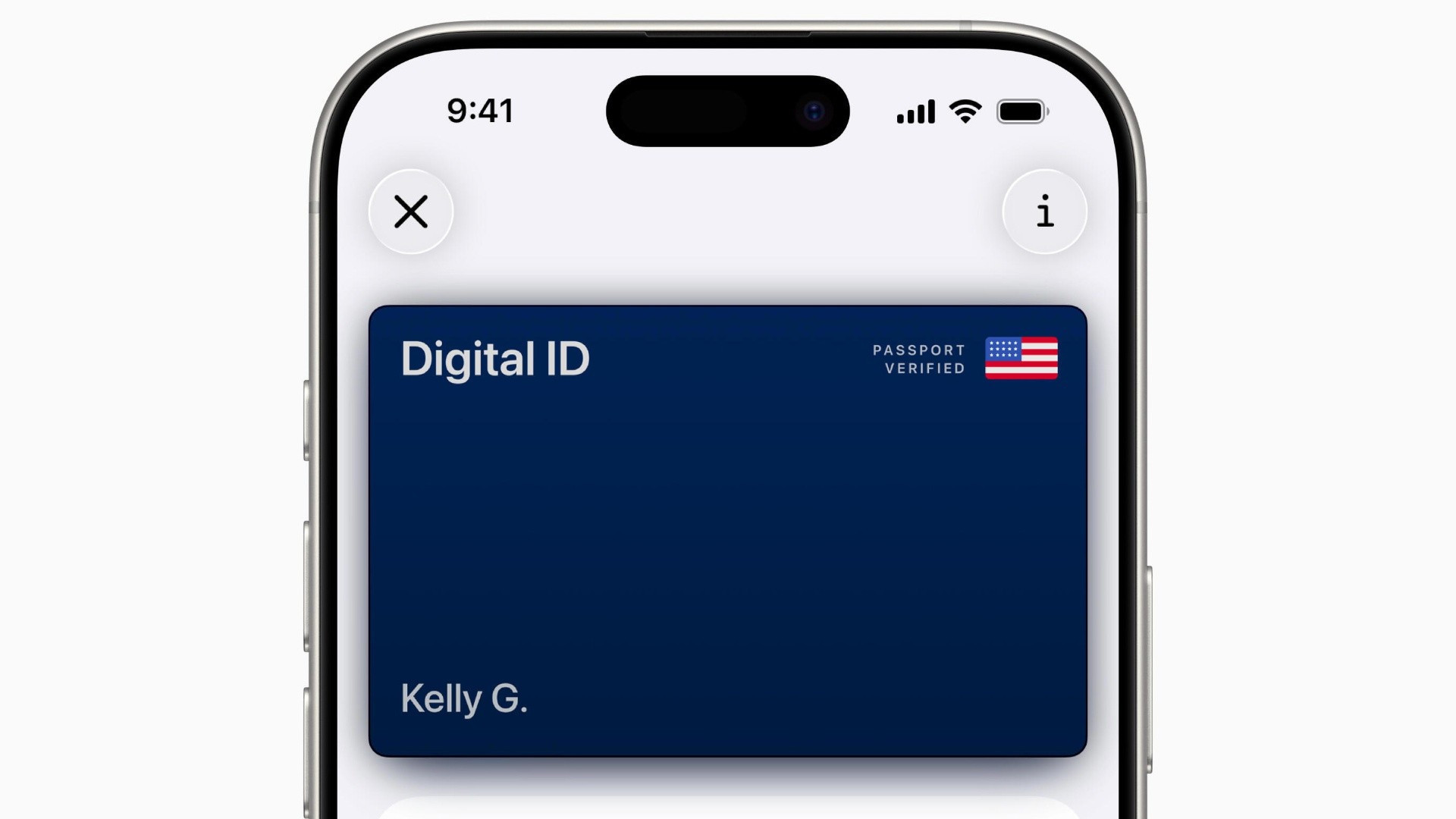
Apple recently revealed that its Wallet app will soon allow U.S. users to add their U.S. passports as digital IDs in the upcoming software update tied to iOS 26. According to reports, the digital passport feature will be usable for identity checks at select Transportation Security Administration (TSA) checkpoints for domestic travel and for verification within apps and stores — though Apple emphasizes this is not a replacement for the physical passport and cannot be used for international border crossings. Rolling out this fall, the move comes as Apple further expands its digital-identity ambitions beyond boarding passes and payments.
Sources: MacRumors, Identity Week
Key Takeaways
– The digital passport feature in Apple Wallet will allow U.S. passport holders to add a digital version of their passport for domestic travel identity checks, but it cannot replace the physical passport (especially for international travel).
– Adoption is limited: only select TSA checkpoints will support the feature initially, and users will still need a compatible iPhone (and sometimes Apple Watch) and software version to participate.
– While offering convenience, the rollout signals Apple’s broader push into digital identity management — which raises questions around privacy, compatibility, and reliance on a single device for critical identity verification.
In-Depth
In a move that blends convenience with complexity, Apple’s announcement that U.S. passports will soon be eligible to live in the Apple Wallet app reflects both the promise and the caveats of digital-identity innovation. On one hand, flying domestically has long involved presenting a physical government-issued photo ID (or passport) at TSA checkpoints — a ritual that Apple now aims to streamline by expanding its Wallet’s scope beyond boarding passes and payment cards.
With the forthcoming iOS 26 update, Apple intends to allow U.S. users to “create a digital ID in Wallet using your U.S. passport.” According to Apple’s early disclosures, once enrolled, the digital version can be presented at select TSA checkpoints and used in apps, online and in-person, for identity or age verification. Yet, Apple carefully frames the feature: it is not a substitute for the physical passport or state driver’s license, and it won’t work for international border crossings or all airports. (MacRumors, IdentityWeek, TechCrunch)
From a conservative viewpoint, this is an incremental but meaningful shift in how identity is verified in the United States — one that should be welcomed cautiously. On the plus side, it offers a pathway to reducing friction at airport checkpoints, especially for domestic travelers who may carry passports or state IDs yet still face bureaucratic delays. That suits the dynamic of a modern, mobile-first society, and underscores the value of private enterprise (in this case, Apple) providing technological integration with government systems (TSA / Department of State).
Still, several practical and policy-oriented concerns remain. First, the rollout is clearly limited: only select U.S. states currently support digital driver’s licenses or IDs in Apple Wallet; adding in passports will expand the usage base, but the referenced airports and checkpoints that accept digital IDs are still a fraction of the total. TSA itself notes that while more than 250 airports may accept digital IDs, that encompasses a broad program for driver’s license alt IDs and does not yet equate to universal use. (turn0search14) If you turn up at the wrong airport or with a digital passport in an unsupported zone, you could find yourself forced to use the physical booklet anyway.
Second, reliance on technology raises risk. If your iPhone battery is dead, if your device is lost or stolen, or if the software glitch occurs — the physical passport remains the fallback. Apple’s own documentation reiterates the need to keep the physical version of your ID around. That should give pause to travelers who might otherwise assume the digital version “replaces” paper. Also, from a privacy and security perspective, the idea of merging one’s foundational identity document into a connected device increases dependence on a proprietary ecosystem. Some civil-liberties observers worry about over-reliance on devices and the precedent of digital identity tracking — which echoes resistance seen around digital driver’s-licenses scan acceptance.
Third, from a policy angle, liberal states and federal regulators will have to contend with questions of access, equity and interoperability. Not every American will have the compatible hardware, will feel comfortable storing their passport digitally, or travel via airports that support the tech. This creates a potential two-tier system: one group flows through TSA with their digital wallet, another remains tied to analog passports and IDs. From a conservative perspective that emphasizes individual-choice and decentralization, it’s good that Apple isn’t forcing abandonment of the physical passport — the feature remains optional and supplemental. But we should demand that physical options and independent verification remain robust so that the digital shift does not end up disadvantaging those who opt out or are left behind.
Lastly, consider timing and rollout risk. Apple originally announced passenger boarding-pass enhancements and digital ID support for driver’s licenses several years ago. The passport integration, despite being announced for fall 2025, appears to have been delayed; Tom’s Guide reports the feature isn’t yet live and may require iOS 26.1 or later. (turn1news11) That likely means adoption will be gradual, which is fine — but travelers should not assume it’s fully operative at launch.
In your realm of heavy travel, frequent domestic flights, and interest in organizational logistics, this change is worth noting — especially if you hold an iPhone and passport and regularly transit U.S. airports. It suggests fewer items in your physical wallet, less fumbling at checkpoints, and a tangible step toward “wallet-less” travel. However, it does not—yet—mean you can leave the blue passport booklet behind or assume seamless utility everywhere. Keeping the physical passport handy remains wise.
From a planning standpoint, you may want to monitor the rollout by:
– Confirming whether your departure and arrival airports support digital passport checks.
– Checking your iPhone’s eligibility (often iPhone 8 or newer, iOS 16.5+ for related ID features; some states demand newer devices). (turn0search1)
– Maintaining the physical passport until the digital ID rollout becomes robust in your usual travel corridor.
– Considering the backup plan: if your phone fails or is denied at TSA, use the booklet.
– Staying updated on terms of use, privacy disclosures and opt-in steps to avoid surprises.
In conclusion: Apple’s push to bring U.S. passport integration into Wallet is a logical step in the evolution of digital identification — it aligns with familiar conservative themes of innovation, private-sector leadership and consumer choice. But its value lies in first steps, not sweeping transformation. For now, it offers an additional convenience — a “nice to have” upgrade — rather than a wholesale replacement of the physical passport system. Those who travel frequently and adopt early stand to benefit, but caution, awareness and a backup plan remain smart.