

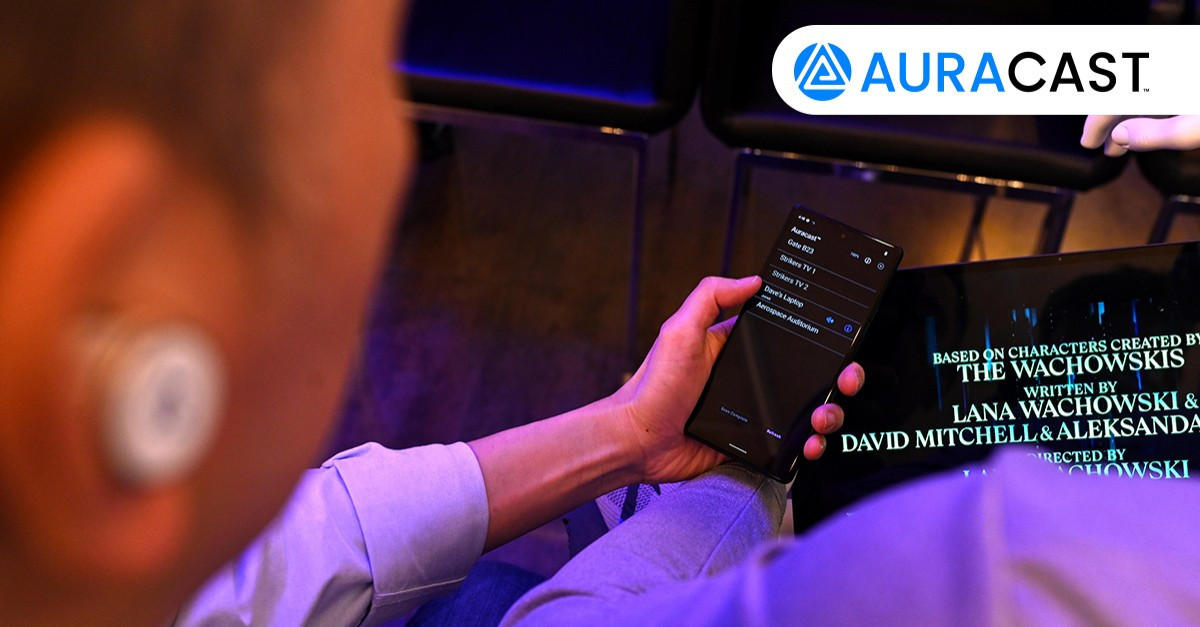
Auracast, the Bluetooth LE Audio technology designed to let a single device broadcast sound to multiple receivers (like headphones or hearing aids) — instantly and without pairing — is already present in many products from major brands such as JBL, LG, Samsung, and Google. Nevertheless, most manufacturers fail to mention it in marketing materials, and public awareness remains tiny, greatly limiting real-world use even where the hardware already supports it. In some cases early adopters like JBL have faced compatibility issues, and venues have only just started deploying Auracast — from gyms and theaters to public-space PA systems — even though the tech has the potential to transform audio sharing, accessibility, and convenience for millions.
Sources: Bluetooth.com, The Verge
Key Takeaways
– Auracast is already supported in a wide array of devices — TVs, phones, speakers, earbuds, and hearing aids — but minimal promotion from manufacturers has left most consumers unaware that they even own it.
– In practice, real-world use remains limited due to early implementation problems (especially device interoperability) and slow rollout in public venues, reducing Auracast’s reach well below its potential.
– If the industry embraced better marketing and cross-brand compatibility, Auracast could significantly improve how we share and consume audio — from private listening at home to accessible broadcasts in airports, gyms, theaters, and other public spaces.
In-Depth
The promise of Auracast lies in its simplicity and flexibility. Under Bluetooth LE Audio, Auracast lets one “transmitter” (like a TV, smartphone, or public-address system) send audio to many “receivers” (headphones, earbuds, even hearing aids) at once — no pairing needed, just tune in, much like tuning a radio. For individuals using hearing aids or earbuds, that’s a big step forward: everyone in a room can listen to the same content independently, adjusting the volume to their preference. Families could quietly watch TV at night, gymgoers could tune into treadmills’ screens or TVs without wires or bulky headphones, and hearing-impaired listeners could access broadcasts in public spaces like airports or lecture halls with far greater clarity.
And yet despite all the potential, the rollout has been sluggish enough that many people don’t even know Auracast is a thing. A recent article noted that major brands such as LG and Samsung embed Auracast in their TVs — but almost never mention it in product pages or ads. This isn’t limited to TVs: earbuds, speakers, phones, and even hearing aids in many cases advertise simply as “Bluetooth 5.2 compatible,” leaving the broadcast feature entirely opaque.
Why the quiet? Early implementation has been bumpy. Some early-adopter products have shown limited compatibility — for example, certain “Auracast speakers” only work properly with other devices from the same brand. That defeats the whole point of an open, cross-brand broadcast standard. In addition, manufacturers may see little incentive to highlight a feature few consumers know how to use — especially when they’d rather drive sales of proprietary or walled-garden features.
That said, the ecosystem is starting to stir. Audio-technology suppliers specializing in hearing aids and public venues have begun rolling out Auracast-enabled “retrofit” systems — allowing existing TVs, PA systems, or presentation setups to broadcast directly to users’ devices. That means substantial upgrades without costly overhauls, and the ability to meet accessibility standards in theaters, lecture halls, or public transport hubs. A national hearing-health advocacy group recently documented how brands have begun adding Auracast to TVs, earbuds, hearing aids, and dongles — evidence that support is expanding.
From a conservative viewpoint, this is exactly the kind of low-hassle, market-driven innovation that tends to deliver real-world results over time: a broadly compatible standard that doesn’t require heavy regulation or subsidies — just consumer demand and manufacturer transparency. If brands were more upfront about Auracast, and if consumers began valuing convenience and accessibility, the technology could find itself quietly embedded in daily life.
Unfortunately, at present it remains a niche — a “silent revolution” that most people don’t even realize they could have access to. Without better marketing, broader compatibility, and more venue adoption, Auracast risks staying a clever experiment rather than the standard it’s capable of.