

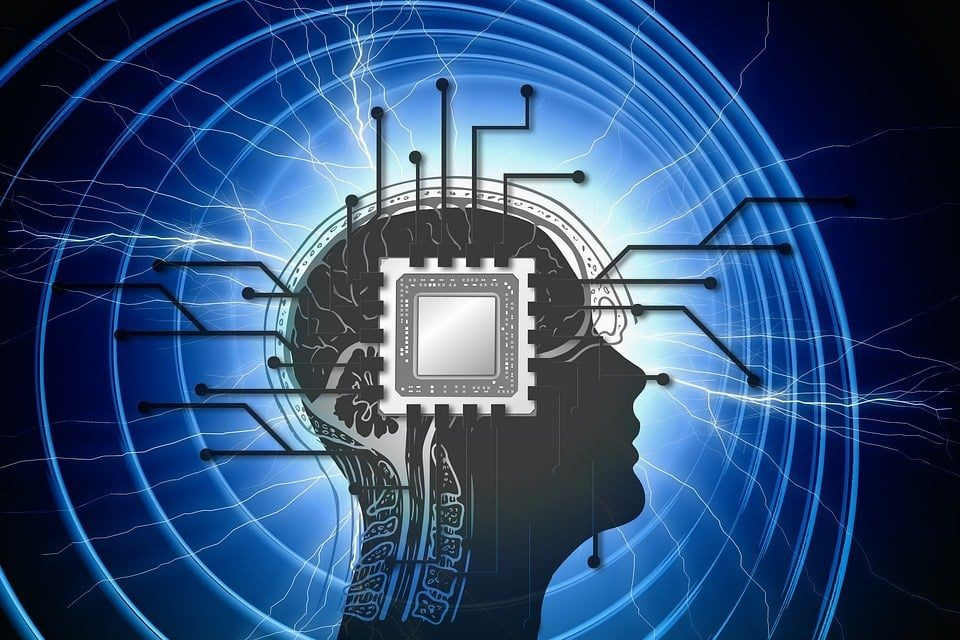
Scientists at the University of Southern California have developed a new type of artificial “neuron” using a diffusive memristor stacked with a resistor and transistor that physically emulates the chemical and electrical operations of brain cells, rather than just their software simulation. This system replicates complex behaviours of biological neurons—including ion-driven spiking, leaky integration, stochastic firing and refractory periods—while occupying a footprint as small as a single transistor and consuming orders of magnitude less power than conventional chips. The breakthrough, published in Nature Electronics, may bring us significantly closer to neuromorphic computing architectures suited for artificial general intelligence.
Sources: SciTech Daily, USC.edu
Key Takeaways
– These artificial neurons use ion-based dynamics (silver ions diffusing in a memristor) to replicate not just neural network models, but biologically-inspired hardware behaviour, enabling spikes, thresholds and leakiness in a compact footprint.
– The technology promises dramatic gains in energy efficiency and size reduction compared to conventional AI hardware, potentially overcoming a major bottleneck in scaling large-language-models and other AI systems.
– Significant hurdles remain for commercial use—most notably compatibility with standard semiconductor fabrication and finding ion materials (silver is used now, but alternatives will be needed) and scaling large arrays of these devices for full neuromorphic systems.
In-Depth
In recent years the AI world has been dominated by software breakthroughs: larger models, more data, faster GPUs. But underlying that progress lies a persistent hardware challenge: energy consumption, heat dissipation, chip real-estate and diminishing returns as Moore’s Law slows down. That’s why this development at USC matters: the team built artificial neurons that don’t just simulate neural behaviour in code or emulate it in digital form, but physically replicate many of the hallmark behaviours of biological brain cells by leveraging ion-dynamics in hardware.
In the study, each artificial neuron consists of a diffusive memristor, a resistor, and a transistor—stacked in a tiny footprint (~4 µm² per neuron) inside a chip. In practice, silver-ions embedded in an oxide matrix diffuse under an applied electric field, forming and dissolving conductive filaments; this movement of atoms mimics how ions move across neuronal membranes in real brains. That ionic diffusion supports leaky integration (the gradual build-up of potential), threshold-triggered spiking (when potentials exceed a threshold), a refractory period (a brief time when the neuron is less excitable), intrinsic plasticity (its internal state adapts) and stochastic (noise-driven) behaviour. All of these mimic real neuron behaviours more faithfully than previous silicon-only approaches, which often rely on software abstractions and large transistor counts. The team reports that each neuron can be realized with a footprint comparable to a single transistor rather than dozens or hundreds, and energy consumption is dramatically lower. The lead researcher, Prof. Jin‑Woo Han (also referenced as Joshua Yang), points out that the biological brain operates on about 20 watts of power while current high-end AI systems consume kilowatts or more. Bridging that gap could unlock major gains in sustainability and deployment (e.g., on-device AI, battery-powered inference, edge computing).
From a conservative vantage, this breakthrough has several important implications. First, it reinforces that hardware innovation—especially hardware mirroring biology—remains critical for the next frontier of AI, not just bigger models or more training data. Second, the potential to drastically cut power and chip area means that AI could move beyond data-centers and cloud farms into more pervasive, embedded, and accessible contexts—without relying on ever-increasing energy budgets. Third, there’s a national-security and economic dimension: nations that master neuromorphic hardware stand to gain strategic advantage not only in commercial AI, but in defense and computing sovereignty.
That said, we must remain cautious. The current work uses silver ions—a material not yet compatible with mainstream CMOS (complementary metal-oxide-semiconductor) fabrication lines used in most chips worldwide. For commercial viability, materials that meet reliability, temperature, lifespan and cost requirements must be found. Moreover, while single-neuron behaviour is promising, the key tests lie in large-scale integration: networks of millions or billions of such artificial neurons, with synapses and interconnects, real-world training and resilience to defects. Scaling up from lab demonstration to manufacturing faces enormous engineering, yield, supply-chain and thermal-management challenges. Lastly, as hardware becomes more brain-like, questions of architecture edges blur: will we still program these systems as we do conventional computers, or will they require new paradigms of training, design and governance? From a policy and societal viewpoint, the ability to mass-deploy low-energy AI could accelerate both beneficial uses (healthcare, rural services, edge robotics) and more worrisome ones (surveillance, autonomous weapons, pervasive monitoring).
In short, the USC team’s work points toward a major inflection point: hardware that doesn’t just mimic neural networks in software, but truly replicates the analog, ionic, dynamic behaviour of neurons—offering orders-of-magnitude gains in efficiency. For real estate-scale AI, for on-device intelligence, for smarter, lower-power devices, this is exciting. But for mainstream adoption, the journey from single-chip demo to industry-scale deployment remains long, and conservative stakeholders should track materials compatibility, scalability, and downstream ecosystem readiness.
In the coming years we’ll see whether neuromorphic chips built on this kind of technology become commercially viable, whether they enable widespread smart devices that today’s silicon cannot support, and whether they herald a broader shift in the AI stack—from cloud and GPU farms to embedded, brain-like processors. If so, this might be a foundational hardware milestone for “AI everywhere” rather than “AI-only in big data-centres.” The economic and geopolitical implications of that (especially for the U.S., China and allied tech ecosystems) could be substantial.