

Close Menu

    Subscribe to Updates

    Get the latest tech news from Tallwire.

      What's Hot

      Google Cracks Down On Android Apps And Developer Accounts In 2025

      March 1, 2026

      Study Signals AI Search Shift Threatens Traditional Web Traffic Model

      March 1, 2026

      Chinese Sellers Peddling Anti-Drone Weapons On TikTok Raise Security Alarms

      March 1, 2026
      Facebook X (Twitter) Instagram
      • Tech
      • AI
      • Get In Touch
      Facebook X (Twitter) LinkedIn
      TallwireTallwire
      • Tech

        Chinese Sellers Peddling Anti-Drone Weapons On TikTok Raise Security Alarms

        March 1, 2026

        Say Goodbye to the Undersea Cable That Made the Global Internet Possible

        March 1, 2026

        Microsoft Copilot Bug Exposed “Confidential” Emails Despite Label

        February 28, 2026

        Taara Beam Launch Brings 25Gbps Optical Wireless Networks to Cities

        February 27, 2026

        Global Memory Shortage Set to Push Up Prices on Phones, Laptops, and More

        February 27, 2026
      • AI

        Study Signals AI Search Shift Threatens Traditional Web Traffic Model

        March 1, 2026

        AI Password Generation Poses Major Security Risk, Experts Warn

        February 28, 2026

        Microsoft Copilot Bug Exposed “Confidential” Emails Despite Label

        February 28, 2026

        AI Productivity Gains Concentrated Among High-Skilled Workers, Study Finds

        February 28, 2026

        X to Let Users Mark Posts ‘Made With AI’ as Platform Eyes Voluntary Disclosure Feature

        February 27, 2026
      • Security

        Google Cracks Down On Android Apps And Developer Accounts In 2025

        March 1, 2026

        Massive Exposed Database With Billions of Social Security Numbers Sparks Identity Theft Fears

        March 1, 2026

        Password Managers Share a Hidden Weakness

        March 1, 2026

        AI Password Generation Poses Major Security Risk, Experts Warn

        February 28, 2026

        Microsoft Copilot Bug Exposed “Confidential” Emails Despite Label

        February 28, 2026
      • Health

        Social Media Addiction Trial Draws Grieving Parents Seeking Accountability From Tech Platforms

        February 19, 2026

        Portugal’s Parliament OKs Law to Restrict Children’s Social Media Access With Parental Consent

        February 18, 2026

        Parents Paint 108 Names, Demand Snapchat Reform After Deadly Fentanyl Claims

        February 18, 2026

        UK Kids Turning to AI Chatbots and Acting on Advice at Alarming Rates

        February 16, 2026

        Landmark California Trial Sees YouTube Defend Itself, Rejects ‘Social Media’ and Addiction Claims

        February 16, 2026
      • Science

        Astronomers Confirm Discovery Of Galaxy Nearly Entirely Composed Of Dark Matter

        March 1, 2026

        Microsoft Claims 100 Percent Renewable Energy Match Across Global Electricity Use

        February 28, 2026

        Taara Beam Launch Brings 25Gbps Optical Wireless Networks to Cities

        February 27, 2026

        Large Hadron Collider Enters Third Shutdown For Major Upgrade

        February 26, 2026

        Google Phases Out Android’s Built-In Weather App, Replacing It With Search-Based Forecasts

        February 25, 2026
      • Tech

        Sam Altman Says ‘AI Washing’ Is Being Used to Mask Corporate Layoffs

        February 28, 2026

        Zuckerberg Testifies In Landmark Trial Over Alleged Teen Social Media Harms

        February 23, 2026

        Gay Tech Networks Under Spotlight In Silicon Valley Culture Debate

        February 23, 2026

        Google Co-Founder’s Epstein Contacts Reignite Scrutiny of Elite Tech Circles

        February 7, 2026

        Bill Gates Denies “Absolutely Absurd” Claims in Newly Released Epstein Files

        February 6, 2026
      TallwireTallwire
      Home»Tech»Chinese AI Models Drive Covert Campaign to Subvert Taiwan’s Democracy
      Tech

      Chinese AI Models Drive Covert Campaign to Subvert Taiwan’s Democracy

      Updated:February 21, 20265 Mins Read
      Facebook Twitter Pinterest LinkedIn Tumblr Email
      Chinese AI Models Drive Covert Campaign to Subvert Taiwan’s Democracy
      Chinese AI Models Drive Covert Campaign to Subvert Taiwan’s Democracy
      Share
      Facebook Twitter LinkedIn Pinterest Email

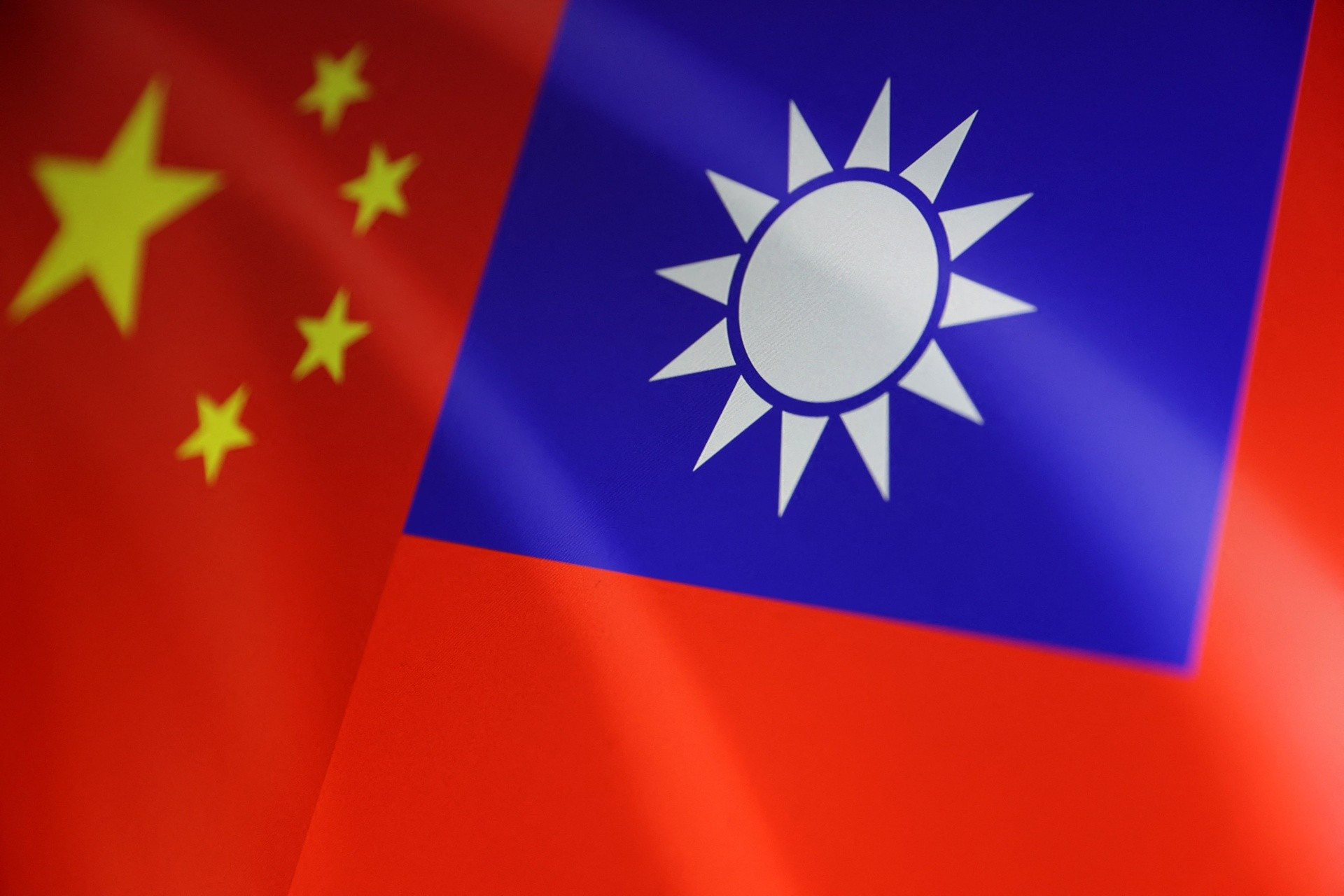
      Several Chinese-built artificial-intelligence (AI) language models are now playing a central role in what analysts describe as a broader cognitive-warfare strategy aimed at undermining the social cohesion and democratic resilience of Taiwan. According to a recent report from Taiwan’s National Security Bureau (NSB) dated November 16, multiple China-originated models were found to exhibit significant cybersecurity flaws, heavy pro-Beijing political bias in their content, and pose data-exfiltration risks via location tracking and permissions abuse. One expert commentary argues that these AI systems are being used as tools of Beijing’s so-called “unrestricted warfare,” designed to foment disinformation, erode institutional trust, and set the stage for acceptance of forced cross-strait unification. The NSB’s findings track with separate coverage from independent outlets spotlighting both the technical vulnerabilities of these apps and Taiwan’s warning to its citizenry to avoid downloads of certain Chinese AI products.

      Sources: Taipei Times, Taiwan News

      Key Takeaways

      – These China-developed AI language models are flagged not just for standard security risks but for explicitly pro-Beijing narrative bias, including claims that “Taiwan is part of China” and avoidance of terms like “democracy” or “freedom.”

      – The NSB review identified broad data-security concerns: models demanding location access, screenshot capture, device-parameter harvesting, and permissions far beyond legitimate functionality.

      – The deployment of such AI tools appears to be part of a larger, integrated campaign by Beijing—combining cyber operations, disinformation, and digital influence efforts—to weaken Taiwan’s democratic defenses, not simply a matter of stray apps.

      In-Depth

      In recent months, the democratic island of Taiwan has found itself confronting not just the well-publicized military and diplomatic pressure from the mainland, but also a sophisticated, tech-driven assault on its very democratic fabric. At the heart of this is the use of artificial intelligence (AI) language models developed in the People’s Republic of China, which Taiwan’s National Security Bureau (NSB) now identifies as major national-security vulnerabilities and psychological-operations vectors.

      According to a report dated November 16, the NSB examined five China-originated AI language models — including names like DeepSeek, Yiyan, Tongyi, Doubao and Yuanbao — and found them riddled with problems. These include rampant cybersecurity weaknesses (such as collecting location data, device parameters, screenshots and excessive permissions) and egregious content-bias issues. The models tend to adopt the political narratives of Beijing: for example framing Taiwan as a province of China, omitting keywords like “democracy” or “human rights,” and aligning with the official Chinese state line. The NSB’s inspection found nearly all of the five crossed multiple violation thresholds in its mobile-app security testing protocol.

      What makes the situation especially dangerous is that this is not just about some poorly-guarded applications; analysts argue it is part of a broader campaign by Beijing to engage in “cognitive warfare” — a term that denotes the attempt to shape perceptions, beliefs and social stability through non-kinetic means. By seeding biased content, harvesting user data, and undermining trust in democratic institutions, the deployment of these AI systems becomes part of a layered strategy, interlocking with cyberattacks, disinformation campaigns and grey-zone military actions aimed at Taiwan. From the vantage point of Taiwanese defense and intelligence officials, the goal is clear: soften public resistance, sow confusion and division, and create an environment more amenable to eventual Chinese coercion or unification.

      From a U.S.-friendly perspective, this development signals a new and troubling frontier in great-power competition — one that uses everyday technological tools, deployed globally, to project influence and control rather than strictly force of arms. For Taiwan, which already stands at the front lines of cross-strait confrontation, the need to bolster digital resilience, reinforce media literacy and guard against infiltration of its tech ecosystem has moved from academic concern into urgent national-security policy.

      In practical terms, the Taiwanese government has begun issuing public warnings and restricting certain Chinese apps from sensitive networks, while also calling on the private sector and civil society to raise awareness of the risks posed by using such tools. For democracies globally, the Taiwan case provides a warning: the future of conflict won’t just be defined by ships in the strait or jets overhead — it will increasingly be defined by algorithms, apps and influence operations aimed at shaping minds rather than firing bullets.

      Yet the threat remains difficult to contain. Once an AI model is deployed, its reach can be broad, subtle, targeted and difficult to trace. Especially when combined with well-orchestrated social-media amplification, AI-generated text and media, and state-backed propaganda, the challenge is not merely one of defense but of offense: democracies must not only block hostile tools, but also build stronger narratives, diversify trusted platforms, and deepen digital literacy among citizens. For those watching Taiwan’s struggle, it may well foreshadow the next phase of the global ideological and technological contest.

      As the cross-strait relationship remains volatile, the role of AI in national-security strategy is fast evolving — and Taiwan’s warnings deserve attention far beyond East Asia.

      Taiwan Tech
      Share. Facebook Twitter Pinterest LinkedIn Tumblr Email
      Previous ArticleChina Slashes Data-Center Power Bills to Bolster Domestic AI Chips
      Next Article Chinese-Linked “Salt Typhoon” Hackers Blocked in European Telecom Breach Attempt

      Related Posts

      Chinese Sellers Peddling Anti-Drone Weapons On TikTok Raise Security Alarms

      March 1, 2026

      Say Goodbye to the Undersea Cable That Made the Global Internet Possible

      March 1, 2026

      Microsoft Copilot Bug Exposed “Confidential” Emails Despite Label

      February 28, 2026

      Taara Beam Launch Brings 25Gbps Optical Wireless Networks to Cities

      February 27, 2026
      Add A Comment
      Leave A Reply Cancel Reply

      Editors Picks

      Chinese Sellers Peddling Anti-Drone Weapons On TikTok Raise Security Alarms

      March 1, 2026

      Say Goodbye to the Undersea Cable That Made the Global Internet Possible

      March 1, 2026

      Microsoft Copilot Bug Exposed “Confidential” Emails Despite Label

      February 28, 2026

      Taara Beam Launch Brings 25Gbps Optical Wireless Networks to Cities

      February 27, 2026
      Popular Topics
      Ransomware picks trending Satya Nadella Tesla Cybertruck Robotics Sam Altman Series B Qualcomm Startup Series A UAE Tech SpaceX Tesla Tim Cook Taiwan Tech Sundar Pichai Quantum computing spotlight Samsung
      Major Tech Companies
      • Apple News
      • Google News
      • Meta News
      • Microsoft News
      • Amazon News
      • Samsung News
      • Nvidia News
      • OpenAI News
      • Tesla News
      • AMD News
      • Anthropic News
      • Elbit News
      AI & Emerging Tech
      • AI Regulation News
      • AI Safety News
      • AI Adoption
      • Quantum Computing News
      • Robotics News
      Key People
      • Sam Altman News
      • Jensen Huang News
      • Elon Musk News
      • Mark Zuckerberg News
      • Sundar Pichai News
      • Tim Cook News
      • Satya Nadella News
      • Mustafa Suleyman News
      Global Tech & Policy
      • Israel Tech News
      • India Tech News
      • Taiwan Tech News
      • UAE Tech News
      Startups & Emerging Tech
      • Series A News
      • Series B News
      • Startup News
      Tallwire
      Facebook X (Twitter) LinkedIn Threads Instagram RSS
      • Tech
      • Entertainment
      • Business
      • Government
      • Academia
      • Transportation
      • Legal
      • Press Kit
      © 2026 Tallwire. Optimized by ARMOUR Digital Marketing Agency.

      Type above and press Enter to search. Press Esc to cancel.