

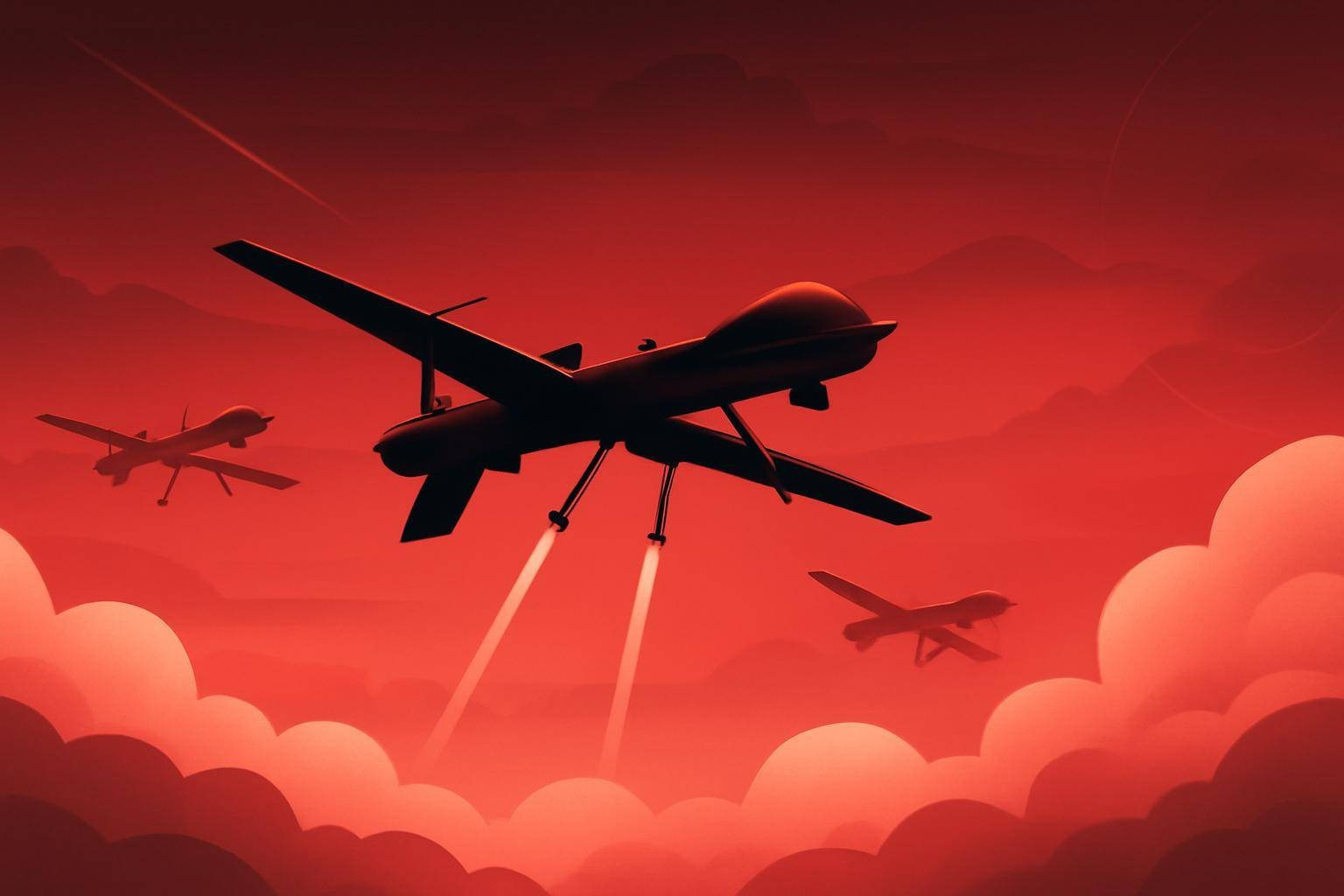
D-Fend Solutions, an Israeli defense technology firm founded in 2017, is growing into a globally deployed leader in non-kinetic counter-drone systems by using software to detect, identify and seize control of unauthorized drones without jamming communications or destroying equipment, addressing how small commercial and DIY drones have become a dominant security risk for crowded urban centers, critical infrastructure and government sites; its flagship EnforceAir platform is in use with around 30 countries, Five Eyes partners and major U.S. agencies and emphasizes precision, minimal disruption and safety in environments where traditional jamming or kinetic methods would be unsafe or unacceptable, as the broader landscape of high-tech air defense and layered systems (including directed-energy platforms like Iron Beam) highlights both emerging threats and evolving Israeli innovations in the global security market.
Sources
https://www.jpost.com/defense-and-tech/article-885530
https://en.wikipedia.org/wiki/Iron_Beam
https://en.wikipedia.org/wiki/Iron_Dome
Key Takeaways
- D-Fend Solutions’ cyber-centric EnforceAir system focuses on safe, non-destructive counter-drone capabilities that take control of unauthorized UAVs by manipulating radio-frequency links rather than resorting to broad jamming or kinetic interception.
- The rise of cheap commercial and DIY drones has shifted the threat landscape, making precision mitigation technologies a priority for airports, cities, critical infrastructure and government operations.
- Israeli defense innovation spans layered air defense, including directed-energy systems like Iron Beam and combat-proven interceptors such as Iron Dome, reinforcing the strategic importance of adaptable technology in modern security environments.
In-Depth
In a security environment where unmanned aerial vehicles have proliferated far beyond their original hobbyist roots, the challenge for defense planners isn’t just spotting hostile or unsafe drones — it’s figuring out how to neutralize them without turning one hazard into another. That’s the problem at the heart of what D-Fend Solutions sells to governments, agencies and critical infrastructure operators around the world: a way to address unwanted aircraft calmly, surgically, and without creating more chaos than the original incident. Founded in 2017 by a small team with software and systems expertise, D-Fend tapped into a niche that barely existed a decade ago and has since leveraged that early move into a significant role in the global counter-UAV ecosystem.
At the core of the company’s technology is the EnforceAir platform, a software-driven system that detects and classifies drones not by trying to blow them out of the sky or jam every radio signal in the vicinity, but by manipulating the specific radio-frequency links between the drone and its operator. In practice, that means security teams can force an errant or malicious drone to land safely or return to its controller, minimizing the risk of collateral damage, widespread communications disruption, or injury to bystanders. That approach resonates strongly in densely populated cities, at major transport hubs like airports, and around infrastructure where traditional countermeasures — broad spectrum jamming, kinetic interceptors, or net-based capture devices — would be too blunt or disruptive to be acceptable.
From a conservative standpoint, this kind of precision technology underscores a pragmatic evolution in defense priorities. It recognizes that asymmetric threats don’t always arrive in uniform packages and that state and non-state actors alike can exploit commercially available tools with minimal training. The United States, its Five Eyes partners and other allied nations have deployed D-Fend’s systems alongside other advanced defense tools precisely because they balance security with restraint. In doing so they reflect a broader commitment to protect airspace and critical assets without resorting to measures that could unnecessarily escalate clashes or disrupt ordinary civilian life.
This nuance matters because the challenge from drones isn’t limited to hostile militants or well-funded adversaries; it includes teenagers flying commercially purchased quad-copters too close to sensitive sites, misconfigured devices straying into restricted airspace and commercially developed UAVs that either fail or are misused. As the company itself notes, these “small drones” account for a large share of incidents that trigger alerts for security forces, and the response must be measured, reliable and legally defensible. The D-Fend approach treats the drone as a software problem before it becomes a physical one, which aligns with conservative principles of minimizing force and focusing on targeted solutions where possible rather than broad, indiscriminate suppression.
This focus on non-destructive intervention also sits alongside other elements of modern air defense innovation emerging from Israel and elsewhere. Directed energy systems like Iron Beam illustrate how layered approaches to aerial threats are becoming more diverse: lasers that can intercept rockets, mortars and drones at low cost per engagement complement mobile interceptor batteries like Iron Dome, which has proven its value in high-intensity conflict scenarios by defending population centers and assets against rockets and missiles. Together, these systems show a defense ecosystem that values depth, redundancy and the ability to tailor responses to the threat at hand. D-Fend’s cyber-first philosophy is an important part of that mosaic because it acknowledges the changing nature of risk and offers a proportionate tool that keeps public safety at the forefront.
As geopolitical tensions remain high in many regions, investment in technologies that can protect civilians and infrastructure without escalating confrontations is a key strategic objective. For conservative policymakers and defense planners, tools like EnforceAir offer a way to defend national interests while maintaining the rule of law, protecting innocent life and preserving critical services — all without unnecessary force. The success of these systems in deployments across multiple allied nations indicates that there is broad recognition of this kind of calibrated defense approach. In a world where threats evolve rapidly and the lines between civilian and military technology blur, pragmatic, tech-savvy responses that emphasize control and restraint are likely to be a central pillar of effective national security strategy moving forward.