

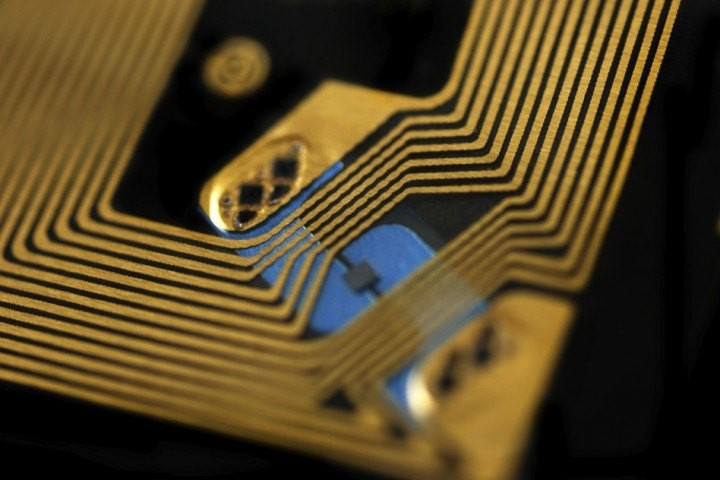
A magician in Missouri, Zi Teng Wang (stage name Zi the Mentalist), implanted an RFID microchip into his hand for magic-trick flair — only to discover recently he completely forgot the password that unlocks it, leaving him unable to reprogram or access the chip embedded in his flesh. What began as a gimmick (audience members tapping their phones to his palm to trigger a trick) evolved into a Bitcoin-address/ meme-storage device; but when the meme link expired and he attempted to rewrite the chip’s contents, the forgotten password made the implant a permanent, inert piece of hardware under his skin. Tech-savvy friends reportedly told him that the only way to recover it would be to “strap on an RFID reader for days to weeks” and brute-force every possible combination — a practical impossibility. His mishap offers a striking, cautionary illustration of what can go wrong when you embed technology inside your body, especially as more ambitious forms of bio-tech (like brain chips) edge closer to mainstream use.
Sources: Futurism, The Register
Key Takeaways
– Even simple body-embedded tech — like RFID chips — carries risks: forget your password, and the device becomes effectively permanent, buried inside you.
– What can start as a novelty or performance gimmick may morph into a regrettable long-term commitment, especially when the content tied to the implant (Bitcoin addresses, links, apps) becomes obsolete.
– As more invasive bio-hacking and neural-tech startups seek to mainstream implants, this incident underscores the need for thoughtful risk assessment — and robust fallback/backup procedures — before letting machines into your body.
In-Depth
It may sound like the setup to an over-the-top sci-fi short story: a stage magician gets an RFID microchip implanted in his hand for futuristic magic tricks, only to forget the password and become locked out of whatever data he’d stored in his flesh. That’s exactly what happened to Zi Teng Wang — and the implications go deeper than the punchline.
Back when he first got the chip, Wang thought it would be a cool party trick. Audience members could tap their phones against his palm, triggering a hidden RFID response — a little cyber-sleight of hand, blending flesh and code. But the reality fell short: most phones either have their RFID readers disabled or just don’t register the scan properly; using his own phone lacked drama. The novelty wore off. Still, curious, Wang tinkered with the chip’s contents anyway, rewriting it to store a Bitcoin address, then later a link to an image meme hosted on Imgur. For a while, it worked — or at least, it seemed to.
But memes don’t live forever. The Imgur link eventually went dead (ironically after certain UK age-verification laws prompted access restrictions), and when Wang tried to reprogram the chip, he froze: he couldn’t remember the password. The catch of embedded tech reared its ugly head.
His tech-savvy friends reportedly told him that the chip was “too dumb and simple to hack,” meaning there was no back-door or reset option. The only theoretical path to recovery would be to strap an RFID reader to his palm for days or even weeks and brute-force every possible password combination — a Sisyphean task. The result: a small, inert piece of hardware dutifully skull-tagged to his hand for life, accessible only through a long shot and great deal of effort — or a costly surgical removal.
Poking fun at the “world’s most useless cyborg,” the story may draw laughs. But beneath that levity lies a serious warning. As buzzy projects from ambitious outfits (yes — including brain-chip pioneers) promise to integrate technology more deeply into human bodies, the little details matter: passwords, backups, longevity of linked services, maintenance. If you lose access, you could be stuck with tech under your skin — the digital equivalent of a defunct implant.
And this doesn’t apply only to fringe performance magicians. Imagine a future where implants manage identity, medical records, payments, or biometric access. If protocols lapse, service providers vanish, or passcodes are forgotten — what then? The consequences might be more than inconvenient: they could be permanent.
Wang’s hand-chip fiasco isn’t just a goofy headline — it’s a microcosm of a broader dilemma. When we treat our bodies like gadgets, built-in obsolescence, forgetfulness, and the decay of external infrastructure can turn bold experiments into unfortunate life-long regrets.
If you’re ever tempted by bio-hacking — whether for novelty, performance, or perceived convenience — take this as your warning: embed with caution. And if you do manage to get something implanted — document your credentials, store them offline, build a backup plan, or better yet — think twice. Because unlike a lost phone or a forgotten password on a cloud service, a lost password in your own body might just stay lost.