

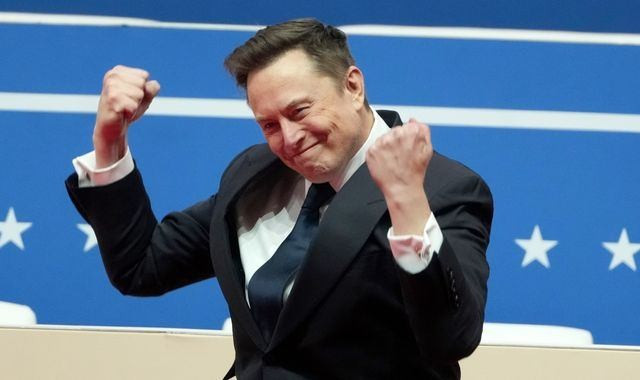
The Delaware Supreme Court has unanimously reinstated Elon Musk‘s 2018 Tesla compensation package, once valued at roughly $56 billion, overturning a lower-court decision that had voided the deal due to procedural concerns and potential conflicts of interest; the Supreme Court ruled that completely rescinding the award was an excessive remedy because Musk met all performance targets, and the restored package would now be worth about $139 billion based on current stock prices, closing a multi-year legal battle that prompted Tesla’s reincorporation to Texas and stirred broader corporate governance debates.
Sources: Financial Times, TechCrunch
Key Takeaways
• The Delaware Supreme Court reversed a 2024 lower-court decision that had rescinded Musk’s Tesla pay package, reinstating it on grounds that rescission was disproportionate given performance achievement.
• The compensation, originally valued at ~$56 billion in 2018, is now valued far higher—around $139 billion—based on Tesla’s current share price, with latest corporate maneuvers reflecting its enormous scale.
• The legal dispute triggered wider corporate consequences, including Tesla’s move to reincorporate in Texas and discussions about executive pay governance and forum shopping among U.S. corporations.
In-Depth
In a decisive and often dissected legal move, the Delaware Supreme Court overturned the controversial 2024 ruling by a Delaware Court of Chancery judge that had nullified Elon Musk’s 2018 Tesla compensation package, one of the most discussed executive pay plans in modern corporate history. The earlier ruling, issued by Chancellor Kathaleen McCormick in January 2024, had deemed the package “unfathomable” and unfair to shareholders, citing procedural irregularities and a board overly influenced by Musk’s position. Lower-court findings asserted that the proxy disclosures lacked sufficient clarity and that fiduciary standards might have been breached in approving the award. Yet the Supreme Court, reviewing the remedy imposed rather than relitigating liability per se, concluded that outright rescission was a disproportionate punishment given that Musk had delivered on all the specified performance milestones and significantly increased Tesla’s market value over six years. The court’s opinion underscored that equitable rescission is typically reserved for situations where parties can be restored to their pre-transaction state—something not feasible here, as Musk had already fulfilled the plan’s benchmarks and generated substantial shareholder value.
With Tesla’s stock climbing since the package’s inception, the reinstated compensation’s effective value has ballooned to approximately $139 billion at current prices, dwarfing its original $56 billion valuation and reaffirming Musk’s financial stake in the automaker’s trajectory. This reinstatement also intersects with broader corporate governance debates, as critics decry the massive scale of performance-based CEO compensation and question whether board independence was sufficiently robust during the original approval process. Supporters, however, argue that Musk’s relentless performance justified the rewards and that the Supreme Court’s ruling reinforces shareholder primacy: investors initially approved the plan, and the company’s success vindicates that choice.
Beyond legal theory, the decision has concrete corporate repercussions. Musk’s public criticism of Delaware’s judiciary during the litigation fueled a wave of “DExit”—or Delaware exit—among corporations seeking more management-friendly legal climates. Tesla itself reincorporated in Texas, a move followed by other firms eyeing governance predictability and lower litigation risk. This trend has prompted legal commentators to reassess Delaware’s historical dominance as the preferred incorporation state in the U.S., particularly for high-profile tech and growth companies.
Despite the high court’s decision, discussions about executive pay limits, shareholder protections, and judicial roles in corporate oversight persist, with this case likely serving as a touchstone in future disputes. The Musk compensation saga illustrates the complex balance between rewarding performance, adhering to fiduciary standards, and navigating judicial scrutiny. Underlying the corporate legal victory is a broader narrative about shareholder rights, executive incentives, and regional competition for business incorporation—dynamics reshaping U.S. corporate law as high-stakes litigation and market forces collide.