

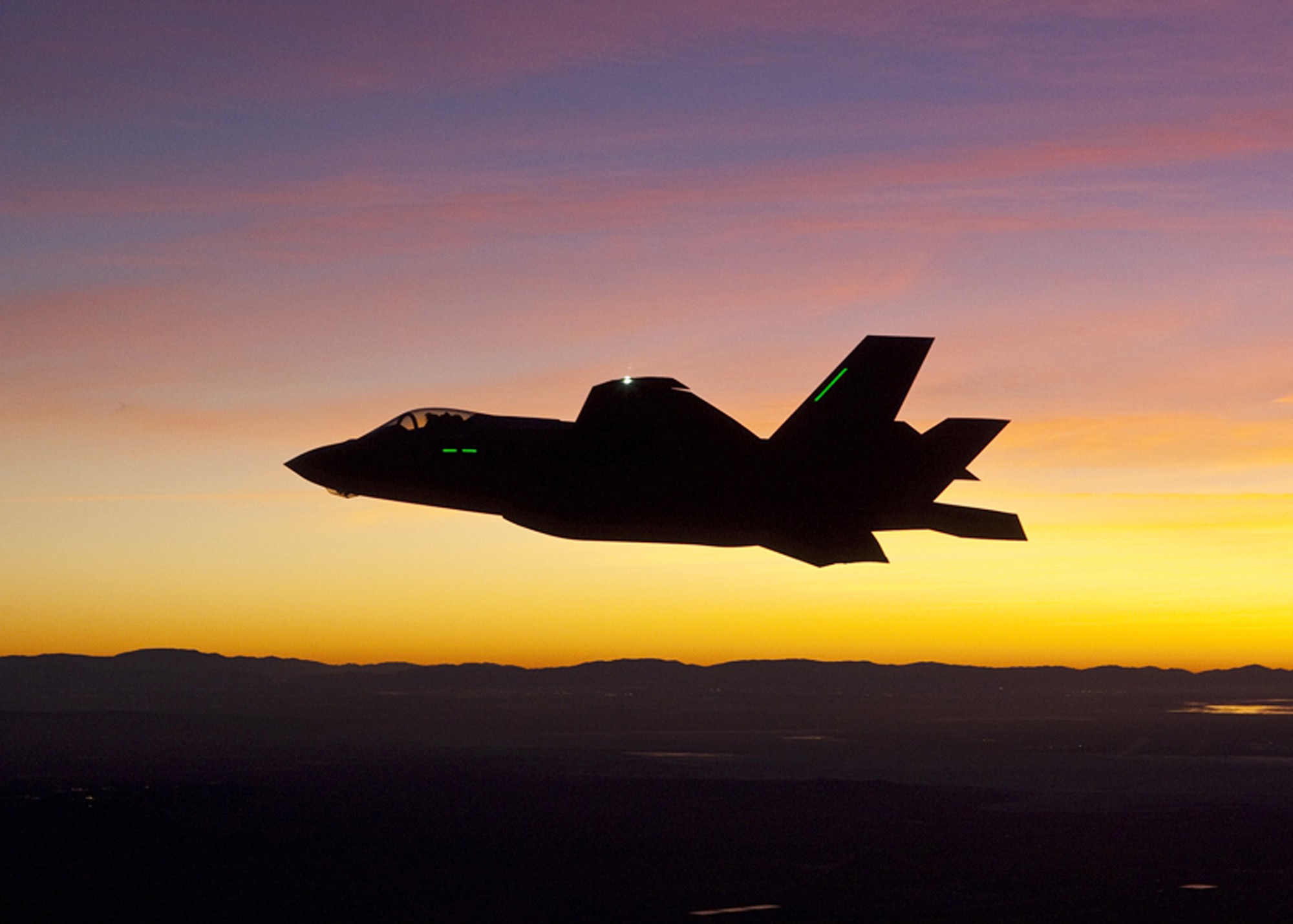
A major milestone in military aviation occurred when Lockheed Martin’s F-35 Lightning II fighter jet successfully integrated and used an artificial intelligence-enhanced combat identification system in flight, marking the first time that a tactical AI model generated independent target and threat identification on a pilot’s display during a test flight. The demonstration, part of what the company calls Project Overwatch and conducted at Nellis Air Force Base in Nevada, saw an onboard AI machine learning model analyze complex sensor data—especially ambiguous radio-frequency emissions—and present clearer target information to the pilot significantly faster than traditional methods. The capability aims to bolster pilot situational awareness, reduce decision latency in beyond-visual-range engagements, and potentially update intelligence models between sorties. Lockheed officials describe this advancement as bringing next-generation technology to current fighter platforms, while also emphasizing that human control remains essential for final combat decisions. Despite the technological achievement, experts indicate that challenges remain due to limited training data from adversary systems and the risk of AI misclassification, reinforcing the ongoing need for pilots to remain “in the loop.” Sources following the test reveal Lockheed plans to extend the AI’s training and improve reliability before widespread operational integration.
Sources
https://www.semafor.com/article/02/25/2026/fighter-jet-uses-ai-to-better-identify-targets-for-the-first-time
https://www.defensenews.com/industry/techwatch/2026/02/24/lockheed-debuts-ai-on-f-35-fighter-jet-to-identify-targets
https://breakingdefense.com/2026/02/lockheed-test-flies-f-35-with-artificial-intelligence-to-quickly-id-unknown-contacts
Key Takeaways
• Lockheed Martin successfully tested AI-enhanced combat identification on the F-35, marking the first tactical AI to independently generate target information for a pilot in flight.
• The AI system processes complex sensor and emitter data rapidly, enhancing situational awareness and reducing pilot decision time in engagements beyond visual range.
• While promising, tactical AI use in combat still requires human oversight due to data limitations and potential misclassification risks.
In-Depth
In a notable advancement for U.S. defense technology, Lockheed Martin has taken a significant step toward integrating artificial intelligence into frontline combat aircraft. During a recent test flight known as Project Overwatch, a version of the F-35 Lightning II fighter successfully employed an AI-enhanced Combat Identification system capable of independently generating a display of potential targets and threats for the pilot. According to multiple reports, this represents the first time tactical AI has been embedded into a fighter jet’s information fusion architecture and used in an airborne operational environment to advise a pilot on combat decisions. The demonstration took place at Nellis Air Force Base in Nevada, where engineers and military personnel observed the system’s capacity to rapidly interpret ambiguous signals—especially radio-frequency emissions from other platforms or systems—and convert them into a clearer tactical picture that informs pilots without overwhelming them with raw data. This addresses a key challenge in modern air warfare: beyond-visual-range engagements increasingly depend on accurate sensor fusion, and traditional analytic methods can lag behind the pace of combat.
Lockheed Martin officials highlighted that the AI model was trained and integrated into the F-35’s onboard systems, allowing real-time identification data to be presented on the cockpit display. Rather than replacing human judgment, the AI worked as an accelerant to situational awareness, intended to help pilots discern friend from foe and manage time-critical targeting decisions. In demonstrating the ability to label unknown signal types and incorporate those updates for subsequent flights within the same mission planning cycle, the company showed an iterative approach to improving the AI’s performance. Engineers could onboard new emitter classifications developed on the ground and then update the model for the next sortie, a capability that could shorten feedback loops from days or weeks down to hours or minutes.
Characterizing the advancement as bringing elements of potential sixth-generation technology to a fifth-generation platform, Lockheed’s leadership expressed confidence that this direction will keep the F-35 relevant amid evolving global threats. They noted that such AI systems could eventually help maintain a tactical edge by allowing allied forces to react more quickly to emerging threats, from enemy aircraft to advanced air defense networks.
Yet despite the progress, experts caution against overly rapid adoption absent rigorous safeguards and extensive training data. The military AI community is aware that models can suffer from ‘hallucinations’ or misclassifications when encountering unfamiliar or deceptive signatures—a risk compounded by the fact that potential adversaries often conceal or obfuscate their emission profiles. Given this, both defense analysts and industry officials emphasize that human operators will remain responsible for final decisions, a principle known as keeping the human “in the loop.” This approach underscores a broader philosophy within the U.S. Air Force and allied militaries: use AI to augment human capabilities rather than supplant them, particularly when lives and national security are on the line.
As the technology continues to mature, the Defense Department and its contractors are likely to explore paths toward operational deployment, with additional testing phases and software hardening planned. Considerations will include not only improving the reliability of AI identification but also addressing questions of cybersecurity, model robustness, and interoperability with existing mission systems across the F-35 fleet. The long-term vision involves a future where rapid, AI-assisted decision-making is woven into the fabric of aerial combat, improving fighter effectiveness while preserving the ultimate authority of trained pilots. The evolution of such systems will be watched closely by both allies and competitors, shaping the future of air dominance in an era of accelerating technological change.