

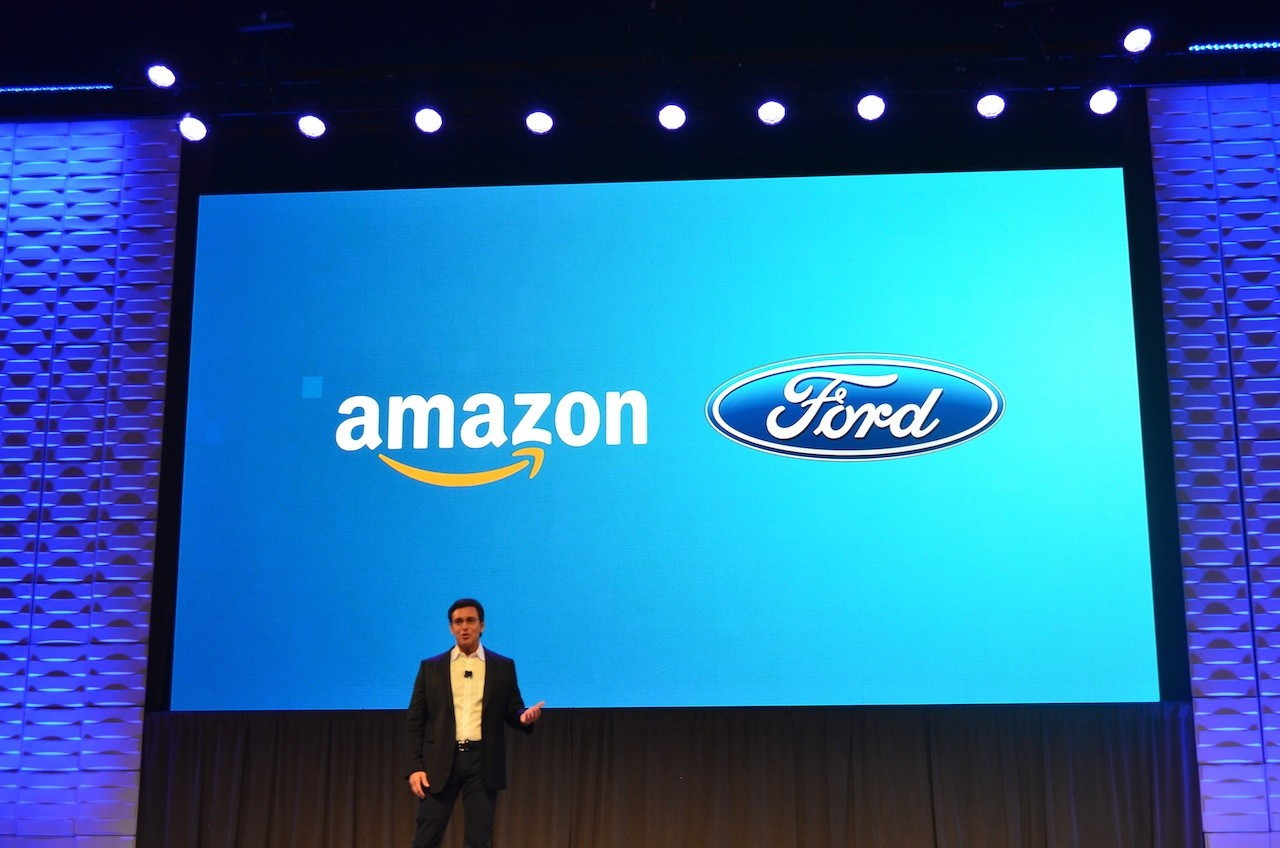
A new partnership between Ford Motor Company and Amazon Autos allows customers in select U.S. markets (currently Los Angeles, Seattle, and Dallas) to browse, finance, and purchase certified pre-owned (CPO) Ford vehicles online, then pick them up at a local participating dealer. Under the program, participating Ford dealers’ inventory appears on Amazon’s platform, customers can complete much of the paperwork digitally, and each vehicle comes with a money-back guarantee of 14 days or 1,000 miles. About 20 dealers are already live and roughly 160–180 have expressed interest. The move follows Amazon’s earlier collaborations with other OEMs such as Hyundai Motor Company (for new cars) and Hertz Global Holdings (for used fleet vehicles).
Sources: TechCrunch, Business Insider
Key Takeaways
– This collaboration represents Ford’s strategic attempt to modernize its retail channel and reach online-first buyers without bypassing its franchise dealer network.
– For consumers, the deal offers greater convenience (online browsing, financing, e-signing paperwork) combined with certified-pre-owned protections (inspection standards, warranties, money-back guarantee).
– From an industry standpoint, the move is part of a broader shift in automotive retail toward digital transaction flows, challenging the traditional in-lot experience and responding to competitive pressure from direct-sales OEMs like Tesla.
In-Depth
In an era of accelerating digital transformation across retail sectors, the auto-industry is no exception—and Ford’s newly announced partnership with Amazon Autos is a clear signal of how legacy manufacturers are adapting. The collaboration enables consumers in Los Angeles, Seattle and Dallas to purchase certified pre-owned (CPO) vehicles from Ford dealers via Amazon’s platform. They can browse inventory, secure financing, e-sign paperwork, and then go to the dealership only for pickup—meaning the heavy lifting moves online.
For Ford, this is a pragmatic move. The automaker remains bound by state franchise laws to rely on its network of dealers, but by anchoring its CPO used-car business on Amazon’s e-commerce infrastructure, Ford leverages the massive reach and digital convenience of one of the largest consumer marketplaces in the world. The arrangement keeps dealers in the loop—pricing, vehicle delivery and service remain local—but adds a new digital channel to capture younger, more web-savvy buyers who might otherwise migrate to disruptors. According to the announcement, about 20 dealers are already live and roughly 160–180 additional dealers have expressed interest, showing early traction in the model.
From the buyer’s perspective, the offering hits a sweet spot: the convenience of online shopping (search by model, trim, or feature; financing options; e-signing) paired with the reassurance of a certified-pre-owned program—Ford’s Blue Advantage certification program covers inspection tiers (Gold, Blue, EV), warranty coverage, and a 14-day/1,000-mile money-back guarantee. That matters, because used-car buyers often distrust opaque pricing or hidden issues. By offering transparency, warranties and the backing of a known OEM, Ford and Amazon lower friction for the consumer.
This move also echoes a broader industry trend. Amazon Autos launched with new-car sales in partnership with Hyundai late last year, and then expanded to include pre-owned/used inventory from Hertz and other dealers. Automotive Dive reported that Amazon’s shift into used-vehicle inventory lets any participating dealer list vehicles within a 75-mile radius of prospective buyers and complete much of the purchase process online. With Ford entering now, more mainstream volume should follow.
For Ford, this helps shore up the profitability of its used-car business—an increasingly critical margin source when new-vehicle margins are under pressure from rising costs, EV investment and supply-chain constraints. Online transactions can reduce overhead, streamline sales, and potentially deliver higher throughput and lower cost per sale. Meanwhile, dealership partners still get foot traffic for service, warranty work and add-ons, maintaining their value in the ecosystem.
Of course, challenges remain. The model still requires the physical hand-off at the dealership, which means Ford and Amazon haven’t eliminated the brick-and-mortar element entirely. Dealers will need to ensure inventory is accurately represented, inspections reliably completed, and logistics (delivery/pick-up) run smoothly to avoid customer dissatisfaction. Furthermore, rolling the program out beyond the initial metro areas will be crucial to test scalability and whether the channel can meaningfully scale volume.
On balance, the Ford-Amazon partnership signals an important evolution in auto retail. Ford is leveraging digital commerce to better compete for consumers who expect Amazon-like convenience. At the same time, it preserves the vital franchise dealer structure that remains foundational for service, warranty and downstream revenue. For consumers, the result is increased ease and transparency in buying a used car—something that has long been more headache than thrill. As the program expands across more cities and more dealers come online, this may mark a broader inflection point in how major automakers distribute and service their vehicles in the digital age.