

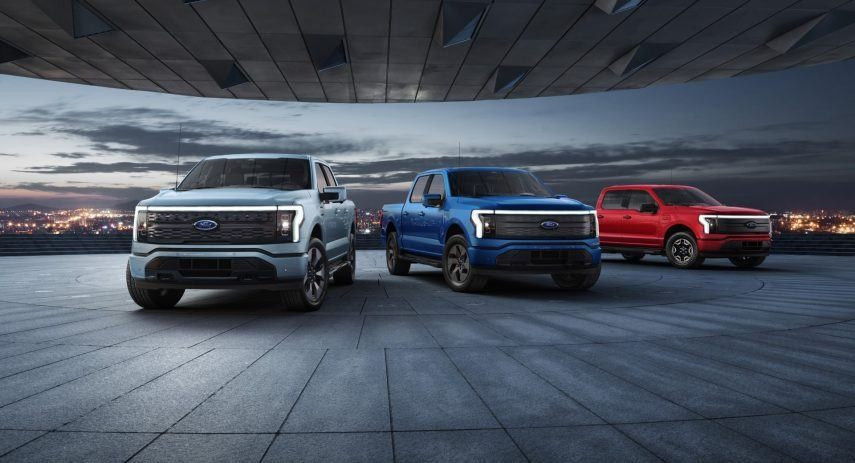
Ford Motor Company has temporarily halted production of the all-electric Ford F‑150 Lightning at its Rouge Electric Vehicle Center in Dearborn, Michigan—citing a fire at aluminium-supplier Novelis Inc.’ plant and a strategic pivot toward higher-margin gasoline and hybrid F-Series trucks. According to reporting by The Verge, Ford said it will prioritise its conventional and hybrid full-size trucks because they “use less aluminium and are more profitable.” A separate Carscoops article noted that the plant fire cut critical material supply, forcing Ford to add a third shift at the Dearborn Truck Plant to boost production of the gas-powered F-150 while the Lightning remains paused indefinitely. Meanwhile InsideEVs reports Ford lacks a specific restart date for the Lightning’s production, emphasising that inventory levels are sufficient for now and pointing to the company’s broader realignment toward conventional powertrains.
Sources: CarScoops, Inside EVs
Key Takeaways
– Ford is indefinitely pausing production of the F-150 Lightning due both to a major aluminium supplier outage and to a strategic shift toward higher-profit gasoline/hybrid trucks.
– The aluminium supply disruption stems from a fire at Novelis’s plant, severely affecting Ford’s ability to source components for its electric and conventional trucks alike.
– Ford’s decision signals a re-prioritisation of profitability over rapid electrification, favouring established internal-combustion and hybrid trucks that generate stronger margins and rely less on constrained materials.
In-Depth
In the latest twist in the automotive sector’s electrification journey, Ford Motor Company has announced a suspension of production of its electric pickup truck, the F-150 Lightning, marking a pronounced shift in its commercial strategy and supply-chain response. At the heart of the move lies both a material-supply shock and an economic calculus: a fire at Novelis Inc.’s aluminium-sheet plant in Oswego, New York, knocked out a key component of Ford’s supply chain, forcing Ford to prioritise which models receive the limited aluminium available. Meanwhile, Ford’s leadership pointed to profitability metrics that favour traditional gasoline and hybrid full-size trucks over electric models, which remain costlier to build and face slower-than-hoped adoption.
Ford’s statement, echoed in a detailed report by Carscoops, laid bare the rationale: “The F-150 Lightning production will remain paused while the Dearborn Truck Plant ramps up its third shift to build more than 45,000 additional traditional F-150 trucks in 2026.” This reveals that not only is Ford responding to immediate supply-chain stress, but it is actively re-allocating labour and capital to its legacy truck programs, which remain America’s best-selling pickups. The Verge provided colour on the supply-side disruption: “Ford halted production … for now the automaker is prioritising its gas and hybrid F-Series trucks because they’re more profitable and use less aluminium.” With the aluminium constraint mounting—and Ford’s profits hinging on its F-Series volume—it’s clear the company views the electric truck segment as a secondary play until conditions improve.
InsideEVs further reports that Ford has not given a date for when production will resume, indicating that this is more than a brief hiccup. Inventory levels of the Lightning model are, by Ford’s own admission, adequate for now, allowing the pause to stretch without immediate shortfalls. The carve-out of the Lightning in favour of higher-margin units points to a pragmatic recalibration: Ford is not abandoning electrification, but it is delaying full EV rollout in favour of financial discipline and supply-chain manageability. For investors, dealers and consumers alike, the implications are substantial. Electric trucks were seen as Ford’s bold statement in the EV era—yet now, the company is signalling that the EV transition will be more gradual and more strategically conditional than many expected.
From a broader industry standpoint, this decision emphasises how raw-material disruptions—especially aluminium, a critical input for lightweighting and EV architecture—can force even major OEMs to pivot. It also shows that electrification efforts must still align with profitability thresholds, not just regulatory trends or brand positioning. For Ford loyalists and pickup buyers, this means continued support and development of the internal-combustion and hybrid F-Series line remains front and centre. Meanwhile, customers in the EV market may interpret the Lightning pause as a cautionary tale: the shift to electric pickups may take longer, cost more and carry more risk than early narratives suggested.
In short: Ford is advancing its electrified future—but not at any cost. For now, the company is leaning into what works, stabilising its supply chain, safeguarding margin and retreating from ambitious EV volume targets. How and when Ford brings the Lightning back into full-tilt production will be a critical gauge of how this EV-era truck vehicle race evolves.