

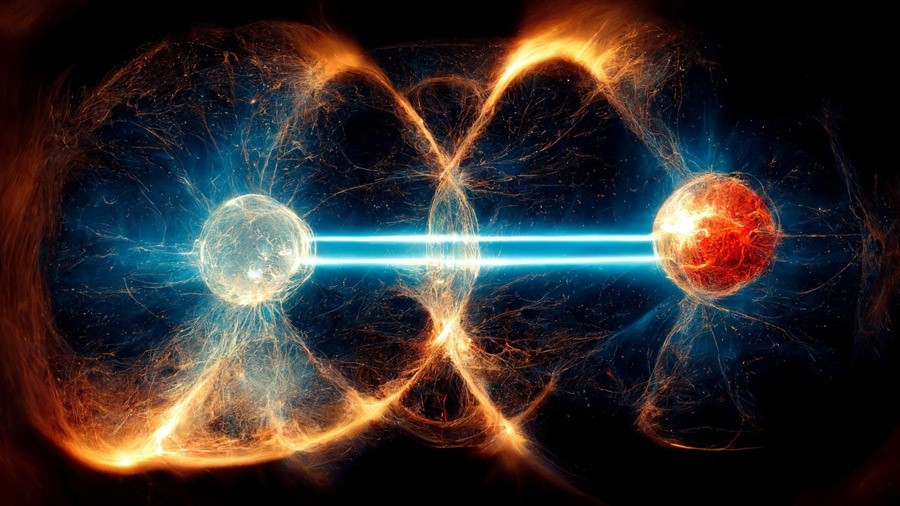
Fusion energy—the same process that powers the sun—is drawing renewed attention as startups and private investors push to make it commercially viable, aiming to deliver abundant, reliable electricity without the drawbacks of traditional energy sources; the technology works by forcing light atomic nuclei, typically isotopes of hydrogen, to fuse under extreme heat and pressure, releasing massive amounts of energy, but the challenge lies in sustaining those reactions long enough and efficiently enough to produce net electricity, with companies pursuing a range of approaches including magnetic confinement, laser-driven compression, and alternative reactor designs, while recent milestones—such as achieving net energy gain in controlled experiments—have shifted the problem from pure science to engineering, though significant technical, financial, and scalability hurdles remain before fusion can realistically power the grid.
Sources
https://techcrunch.com/2026/03/21/how-fusion-power-works-and-the-startups-pursuing-it/
https://en.wikipedia.org/wiki/Fusion_power
https://www.lemonde.fr/en/science/article/2025/09/25/nuclear-fusion-the-race-among-start-ups-to-harness-limitless-clean-energy_6745719_10.html
Key Takeaways
- Fusion energy has transitioned from a theoretical challenge to a complex engineering race, with startups competing to make it commercially viable.
- Multiple technological approaches are being pursued simultaneously, reflecting uncertainty about which method will ultimately succeed.
- Despite progress and heavy investment, significant barriers—cost, scalability, and sustained energy output—remain before fusion becomes a practical energy source.
In-Depth
Fusion power has long been treated as the holy grail of energy policy—limitless, clean, and geopolitically stabilizing—but only recently has it begun to look like something more than a perpetual science project. What’s changed is not the underlying physics, which scientists have understood for decades, but the growing confidence that the engineering barriers, while formidable, may actually be solvable within a commercially relevant timeframe.
At its core, fusion involves forcing atomic nuclei together at extremely high temperatures—tens of millions of degrees—until they overcome natural repulsive forces and merge, releasing energy in the process. The difficulty lies in maintaining those conditions long enough to produce more energy than is consumed. Historically, that balance has been elusive, but recent experimental breakthroughs have demonstrated that net energy gain is achievable, at least in tightly controlled environments.
That progress has unleashed a wave of private-sector activity. Startups are no longer content to follow a single government-backed model; instead, they are pursuing a range of competing designs. Some rely on magnetic fields to contain superheated plasma, while others use high-powered lasers or alternative compression methods. This diversity reflects both innovation and uncertainty—no one yet knows which approach, if any, will scale efficiently to the power grid.
Investment trends suggest growing confidence, with billions flowing into the sector from both institutional and private sources. But optimism needs to be tempered with realism. The technical challenges are immense, from material durability under extreme conditions to maintaining stable reactions over time. Even if those are solved, economic viability remains an open question.
In short, fusion is closer than it has ever been—but still not close enough to replace existing energy systems in the near term.