

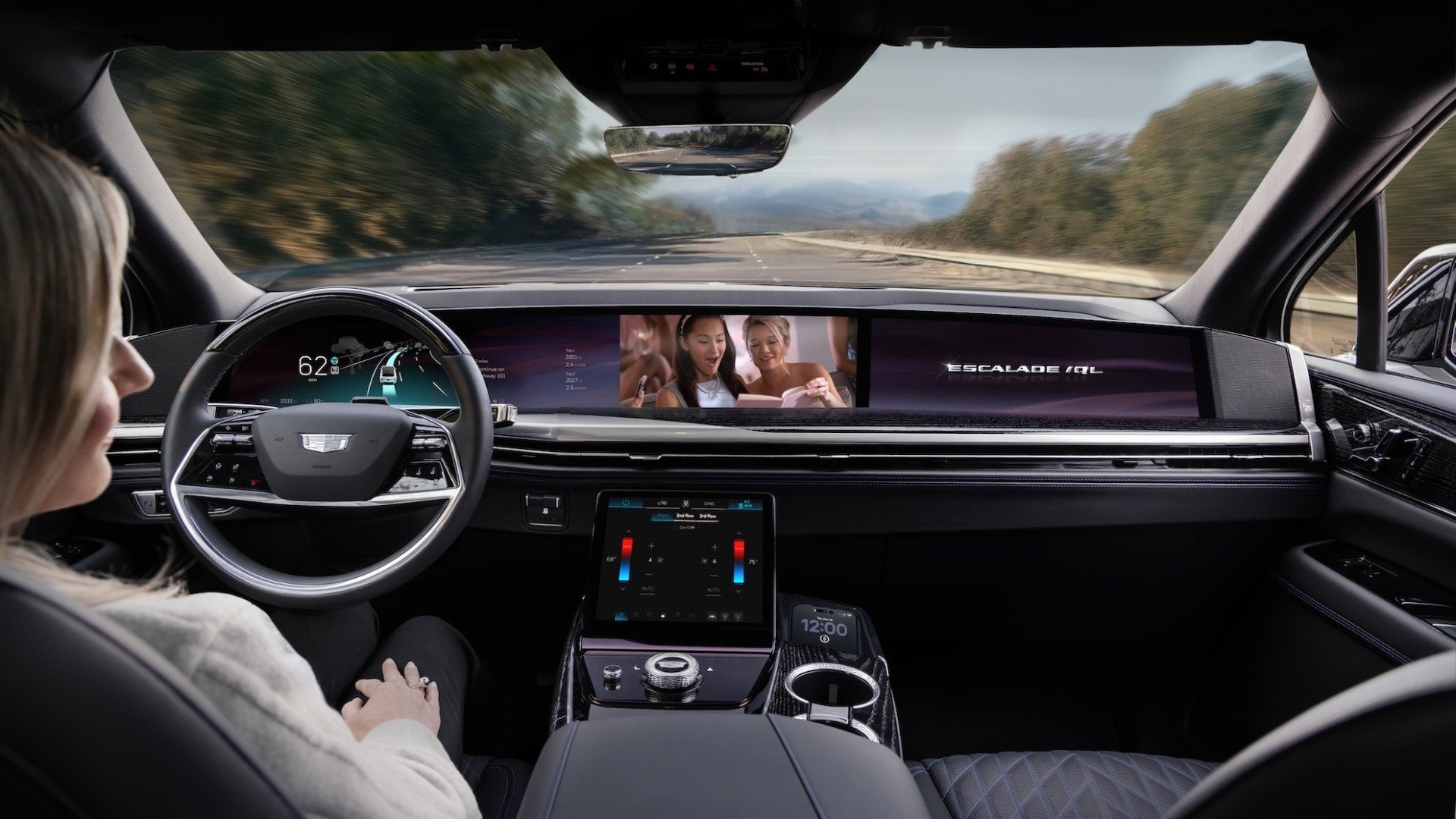
General Motors (GM) has officially announced that its next-generation driver-assistance system will reach a new milestone in 2028: the company’s upgraded version of Super Cruise will allow drivers to take their eyes off the road and their hands off the wheel on pre-mapped highways, beginning with the electric Cadillac Escalade IQ. According to GM’s press release, the system will debut only on certain highways and is built with redundancy in lidar, radar, and cameras—moving beyond “hands-free” to “eyes-off” automation. The company also revealed a new centralized vehicle computing platform launching in 2028 that will underpin this upgrade and a conversational AI rollout (via Google Gemini) beginning in 2026. The announcement comes amid GM’s broader pivot away from robotaxi ambitions toward advanced driver-assist systems in personal vehicles.
Sources: Car & Driver Magazine, GM
Key Takeaways
– GM’s Super Cruise is evolving from “hands-free but eyes on” to a true Level 3 “eyes-off, hands-off” system on select highways in 2028, initially on Cadillac’s Escalade IQ.
– The system is supported by a new centralized computing architecture enabling greater bandwidth and sensor fusion (lidar, radar, cameras), as GM emphasizes safety via redundancy.
– GM is also introducing a voice/conversational AI experience starting in 2026, but its wider strategy is a shift away from robotaxi deployment toward incremental autonomy in consumer vehicles.
In-Depth
GM’s announcement marks a significant moment in the evolution of vehicle automation—and in the conservative view, it’s a calculated progression rather than a leap into uncharted risk. The company is signalling to consumers and regulators that it’s approaching autonomy cautiously, building upon proven systems rather than chasing full self-driving fantasies. Starting with the Cadillac Escalade IQ in 2028, GM’s upgraded Super Cruise will allow a driver to remove both hands from the wheel and take their eyes off the road—but only under specific conditions (mapped highways) and only when the system indicates readiness via turquoise lighting on the dashboard and exterior mirrors.
This matters because going from “hands-off, eyes-on” (a Level 2 system) to “eyes-off, hands-off” (Level 3) is a threshold: it means the driver is no longer required to monitor the environment, and responsibility shifts more significantly toward the vehicle’s systems. To support this, GM has engineered substantial redundancy—lidar plus radar plus cameras—rather than relying on vision only. That suggests a more conservative safety architecture than some competitors who emphasize camera-only systems. By anchoring the rollout to a single high-end electric SUV on mapped highways, GM is managing risk and regulatory exposure while laying the foundation for wider deployment.
From a market and strategic standpoint, the move also reflects GM’s recognition that the robotaxi business hasn’t panned out as quickly or profitably as once hoped. Instead of burning billions chasing fully driverless fleets, GM is funneling resources into making consumer vehicles safer and more capable. That approach may play better with regulators, insurers, and everyday consumers who remain wary of handing full driving control to software. Furthermore, the introduction of a centralized computing platform in 2028 allows GM to unify vehicle architecture (infotainment, safety, steering, powertrain) and deliver ongoing feature updates—a modern software-first mindset applied to car manufacturing.
On the flip side, some conservative concerns remain. First, even though GM is mapping highways and limiting initial functionality, the expectation that drivers will truly trust an “eyes-off” system is non-trivial. Will drivers become complacent? Will secondary tasks (texts, videos) distract them from system hand-off transitions or emergency reconnections? Also, while sensor redundancy is good, any automated system still needs to anticipate rare or uncharted events (ice, debris, sudden maneuvering by other vehicles). And liability remains murky—when the system is engaged, who is responsible if something goes wrong? While GM may make insurance and regulatory arrangements behind the scenes, public trust will be earned slowly.
In sum, GM’s 2028 “eyes-off” Super Cruise is a significant step in the path toward true autonomy—but it’s designed as an incremental, cautious rollout rather than a leap into full self-driving. For conservatives who favour risk management, gradual implementation, and technological realism over hype, it may represent a responsible roadmap. As with any automotive innovation, success will hinge not only on the technology, but on consumer adoption, regulatory alignment, and real-world safety outcomes.