

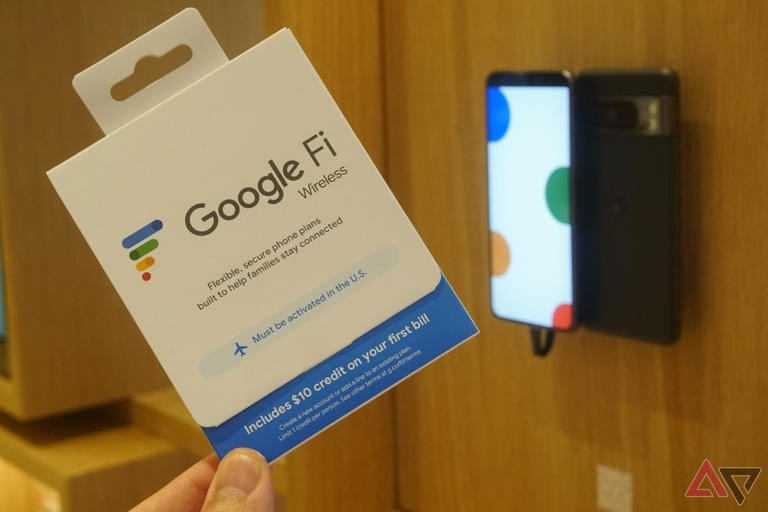
Telecom service provider Google Fi is launching a broad technology upgrade aimed at improving call quality, messaging capabilities and connectivity for its users. Beginning in mid-November, the company will enable AI-powered noise-filtering during phone calls, helping reduce background distractions and clarify voices—even when one party is using an older device or landline. Around early December, Google Fi will also introduce full RCS (Rich Communication Services) support via the web interface of its Messages platform, enabling high-resolution media sharing and better cross-device texting even when the phone is not physically present. Additionally, the service is expanding its Wi-Fi Auto Connect+ network (for qualified devices) to “tens of millions” of new locations including major airports such as LAX, ORD and JFK, enabling automatic, secure Wi-Fi switching when cellular connectivity is weak. To round out the announcement, Google is touting an AI-powered billing summary feature in its app (to explain monthly charges and plan changes) and a limited-time promotional rate of 50 % off for 15 months on Unlimited plans for new subscribers who bring their own phone.
Sources: The Verge, 9to5 Google
Key Takeaways
– Google Fi is pivoting toward an AI-driven user experience by embedding noise-filtering during calls and AI billing-summaries, potentially differentiating itself from traditional carriers focused primarily on coverage and raw speed.
– The introduction of full RCS support for web messaging means Google Fi is pushing toward a seamless cross-device communication model (calls, texts, voicemails from browser or tablet) which could appeal to power users and productivity-focused customers.
– The expansion of Wi-Fi Auto Connect+ to millions more indoor locations, combined with encryption and automatic switching, addresses one of wireless’s persistent pain points (poor indoor signal) and may give Google Fi an edge—though it remains restricted to Pixel 5a and newer devices.
In-Depth
The wireless carrier landscape has long been a commodity battle: coverage maps, data caps, network speed claims. So when a provider starts shifting the focus away from raw network horsepower and toward smarter connectivity, enhanced user experience and cross-device fluidity, it’s worth noting. With this latest announcement, Google Fi is doing exactly that—leveraging its parent company’s (Google’s) strengths in artificial intelligence and software to build a differentiated offering.
First up is improved call quality. We all know how frustrating it is to be stuck on a call in a noisy environment—construction next door, wind gusts outdoors, someone on the line stuck on a landline with older audio technology. Google Fi’s upcoming AI-enhanced audio feature promises to filter out distracting background noise and clarify both ends of the conversation. The user benefit is obvious: calls sound cleaner and less fatiguing. But from a business perspective, this is interesting because most carriers have historically focused on enabling better hardware (HD calling, VoLTE, etc) or better network coverage; here the value is layered through software intelligence. The feature is billed as automatic (but with an option to disable) and deploys mid-November.
Next is messaging. The shift to RCS (Rich Communication Services) has been gradual across the industry, but Google Fi’s announcement stands out because it supports full RCS via the web interface: meaning you can send and receive high-resolution photos and videos from your browser or tablet, even when your phone isn’t nearby, and also handle voicemails and calls in a unified interface. For someone who toggles between laptop and phone, this matters. The rollout is expected in early December. What this signals is that Google is thinking beyond the phone as the sole anchor—turning communications into a multi-device experience.
Then there’s connectivity and seamless fallback. One of the stubborn problems for wireless users is not lack of coverage per se but poor signal inside indoor venues: malls, airports, arenas, large retail spaces. Google Fi’s Wi-Fi Auto Connect+ has existed before, but now it’s being expanded to “tens of millions” of locations, including major airports like LAX, ORD, and JFK. When your Pixel 5a or newer senses that cellular connectivity is weak, it will automatically switch to a premium Wi-Fi network (with built-in VPN encryption) and show a “W+” icon. The promise: better reliability inside challenging spots without you having to manually join Wi-Fi networks. That’s a tangible quality-of-life improvement though it does come with the limitation that only Pixel 5a and newer devices are supported.
Google is also tackling the mundane but irksome problem: understanding your monthly bill. Many wireless users are frustrated with opaque charges or subtle plan changes that creep up. With this update, the Google Fi app will generate an AI-powered summary of charges, month-over-month changes, and how recent plan modifications might affect future cost. This kind of transparency aligns with Google’s software-first ethos and may appeal to users tired of phone-carrier bill puzzles and hold times for human service.
From a promotional angle, the inclusion of a 50 % discount for 15 months for new subscribers who bring their own device and choose the Unlimited Essentials or Unlimited Standard plans is strategic: it lowers the barrier to entry, encourages switching from incumbents, and lowers friction associated with device subsidies.
However, there are some caveats and strategic considerations. The Pixel-only support for Wi-Fi Auto Connect+ suggests that Google is still heavily focused on its hardware ecosystem—those who don’t own a Pixel may not benefit from all features. The rollout schedule means that while some features (AI-audio) arrive mid-November, others (RCS web messaging) land in early December—so the full experience doesn’t arrive all at once. Moreover, while these features are compelling, they address quality and convenience rather than network breadth; users in rural areas or overseas may still prioritize network reach and roaming options. From a conservative viewpoint, one might ask whether these features are enough to sway users away from major carriers whose marketing emphasizes broad network infrastructure and enterprise reliability.
But from a right-leaning perspective, this is exactly the kind of innovation you want in a competitive market: software and intelligence layered atop infrastructure, offering users real value rather than simply raising prices or relying on bundled services. Google is essentially doing what a classic tech company does: using software and data to optimize the user experience, rather than just building more cell towers. And that plays to strengths: if you can take an existing wireless network (Google Fi uses multiple U.S. networks) and make the service smarter, more seamless, better without raising cost significantly, you’re giving consumers greater choice and forcing competition.
Look at the messaging piece: cross-device, high-res photo/video, unified interface. That’s something many users want but don’t often get from carriers who treat phones and tablets as separate silos. The call audio piece addresses a pain point that many users overlook until they’re in a noisy environment and realize their calls are incomprehensible. The Wi-Fi fallback addresses indoor coverage without necessarily building thousands of new cell sites. And the AI billing summaries lean into transparency and user empowerment—something that directly undermines carrier pricing opacity.
In the broader telecommunications market, carriers have tended to fight on hardware subsidies or network claims (“We have the most 5G coverage”), instead of actual service experience in everyday conditions. Google Fi’s updates suggest a different strategy: focus on the everyday user experience and smartly fill gaps left by network-first thinking. For example, you might get full coverage outdoors, but inside an airport terminal or mall you’re stuck; or you might have HD calling, but create endless frustration when noise or connectivity degrades. The AI-software approach addresses those pain points.
For policy-minded or cost-conscious consumers (a conservative mindset might emphasize personal choice, value for money, transparent pricing) this kind of innovation is welcome. It opens up the market, gives more options, and forces incumbents to improve or risk being undercut on features rather than just coverage maps. That said, one must also be cautious about the hype: AI-noise filtering is useful, but if the base network remains weak, the improvement may be marginal. Hardware limitations (landlines, old devices) may still cap performance. And relying on Wi-Fi fallback still depends on the availability of quality Wi-Fi networks in your area.
In short, the latest feature reveal from Google Fi isn’t just incremental—it’s a strategic repositioning toward smarter, multi-device, AI-enhanced communications. For consumers fed up with over-priced plans, weak indoor signal or cumbersome phone-to-computer transitions, this could be a compelling alternative. Whether Google Fi can scale and whether these features attract a broader audience (beyond tech-savvy or Pixel-owning users) remains to be seen. But from a market-differentiation standpoint, this is a strong move. If traditional carriers rely solely on network claims, Google is offering a “software advantage” as the selling point. For consumers who value choice, transparency and everyday performance, that’s a very good thing.