

Close Menu

    Subscribe to Updates

    Get the latest tech news from Tallwire.

      What's Hot

      Astronomers Confirm Discovery Of Galaxy Nearly Entirely Composed Of Dark Matter

      March 1, 2026

      Massive Exposed Database With Billions of Social Security Numbers Sparks Identity Theft Fears

      March 1, 2026

      Password Managers Share a Hidden Weakness

      March 1, 2026
      Facebook X (Twitter) Instagram
      • Tech
      • AI
      • Get In Touch
      Facebook X (Twitter) LinkedIn
      TallwireTallwire
      • Tech

        Say Goodbye to the Undersea Cable That Made the Global Internet Possible

        March 1, 2026

        Microsoft Copilot Bug Exposed “Confidential” Emails Despite Label

        February 28, 2026

        Taara Beam Launch Brings 25Gbps Optical Wireless Networks to Cities

        February 27, 2026

        Global Memory Shortage Set to Push Up Prices on Phones, Laptops, and More

        February 27, 2026

        OpenAI’s Stargate Data Center Ambitions Hit Major Roadblocks

        February 27, 2026
      • AI

        AI Password Generation Poses Major Security Risk, Experts Warn

        February 28, 2026

        Microsoft Copilot Bug Exposed “Confidential” Emails Despite Label

        February 28, 2026

        AI Productivity Gains Concentrated Among High-Skilled Workers, Study Finds

        February 28, 2026

        X to Let Users Mark Posts ‘Made With AI’ as Platform Eyes Voluntary Disclosure Feature

        February 27, 2026

        Uber Rolls Out “Uber Autonomous Solutions” To Support Third-Party Robotaxi Partners

        February 27, 2026
      • Security

        Massive Exposed Database With Billions of Social Security Numbers Sparks Identity Theft Fears

        March 1, 2026

        Password Managers Share a Hidden Weakness

        March 1, 2026

        AI Password Generation Poses Major Security Risk, Experts Warn

        February 28, 2026

        Microsoft Copilot Bug Exposed “Confidential” Emails Despite Label

        February 28, 2026

        Starkiller Phishing Kit Exposes Dangerous New Wave of Proxy-Based Credential Theft

        February 28, 2026
      • Health

        Social Media Addiction Trial Draws Grieving Parents Seeking Accountability From Tech Platforms

        February 19, 2026

        Portugal’s Parliament OKs Law to Restrict Children’s Social Media Access With Parental Consent

        February 18, 2026

        Parents Paint 108 Names, Demand Snapchat Reform After Deadly Fentanyl Claims

        February 18, 2026

        UK Kids Turning to AI Chatbots and Acting on Advice at Alarming Rates

        February 16, 2026

        Landmark California Trial Sees YouTube Defend Itself, Rejects ‘Social Media’ and Addiction Claims

        February 16, 2026
      • Science

        Astronomers Confirm Discovery Of Galaxy Nearly Entirely Composed Of Dark Matter

        March 1, 2026

        Microsoft Claims 100 Percent Renewable Energy Match Across Global Electricity Use

        February 28, 2026

        Taara Beam Launch Brings 25Gbps Optical Wireless Networks to Cities

        February 27, 2026

        Large Hadron Collider Enters Third Shutdown For Major Upgrade

        February 26, 2026

        Google Phases Out Android’s Built-In Weather App, Replacing It With Search-Based Forecasts

        February 25, 2026
      • Tech

        Sam Altman Says ‘AI Washing’ Is Being Used to Mask Corporate Layoffs

        February 28, 2026

        Zuckerberg Testifies In Landmark Trial Over Alleged Teen Social Media Harms

        February 23, 2026

        Gay Tech Networks Under Spotlight In Silicon Valley Culture Debate

        February 23, 2026

        Google Co-Founder’s Epstein Contacts Reignite Scrutiny of Elite Tech Circles

        February 7, 2026

        Bill Gates Denies “Absolutely Absurd” Claims in Newly Released Epstein Files

        February 6, 2026
      TallwireTallwire
      Home»Tech»Google Rolls Out Emergency Patch for Major Chrome Zero-Day Exploit
      Tech

      Google Rolls Out Emergency Patch for Major Chrome Zero-Day Exploit

      Updated:February 21, 20264 Mins Read
      Facebook Twitter Pinterest LinkedIn Tumblr Email
      Google Rolls Out Emergency Patch for Major Chrome Zero-Day Exploit
      Google Rolls Out Emergency Patch for Major Chrome Zero-Day Exploit
      Share
      Facebook Twitter LinkedIn Pinterest Email

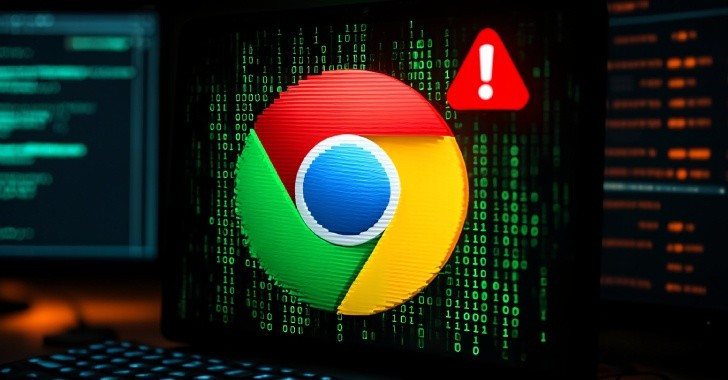
      Google has released an emergency security update for its Google Chrome browser to address a high-severity zero-day vulnerability (tracked as CVE-2025-13223) in its V8 JavaScript/WebAssembly engine that is reported to be actively exploited in the wild. The flaw, rated CVSS 8.8, stems from a “type-confusion” scenario where a crafted HTML page could trigger heap corruption and allow arbitrary code execution. The patch is available now in version 142.0.7444.175/.176 (Windows), 142.0.7444.176 (macOS) and 142.0.7444.175 (Linux) and will roll out via the Stable desktop channel. Because Chrome dominates the browser market, this update affects billions of users and underscores the continuing importance of timely software updates in protecting against cyber-espionage and widespread browser-based attacks. 

      Sources: Malwarebytes, Hacker News

      Key Takeaways

      – The vulnerability CVE-2025-13223 in Chrome’s V8 engine is actively exploited in the wild, meaning delay in updating leaves users vulnerable.

      – Google has now patched its seventh zero-day flaw in Chrome this year, signaling persistent and evolving threats targeting browser internals.

      – The update affects not only Chrome but also other Chromium-based browsers (e.g., Edge, Brave, Opera), meaning enterprises and individual users must act universally.

      In-Depth 

      In an era of escalating cybersecurity threats, the recent emergency release by Google stands as a timely reminder of the inherent risks posed by dominant software platforms. Google’s patch for the zero-day vulnerability CVE-2025-13223 in its Chrome browser represents more than just a technical fix—it underscores a broader point: when billions of users share a single point of software concentration, the stakes rise accordingly for national security, corporate safeguarding, and individual privacy.

      This particular flaw is a type-confusion error within the V8 engine, the component of Chrome responsible for executing JavaScript and WebAssembly code. As security experts explain, type confusion occurs when the code treats one data type as another, enabling memory corruption that attackers can exploit. Visiting a compromised or maliciously crafted website could thus lead to an attacker running arbitrary code—a gateway for remote control, data theft, or persistent access. To Google’s acknowledgement: “an exploit for CVE-2025-13223 exists in the wild.” That means adversaries are already leveraging this bug, raising the urgency decidedly beyond theoretical risk.

      What’s worrisome from a conservative lens is the degree of market concentration and reliance on cloud- and browser-based architectures. With Chrome commanding a significant share of browser usage globally, any flaw becomes a target-rich environment. The fact that Google has already patched seven zero-day vulnerabilities this year within Chrome alone illustrates persistent targeting—by state-sponsored groups or sophisticated commercial spyware operations—seeking to exploit the weakest link. Google’s own Threat Analysis Group is credited with reporting this flaw, which hints at the potency of actors involved and the level of escalation we face.

      For end-users and enterprises, the practical steps are clear—but oft ignored. First: Immediately update your browser to the version specified (142.0.7444.175/.176 for Windows, 142.0.7444.176 for macOS, 142.0.7444.175 for Linux). Second: Recognize that Chromium-based browsers share the same underlying V8 engine, meaning timely updates should extend to other browsers such as Edge, Brave, Opera, and Vivaldi. Third: For organizations, this event should function as a wake-up call: rely not just on automatic updates but implement patch-management policies that ensure no endpoint lags behind. A delayed or unpatched machine can serve as the entry point for broader intrusions.

      From a security-policy perspective, this rollout also sparks discussion about supply-chain resilience, software uniformity, and the wisdom of centralizing so many users into a single browser ecosystem. In more fragmented, competitive environments, a single vulnerability might have limited reach—but when one vendor touches billions of endpoints, the blast radius multiplies. A conservative viewpoint would advocate for diversified systems, reduced monocultures, and greater private-sector accountability in software-hardening practices.

      In short: this patch matters, and the window to act is narrow. Users who delay updating accept undue risk—not just to personal data but to larger digital-infrastructure stability. For those of us who value individual liberty, economic freedom, and robust institutions, the underlying message is simple: technological convenience should never outpace the principles of security, stewardship and resilience. Update now, stay vigilant, and remember: broad adoption of a flaw is what gives adversaries their advantage.

      Google
      Share. Facebook Twitter Pinterest LinkedIn Tumblr Email
      Previous ArticleGoogle Removes AI Model After U.S. Senator Alleges Defamation
      Next Article Google Rolls Out Gemini 3, Positioning AI Dominance with Immediate Search Integration, Enterprise Push

      Related Posts

      Say Goodbye to the Undersea Cable That Made the Global Internet Possible

      March 1, 2026

      AI Password Generation Poses Major Security Risk, Experts Warn

      February 28, 2026

      Microsoft Copilot Bug Exposed “Confidential” Emails Despite Label

      February 28, 2026

      Taara Beam Launch Brings 25Gbps Optical Wireless Networks to Cities

      February 27, 2026
      Add A Comment
      Leave A Reply Cancel Reply

      Editors Picks

      Say Goodbye to the Undersea Cable That Made the Global Internet Possible

      March 1, 2026

      Microsoft Copilot Bug Exposed “Confidential” Emails Despite Label

      February 28, 2026

      Taara Beam Launch Brings 25Gbps Optical Wireless Networks to Cities

      February 27, 2026

      Global Memory Shortage Set to Push Up Prices on Phones, Laptops, and More

      February 27, 2026
      Popular Topics
      Series B Ransomware trending SpaceX Robotics Quantum computing picks UAE Tech spotlight Tesla Taiwan Tech Samsung Sam Altman Tesla Cybertruck Satya Nadella Startup Series A Tim Cook Qualcomm Sundar Pichai
      Major Tech Companies
      • Apple News
      • Google News
      • Meta News
      • Microsoft News
      • Amazon News
      • Samsung News
      • Nvidia News
      • OpenAI News
      • Tesla News
      • AMD News
      • Anthropic News
      • Elbit News
      AI & Emerging Tech
      • AI Regulation News
      • AI Safety News
      • AI Adoption
      • Quantum Computing News
      • Robotics News
      Key People
      • Sam Altman News
      • Jensen Huang News
      • Elon Musk News
      • Mark Zuckerberg News
      • Sundar Pichai News
      • Tim Cook News
      • Satya Nadella News
      • Mustafa Suleyman News
      Global Tech & Policy
      • Israel Tech News
      • India Tech News
      • Taiwan Tech News
      • UAE Tech News
      Startups & Emerging Tech
      • Series A News
      • Series B News
      • Startup News
      Tallwire
      Facebook X (Twitter) LinkedIn Threads Instagram RSS
      • Tech
      • Entertainment
      • Business
      • Government
      • Academia
      • Transportation
      • Legal
      • Press Kit
      © 2026 Tallwire. Optimized by ARMOUR Digital Marketing Agency.

      Type above and press Enter to search. Press Esc to cancel.