

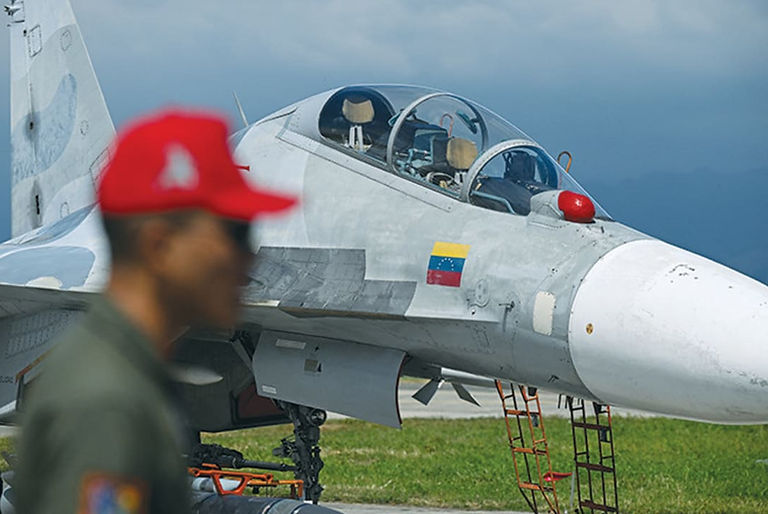
In a striking demonstration of U.S. military and technological dominance, Operation Absolute Resolve saw elite U.S. forces penetrate and neutralize Venezuelan defenses heavily equipped with Russian, Iranian, and Chinese military systems, culminating in the capture of President Nicolás Maduro and his wife in Caracas and their transfer to U.S. custody to face federal charges; the operation exposed the limitations of foreign-sourced air defense and drone assets against integrated U.S. precision strikes, cyber warfare, and special operations, underscoring a broader strategic reality that Western military integration and readiness decisively overwhelm hardware acquisition alone, even when touted as deterrence against American intervention. Source reporting confirmed that Venezuelan forces armed with Russian air defenses and Iranian-designed drones failed to halt the U.S. assault, which combined air power, electronic warfare, and cyber disruption, and that the Maduro regime’s military apparatus could not prevent U.S. forces from securing the capital and extracting Maduro after coordinated attacks and special operations insertion early in the morning. Independent reporting also details the broader context of the U.S. military action and its global implications, including reactions, casualty reports, and what this operation signals about the strategic efficacy of weapons supplied by Russia, Iran, and China.
Sources:
https://www.jpost.com/defense-and-tech/article-882802
https://apnews.com/article/trump-maduro-venezuela-presidential-palace-blowtorches-7969152ae48510003fe9cbde92f3c102
https://www.reuters.com/world/americas/loud-noises-heard-venezuela-capital-southern-area-without-electricity-2026-01-03/
Key Takeaways
- U.S. forces, leveraging superior integration of military capabilities including precision air strikes, cyber operations, and electronic warfare, successfully neutralized Venezuelan defenses and captured Nicolás Maduro, proving the inadequacy of Russian, Iranian, and Chinese hardware when faced with top-tier military coordination.
- The operation underscores the strategic value of technological edge and readiness over merely acquiring advanced foreign systems, as the Venezuelan military’s externally sourced equipment could not prevent U.S. penetrations into Caracas.
- Independent reporting highlights significant geopolitical ramifications, including international reactions, ongoing legal proceedings against Maduro in the United States, and broader implications for global perceptions of U.S. military reach and the effectiveness of adversary weapon systems.
In-Depth
The sudden, decisive U.S. military operation in Venezuela this January has redefined contemporary perceptions of force projection and technological superiority. Known as Operation Absolute Resolve, the mission combined months of meticulous planning, intelligence buildup, and rehearsals with a real-world test of Venezuela’s defense apparatus — which had been outfitted over decades with Russian, Chinese, and Iranian military technology. Despite lofty claims by Caracas of deterrence capability, these systems failed catastrophically under the calibrated weight of U.S. firepower and coordination. The result was the capture of President Nicolás Maduro and his wife, who were extracted from Caracas and flown to face charges in U.S. federal court.
Independent sources confirm that not even Russian-made air defenses or Iranian drone programs could withstand a synchronized U.S. assault that fused air strikes, cyber disruptions, and electronic warfare to neutralize command and control nodes. Videos circulating on social media showed Venezuelan defenses reacting but ultimately being overwhelmed by American tactics that exploited inherent vulnerabilities in static, radar-dependent systems. This operation has sent a clear message to international buyers of Russian, Iranian, and Chinese weapons: hardware without integrated strategy and readiness offers little real deterrent — a sobering reality for client states and sponsors alike.
The broader geopolitical landscape now faces questions of regional stability, U.S. foreign policy reach, and the limits of weapon proliferation. While critics raise legal and ethical debates, the undeniable fact — corroborated by multiple independent quarterlies and global wire services — is that integrated American military technology and planning are unmatched, capable of executing deep-penetration operations even in heavily armed environments. For policymakers and strategists assessing global threats, this episode demonstrates that the real measure of military capability is not what hardware is on the shelf, but how effectively it can withstand coordinated, technologically advanced operations in contested environments.