

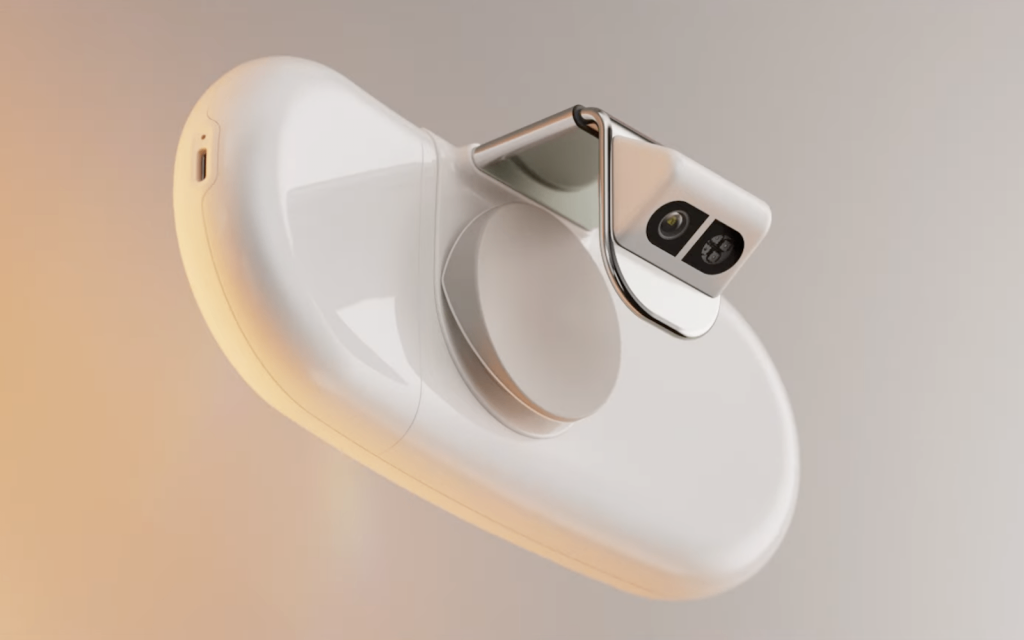
Home-goods giant Kohler has launched a surprising new health-tech offering called the Dekoda, a $599 camera device that clamps onto a toilet bowl rim and uses optical sensors and AI to analyze users’ waste for signs of hydration levels, gut-health trends and even blood detection. According to the company, this first product from its new Kohler Health division attaches easily to most standard toilets, requires a subscription (around $70–$156 per year) for app-based insights, and features a fingerprint remote and end-to-end encrypted data to protect user privacy. While proponents see it as part of the move toward proactive home health monitoring, privacy advocates and some experts question the real value and implications of scoring what many consider a deeply private space.
Sources: The Guardian, The Verge
Key Takeaways
– The Dekoda is priced at $599 and requires a subscription model for its health-insight features—signalling how companies are monetising wellness data in home fixtures.
– It is designed to attach to most toilet bowls, monitor stool and urine via optical/spectroscopic sensors (hydration, shape, blood traces), and deliver feedback through a smartphone app.
– Significant concerns remain around privacy (data collection, device placement in bathrooms), medical-validity of the insights, and whether consumers really want a camera pointing into their toilet bowl.
In-Depth
In a move that might feel futuristic or a bit unsettling depending on your viewpoint, Kohler has introduced the Dekoda, a device that turns your toilet into a health-monitoring station. Putting aside the novelty factor, there are several important threads to untangle: what it does, what it promises, and what it means.
From a features standpoint, the Dekoda uses optical sensors mounted inside or at the rim of the bowl to capture images of what goes into the toilet. These images are analysed by machine-learning algorithms to glean information about stool consistency and shape, signs of possible blood, hydration levels, and general gut health trends. The hardware includes a fingerprint remote (so that multiple users can be differentiated), a rechargeable battery, USB-C connection or magnetic charger, and the accompanying mobile app (currently iOS, with Android support forthcoming). By offering subscription tiers (for example, roughly $6.99/month or $70/year for single-user, higher for multiple users), the company is clearly positioning this as a recurring revenue product rather than a one-time purchase.
On one level, this aligns with the broader trend of home health-tech devices: smart rings that track sleep, fitness trackers that monitor heart rate, and now bathroom fixtures that monitor digestive output. Kohler’s logic is that the bathroom is an undervalued wellness checkpoint: every day individuals flush away data (urine/stool) without realising its potential insights. By turning the toilet into a “connected hub” of health information, Kohler wants to extend its bathroom-fixture legacy into health tech.
However, from a conservative viewpoint several issues surface. First, the pricing model raises the question of cost versus benefit. $599 upfront plus recurring subscription is a significant investment for something that may or may not deliver medically meaningful insights. Many health-care professionals might argue that basic observational hygiene—knowing your body, noticing changes, consulting your doctor—often suffices without a high-tech gadget. Second, privacy and trust remain real obstacles. Even with assurances that the sensors point only into the bowl (and not out into the bathroom), end-to-end encryption and fingerprint access notwithstanding, the idea of a camera in your toilet will make many consumers uneasy. Data ownership, storage, and future uses (or abuses) of biometric/health data remain open questions. Third, medical legitimacy and consumer expectation management are critical. While the device may detect indicators (such as blood), it’s not a diagnostic tool and cannot replace professional medical exams. There is a risk of over-reliance on gadget-derived insights and, concurrently, the possibility of unnecessary alarm for benign variations.
From a conservative frame one might also underscore the personal responsibility angle: rather than outsourcing basic self-monitoring to devices, one might argue for emphasis on diet, hydration, activity, and physician check-ups. Technology can assist, but the notion that your toilet needs a camera to tell you how you’re doing might feel like over-engineering everyday life. That said, for certain users—especially those with known digestive issues, chronic health conditions, or who are motivated by quantified-self tracking—this device could fill a niche. Kohler is betting that wellness enthusiasts will adopt it early and that the broader market will follow.
In sum, the Dekoda is a bold product combining plumbing heritage with digital health ambitions. It offers real novelty: optical sensing of waste to generate wellness feedback, subscription software, and smartphone integration. But it also raises important questions around cost, privacy, and the shifting boundary between home convenience and health-monitoring commodification. For consumers thinking of buying in, the key will be: do you believe the insights justify the investment, are you comfortable inviting a camera into your most intimate space, and are you willing to take action based on the output (rather than simply installing another gadget and forgetting it)? Markets may decide that home health monitoring can indeed extend beyond the wrist, but uptake will likely depend not just on novelty but on clear utility, trust, and cost-effectiveness.