

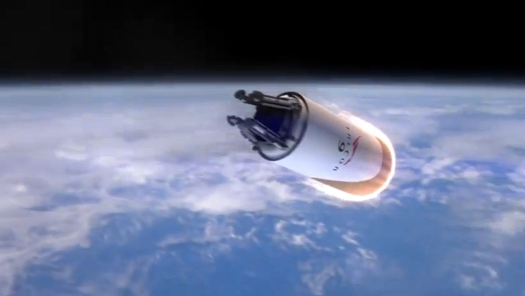
Madrid-based Orbital Paradigm, founded in 2023 by aerospace veteran Francesco Cacciatore and Víctor Gómez García, is pursuing a radically streamlined approach to orbital reentry. With a lean team of nine and under €1 million in spend, the startup has developed the minimalist “KID” test capsule—just 25 kg and ~40 cm across, with no propulsion or recovery systems—to validate reentry survivability and data transmission from orbit. Their longer-term goal: the reusable Kestrel capsule, capable of carrying up to 120 kg of payload on monthly return missions. The company has not only pre-sold its initial flight but also raised significant pre-seed funding from investors like Akka Spain, Demium, id4 Ventures, and Starburst, and has letters of intent from clients across Europe, including biotech and materials research organizations.
Sources: Payload Space, TechCrunch, EU-Startups
Key Takeaways
– Lean, iterative design wins cost efficiency — KID’s stripped-down approach minimizes mass and complexity to test reentry affordably.
– Strong traction in a nascent European market — Pre-sold missions and investor backing indicate robust demand for orbital return services.
– Strategic European alternative to U.S. players — Orbital Paradigm positions itself as a nimble, regionally focused option amid growing space logistics competition.
In-Depth
Orbital Paradigm’s journey out of Madrid is a textbook case of doing more with less—without cutting corners on ambition. Founded in 2023 by Francesco Cacciatore and Víctor Gómez García, the venture kicked off on a shoestring budget of under €1 million and a small but experienced team. What followed was the creation of KID (Kestrel Initial Demonstrator): a diminutive 25-kilogram reentry capsule roughly 40 cm in diameter. It lacks the bells and whistles—no propulsion, no parachute, no recovery—but that’s by design. It’s a “minimum viable reentry” model. The only requirement: survive orbital heat, transmit back “I made it,” and collect real-world data to validate the company’s models.
This approach trims massive chunks off traditional costs by avoiding complex systems and ground infrastructure. Instead, Orbital Paradigm is betting that this leaner method will get them into orbit quicker and cheaper while gathering enough data to build toward a fully reusable vehicle. That next step is Kestrel—a 360 kg capsule designed to carry 120 kg of payload, withstand three-month orbital missions, and return to continental Europe on a monthly cadence.
On the funding front, they’ve been similarly savvy. Investors including Akka Spain, Demium, id4 Ventures, and Starburst have backed the company; Akka led with €470,000 toward a €2 million round, and pre-seed investments now total around €1.5 million. They’ve already secured letters of intent or bookings from European research institutions like ALATYR (France), Leibniz University Hannover (Germany), and others—a sign that Europe’s appetite for orbital return services is real.
In a field increasingly dominated by U.S. players like Varda and Inversion Space, Orbital Paradigm’s focused, cost-conscious strategy feels both refreshing and pragmatic. They’re not aiming to race into crewed spaceflight—they’re delivering cargo, cheaply and reliably. And that might just be the smart way forward for Europe’s commercial space ambitions.