

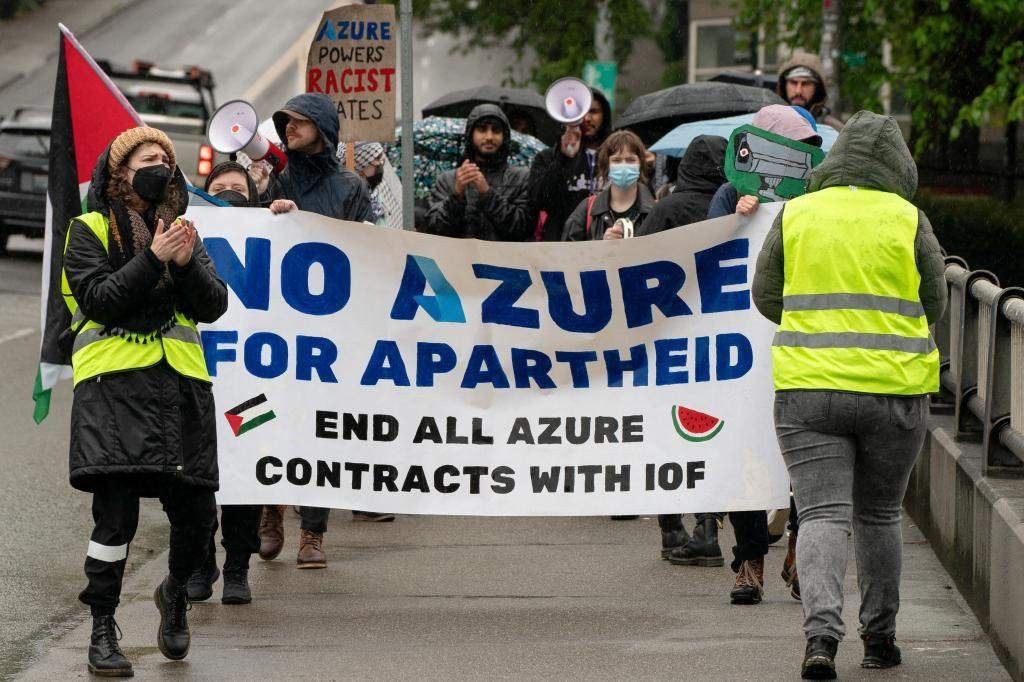
Microsoft has recently terminated four employees—Anna Hattle, Riki Fameli, Nisreen Jaradat, and Julius Shan—after they participated in on-site protests at the company’s Redmond headquarters organized by “No Azure for Apartheid,” a group calling on the tech giant to sever ties with the Israeli military. The protesters staged a sit-in at the office of Microsoft president Brad Smith, livestreamed the event, and set up encampments on campus, actions the company deemed serious breaches of policy, citing safety concerns. The terminations follow earlier firings of employees who disrupted the company’s 50th anniversary event, highlighting escalating internal dissent tied to revelations of Microsoft’s Azure cloud platform possibly being used by Israeli military agencies for surveillance in Gaza and the West Bank. Microsoft has responded by launching a legal review and affirming its commitment to human rights principles.
Sources: Reuters, The Verge, Al Jazeera
Key Takeaways
– Escalating Activism: Microsoft is facing intensified internal protest as employees publicly challenge its contracts and technology use, particularly alleging complicity in surveillance and conflict in Gaza.
– Corporate Policy vs. Free Expression: Microsoft is invoking safety and conduct policies in justifying terminations, raising questions about where employee activism crosses into territory it considers unacceptable disruption.
– External Investigation Underway: In response to both internal and external pressure, Microsoft has commissioned a third-party legal review to assess Azure’s potential misuse in international military contexts.
In-Depth
In recent weeks, Microsoft has found itself at the intersection of employee activism and corporate governance, firing four workers—Anna Hattle, Riki Fameli, Nisreen Jaradat, and Julius Shan—after a high-profile sit-in at the office of Microsoft president Brad Smith. The protest, orchestrated by the “No Azure for Apartheid” group, aimed to press the company to end its technology contracts with the Israeli military, following reports that its Azure cloud platform was used for surveillance in Gaza and the West Bank. Employees live-streamed their sit-in, escalating the situation into a public relations flashpoint.
Microsoft cited serious violations of corporate policy and concerns over workplace safety as reasons for the terminations—pointing to a line being crossed when protest methods extended to occupying executive offices and disrupting daily operations. These firings came on the heels of earlier dismissals tied to protests at the company’s 50th anniversary event, signaling that employee dissent has been steadily becoming more confrontational—and costlier.
Still, the company has not ignored the underlying issues. Microsoft has commissioned Covington & Burling LLP to conduct a legal review, signaling intent to investigate claims about misuse of its technology in international conflicts. President Brad Smith reaffirmed that while freedom of expression is valued, actions that threaten safety or violate conduct codes are unacceptable.
This episode puts a spotlight on the growing tension in tech workplaces, where activist employees demand ethical accountability, and companies must balance that pressure against operational norms and shareholder expectations. For Microsoft, the question now is how to navigate that balance without risking further internal unrest or reputational damage.