

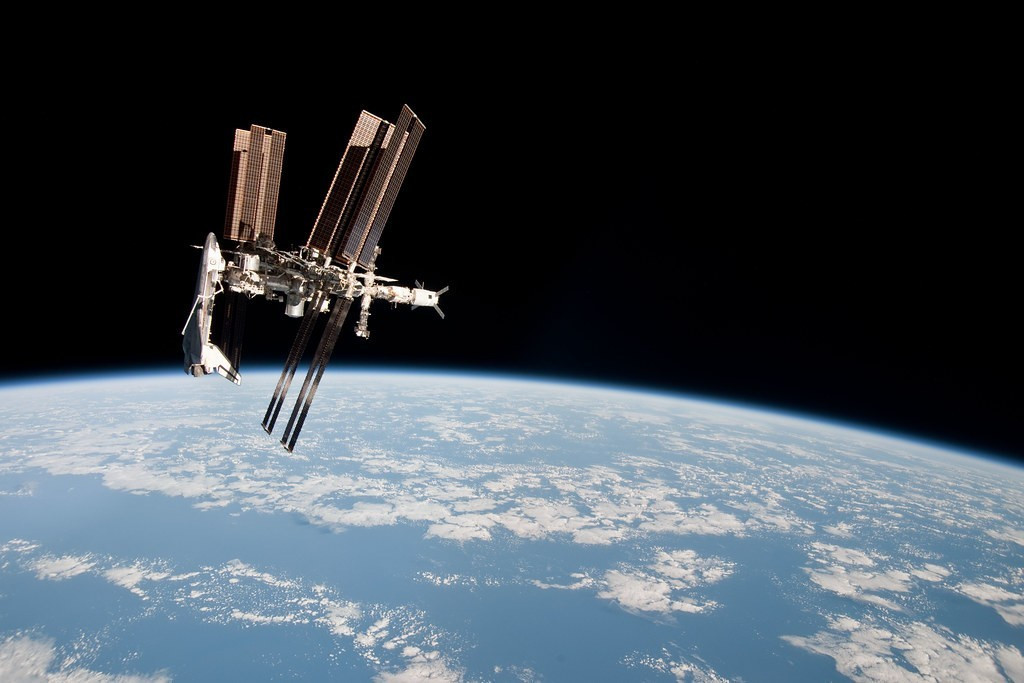
In a surprising turn this week, NASA and Sierra Space jointly reworked their long-standing resupply agreement to strip NASA’s obligation to purchase fixed cargo missions from Sierra’s Dream Chaser spacecraft. Under the revised deal, Dream Chaser will now fly a free-flying demonstration mission (not docking with the ISS) sometime in late 2026, with NASA providing only minimal support during that test. Only if that demonstration succeeds might NASA commit to resupply missions, but there is no guarantee. What began as a bold bet on a reusable runway-landing spaceplane has morphed into a more cautious, multipurpose vehicle pivoting toward potential defense and commercial clients.
Sources: NASA, NASA Space Flight
Key Takeaways
– NASA has ended its firm commitment to ordering Dream Chaser resupply flights, instead demanding a demonstration first before considering future missions.
– The Dream Chaser’s inaugural mission is now slated as a free-flyer orbital test, not docking with the ISS, likely in late 2026 (with schedule risk).
– Sierra Space is being forced to reposition Dream Chaser as a multiuse platform—potentially serving national security, defense, or commercial orbital clients beyond just ISS cargo.
In-Depth
For nearly a decade, Sierra Space (originally part of Sierra Nevada Corporation) has been chasing a grand vision: a reusable, winged spaceplane that could fly to the International Space Station, deliver supplies, and return on a runway just like a small shuttle. The program, known as Dream Chaser, was awarded a Commercial Resupply Services-2 (CRS-2) contract by NASA in 2016, which included a guaranteed minimum of seven cargo missions. That contract formed the financial and development backbone for the spacecraft as it matured in parallel with competing vehicles like SpaceX‘s Dragon and Northrop Grumman’s Cygnus.
But as of September 2025, that trajectory has shifted decisively. NASA and Sierra Space have mutually amended their agreement, removing NASA’s commitment to ordered missions and pivoting the next milestone to a demonstration flight. That demo, now expected in late 2026, will be “free-flying”—meaning the spacecraft, named Tenacity, will orbit independently and will not dock with the ISS. NASA will provide only minimal support during the test, and only afterward may decide whether to reinstate resupply orders based on performance. (This reflects NASA’s own statement about the decision. See NASA’s page on the contract modification.)
This change is a blow to the original model. Dream Chaser’s business case was largely premised on a guaranteed NASA customer to absorb much of the risk. Without that, Sierra Space must either find commercial or defense use cases or face a steep climb in justifying continued investment. In its public messaging, Sierra Space emphasizes that the new path offers “greater mission flexibility” and positions Dream Chaser as a versatile asset capable of serving national security needs and other orbital missions outside the ISS framework. Their press release frames it as a strategic transition designed to preserve value in the vehicle even if some original ambitions don’t pan out.
The timing adds pressure. The ISS is slated for deorbit around 2030, which leaves a narrow window for any credible resupply by Dream Chaser even if the demonstration is fully successful. Critics and analysts now question whether Dream Chaser will ever dock with the ISS at all. Some see the pivot as a tacit admission that NASA no longer views the vehicle as sufficiently mature or low-risk to commit to proximity operations near a crewed habitat. Others note it reflects broader industry trends: space projects now often require midstream course corrections to respond to cost growth, schedule slips, or shifting priorities.
Operationally, the delay means Dream Chaser continues to carry technical and regulatory risk. It still needs to demonstrate propulsion, avionics, rendezvous capability, orbital operations, and safe landing. Meanwhile, NASA must balance its own asset mix: it already has reliable cargo providers (Dragon and Cygnus) and faces its own schedule pressures as it transitions toward commercial low-Earth orbit stations and lunar ambitions. The experiment with Dream Chaser will be watched closely as a test of whether winged reusable spacecraft can find a sustainable niche in the post-ISS era.