

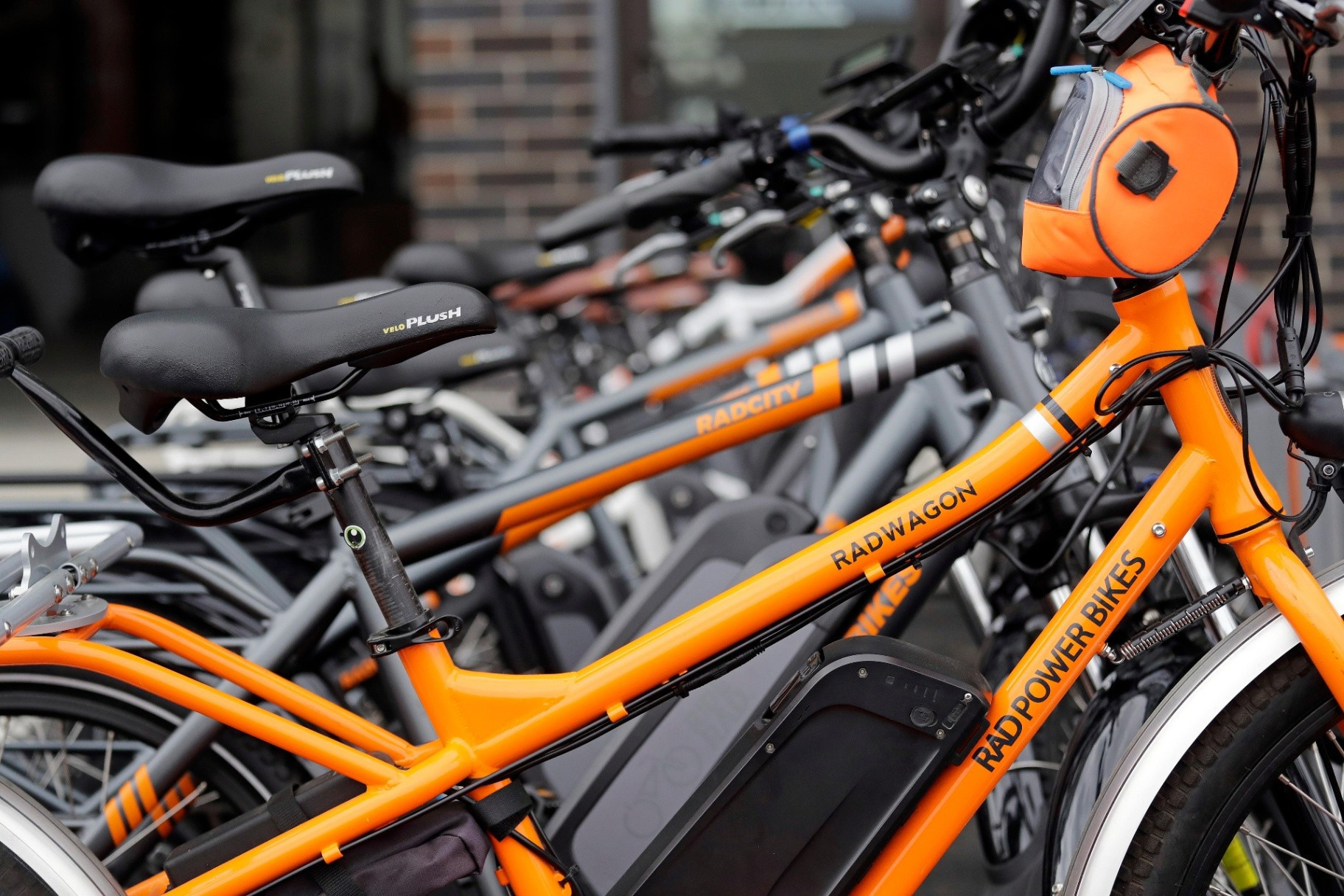
Seattle-based electric bike company Rad Power Bikes is reportedly facing the possibility of shuttering operations as early as January 2026 unless it can secure additional funding or complete an acquisition, according to internal notices and media reports. The firm, once a breakout success during the COVID-19 boom with a 297 % surge in demand at one point, raised over $300 million, achieved unicorn status and expanded quickly — but it now grapples with excess inventory, thinning margins, supply-chain and tariff pressures, and a volatile post-pandemic consumer market. Multiple layoffs, store closures, and a retreat from Europe have followed, and leadership says they are still exploring “every viable option” to preserve the brand.
Sources: GeekWire, Cycling Weekly
Key Takeaways
– Rad Power Bikes’ rapid expansion during the pandemic left it exposed when consumer demand softened, creating inventory and cash-flow strains.
– The shift from high-growth hardware startup to sustaining a large legacy base proved challenging in a capital-constrained environment—especially for a direct-to-consumer model.
– Unless new investment or a buyer emerges, Rad could serve as a cautionary tale of scaling too fast in a niche hardware market vulnerable to macro shifts and competitive saturation.
In-Depth
Rad Power Bikes’ trajectory is often portrayed as the archetypal hardware play of the pandemic era: a nimble startup that leveraged a sudden surge in demand, raised big, scaled fast — and now is confronting what happens when the boom subsides. Founded in 2007 and pivoting to direct-to-consumer e-bikes in 2015, Rad captured the zeitgeist of the early pandemic by offering accessible e-bikes at sub-$2,000 price points, carving out a middle ground for everyday riders. That success caught the eye of investors: by 2021 Rad had raised over $300 million and achieved a valuation north of $1 billion.
But the very factors that drove Rad’s meteoric climb also sowed the seeds of its vulnerability. As post-pandemic demand decelerated in 2022, Rad found itself saddled with large inventory commitments, eroding margins, and a hardware business that lacked the high-margin recurring revenue characteristics of software. As one former Rad executive put it, “It’s like walking around with a bowling ball around our ankles and going for a run.” Meanwhile, the e-bike market matured rapidly, with low-cost imports and established bike manufacturers entering the segment, making Rad’s positioning tougher.
Operationally, the company carried the burdens of a full retail and service network, direct-to-consumer logistics, and warranty obligations. That infrastructure, lean when growth was hot, became expensive when the tailwinds faded. Rad responded with multiple rounds of layoffs, closure of its European operations, and restructuring efforts to stabilize the business. Laying the foundation for a potential shutdown, the company filed a WARN notice in Washington indicating that 64 jobs at its Seattle headquarters could be cut if operations cease by January 2026 — unless a new capital infusion or partner emerges.
For investors, operators and policymakers, Rad’s situation underscores several lessons: the perils of assuming that pandemic-era demand spikes signal a new “normal”; the fragility of hardware-only business models in consumer markets when margins compress; and the importance of flexible supply-chain and inventory strategies. From a right-leaning business-perspective, the case highlights the consequences of chasing growth at all costs without sufficient margin structure, risk buffers or diversification. Hardware businesses must anticipate downturns, avoid over-leveraging for growth, and build resilient operations with service, subscription or software components to hedge cyclical demand.
Ultimately, Rad’s next chapter depends heavily on external backing: new funding, acquisition by a larger player, or a restructuring that lets it ride out the downturn and rebuild. If that doesn’t happen, Rad’s brand may survive — but the company as an independent hardware player likely will not. For the broader e-bike industry, the unraveling of one of its marquee names is a signal that the post-pandemic transition phase is far from over.