

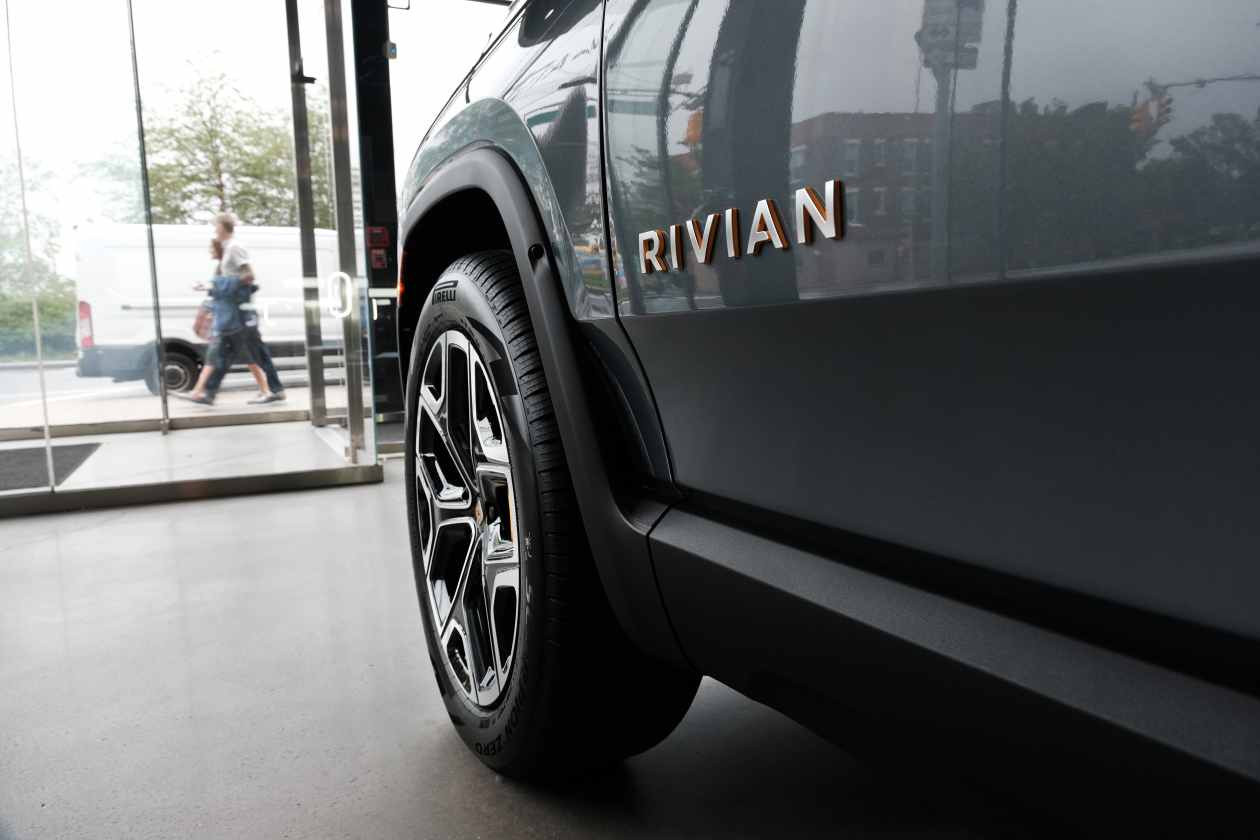
Automaker Rivian Automotive has announced a fresh round of layoffs impacting more than 600 employees—about 4 %–4.5 % of its workforce—as part of its third reduction this year amid sagging demand for electric vehicles and the end of generous U.S. tax incentives. Reuters reports the job cuts come after a month-ago round of smaller reductions and follow earlier workforce trimming this year. The moves coincide with Rivian preparing for the anticipated launch of its more mass-market “R2” SUV and attempting to realign operations in the face of margin pressure and weakening EV incentives.
Sources: Reuters, Business Insider
Key Takeaways
– Rivian is slashing over 600 jobs (approximately 4 %–4.5 % of its total headcount) in its largest layoff of the year, marking the third round of cuts.
– The timing coincides with the expiration of the U.S. $7,500 federal EV tax credit and broader softening in EV demand, placing additional pressure on pure-EV manufacturers.
– Rivian is positioning these cuts as “structural adjustments” ahead of its next-generation, lower-priced R2 SUV launch, attempting to shift toward cost discipline and scalability.
In-Depth
The latest workforce reduction at Rivian Automotive showcases how one of the more emphatic EV upstarts is contending with the realities of transitioning from hype to hard results. Rivian, which has built its narrative around rugged electric trucks and SUVs and enjoyed early buzz, now finds itself needing to recalibrate in a market where incentives are shifting and competition is intensifying. Over 600 employees—roughly 4 % to 4.5 % of Rivian’s global workforce—are being let go in a move described internally by CEO RJ Scaringe as part of “structural adjustments” tied to an upcoming product launch. The October 23, 2025 Reuters piece underscores that this latest cut follows a smaller reduction just a month prior and aligns with the departure of the U.S. EV tax credit era. With the $7,500 federal incentive expiring, Rivian and other EV makers face a tougher demand environment, which has been dampened by increased prices for consumers and heightened cost-pressures for manufacturers.
This isn’t a standalone event—the company had already undertaken multiple rounds of reductions earlier in 2024 and 2025 (for instance, a June cut affecting about 1 % of the workforce was reported by TechCrunch) as it aligned toward launching the R2, a more affordable EV model expected to reach a broader market. The repeated cutbacks reflect a company adapting to the twin imperatives of cost control and scale. Rivian’s strategy to introduce the R2 is a pivotal juncture: if it can strike the balance between lower price, improved cost efficiency, and competitive performance, the company may catch up to more established players. However, the layoffs also signal that achieving that balance will be bumpy.
From a conservative lens, the story echoes a broader theme in the EV industry: companies that ramped aggressively under favorable policy regimes now must confront the realities of profitability, consumer demand, and competitive discipline. Rivian’s decision to reduce its labor base—even as it readies a new product—suggests the company is acknowledging these harsh realities rather than continuing to ride on growth narratives alone. The scale of the cuts is large enough to capture market attention, but modest in the context of its total workforce of around 15,000. The fact that this is the third such layoff this year likewise highlights a persistent rather than one-off pressure.
Looking ahead, the success of the R2 launch will be crucial. If Rivian can deliver a more affordable, capable vehicle while keeping overhead under control, the company may rebound. But if challenged by continuing weak demand, cost overruns, or competitive disadvantage, the layoffs may only be the beginning of more fundamental structural changes. For investors, employees, and the broader EV ecosystem, the message is clear: hype gives way to execution, and firms must adapt swiftly to shifting incentives, consumer behavior, and competitive dynamics.